Published Product3 min read
The wearable spec that matters now is how often it shuts up
The Verge's Victoria Song wore four data-collecting devices for two weeks and was interrupted once, by her cat. That is the new competitive axis: not what the display shows, but how little the thing asks of you.
Not a builder's beat, but builders have a standing stake in it.See today for builders
What happened
- Optimizer is a weekly newsletter written by Verge senior reviewer Victoria Song, described as dissecting the latest gizmos and potions that claim they will change your life.
- The column is headlined "Quiet luxury has come for wearables" with the subhead "Going screenless proves you can afford to be intentionally inefficient."
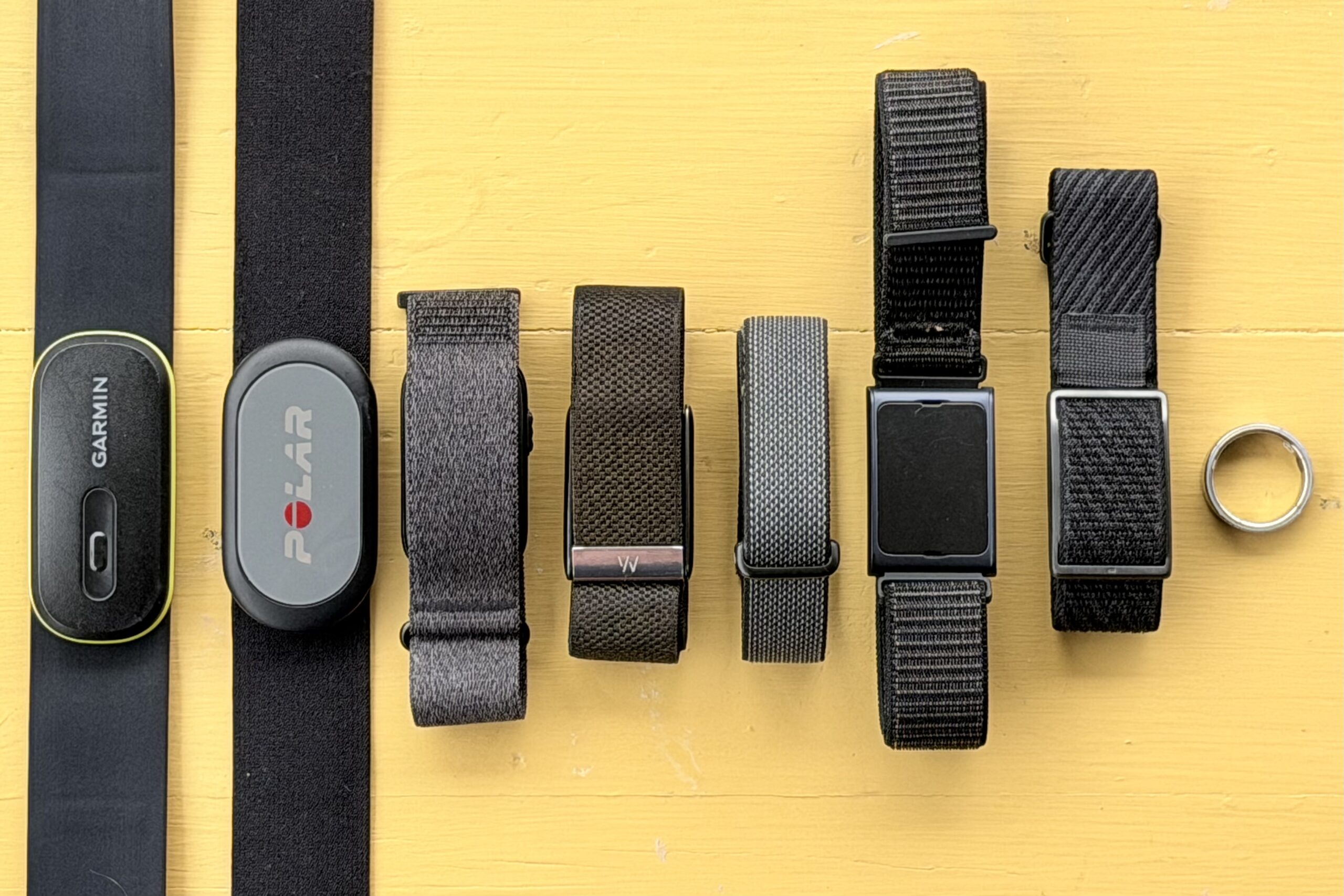
- During two weeks of summer vacation, Victoria Song wore a Fitbit Air and a Garmin Cirqa on her right wrist, an Oura Ring 5 on her right index finger, and a Dexcom G7 continuous glucose monitor on her right arm, as part of going screenless.
- When Song used smart glasses during that period, she opted for the display-free Meta Glasses.
- The setup generated a very large volume of wearable data, and the number of times one of the devices bothered her about it was exactly once, which she called a fluke.
Compiled by The Product DeskSomething wrong?How this is made
Why it matters
The Verge senior reviewer Victoria Song spent two weeks of summer vacation wearing a Fitbit Air and a Garmin Cirqa on one wrist, an Oura Ring 5 on her right index finger, and a Dexcom G7 continuous glucose monitor on her arm, and when she reached for smart glasses she picked the display-free Meta Glasses [3][4]. The stack produced a large amount of data and interrupted her exactly once, and that once was a false low-blood-sugar alarm caused by her 20lb cat napping on the sensor arm [5][6].
Four devices worn continuously across fourteen days is roughly 56 device-days per interruption [7]. That is the number product teams should sit with, because it is a spec, and it is not one anybody is currently marketing.
The category arc is worth restating plainly. Early bands collected data that you actually consumed in a phone app, with tiny screens good for time, heart rate and step count, which worked for fitness and little else [9]. Smartwatches displaced them because they did more: notification triage, a backup line of communication, plus tracking [10]. Song's read is that the expansion was also a retention play, on the theory that the more you can do and track on a device, the more locked into its ecosystem you are [11].
The demand signal she reports is qualitative and single-sourced, so take it as such: over the last two or three years, readers who once wanted wrist computers have been asking her for simpler devices, with Apple Watch owners asking about the Oura life and Garmin users asking whether the Whoop subscription is worth it [12]. Her hunch is that this is not a request for fewer features or less health data, but data fatigue plus minimalism as a status signal [13]. She frames the screenless band as a way of saying you care about your health without being controlled by it [21].
The structural problem she names is the interesting part for anyone building this. More data is not always better, but makers have investors who want lines to go up, which produces iterative software updates that claim to improve your health [14]. That pressure shows up as a race to be first with blood pressure insights, new sleep metrics and metabolic trends derived from urine and blood [15]. It also shows up as a default experience that has degraded into scrolling cluttered graphs and widgets, and correcting an AI coach that has drawn the wrong conclusion from your own data [16]. Song says real notifications she has received include an alert that her wearable had finished charging and a reminder that she did not need to remove it to shower, and she declines to single out one company because, in her account, all of them do it [17]. All of that surface area requires upfront work from the user [18].
Screenless does not remove the data problem; it relocates it. You can still overindex on your phone, but the device on your wrist or finger cannot compete for attention, and an AI coach is easier to ignore when there is no display to put it on [19][20]. Song is explicit that the trade is real: some accuracy for silence, plus the freedom to sync every few days and skip charging alerts [19].
What to watch is whether any of these companies can report a good quarter on a device designed not to be opened. Engagement metrics and an intentionally ignorable product do not point the same direction, and the first team to publish a retention story that does not depend on daily interaction will be telling operators something useful. Watch also whether the accuracy gap Song concedes gets closed or simply priced as a lifestyle choice, and whether the clutter that left the wrist quietly reassembles itself inside the companion app [16][19].
Claim ledger
Ranked by verification strength, evidence, and original report placement.
- [1]
Optimizer is a weekly newsletter written by Verge senior reviewer Victoria Song, described as dissecting the latest gizmos and potions that claim they will change your life.
- [2]
The column is headlined "Quiet luxury has come for wearables" with the subhead "Going screenless proves you can afford to be intentionally inefficient."
- [3]
During two weeks of summer vacation, Victoria Song wore a Fitbit Air and a Garmin Cirqa on her right wrist, an Oura Ring 5 on her right index finger, and a Dexcom G7 continuous glucose monitor on her right arm, as part of going screenless.
- [4]
When Song used smart glasses during that period, she opted for the display-free Meta Glasses.
- [5]
The setup generated a very large volume of wearable data, and the number of times one of the devices bothered her about it was exactly once, which she called a fluke.
- [6]
The single interruption was the Dexcom G7 warning that her blood sugar was perilously low; the alarm was false and was triggered by her 20lb cat napping on her arm.
Sources & coverage · 1 publisher
The reporting this story was synthesized from, earliest first. Every link goes to the original.
- theverge.comVictoria SongAug 13Quiet luxury has come for wearables
Additional citations
- The Verge
- Victoria Song, The Verge