Published Leadership3 min read
The party committee just became the cheapest place to put your money
June's Supreme Court ruling lifted the cap on party spending coordinated with candidates, in the middle of a cycle projected to be the most expensive on record.
Context for builders, not their beat.See today for builders
What happened
- In June, the Supreme Court struck down limits on how much political parties can spend in coordination with their own candidates, further blurring the line between what candidates raise directly and what parties can spend on their behalf.
- The 2026 midterm cycle is projected to be the most expensive election cycle in US history, with candidates across the board raising money at a record pace.
- The recent Democratic Senate primary in Michigan was the most expensive Democratic congressional primary in terms of outside spending.
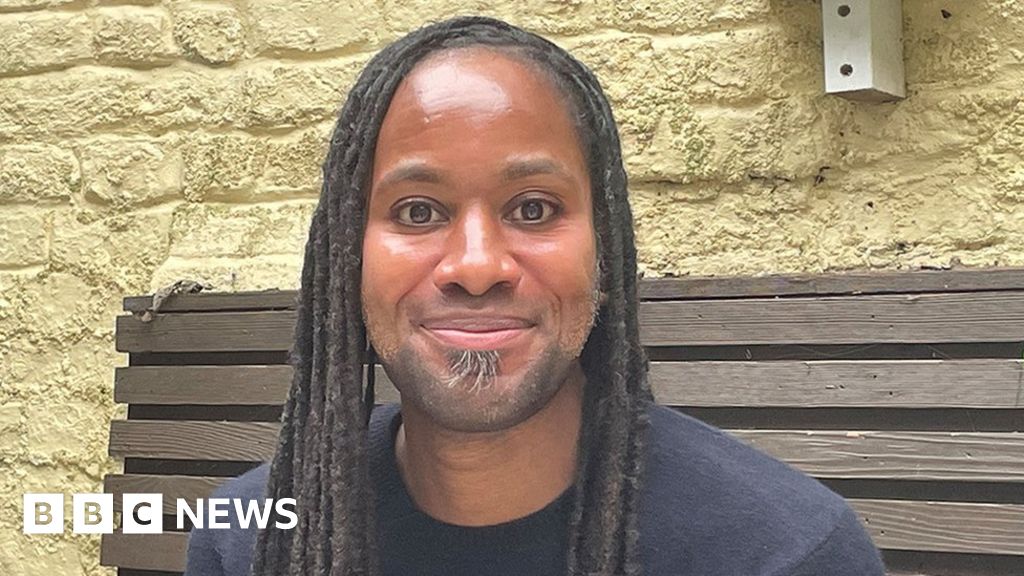
- Abdul El-Sayed was massively outspent by outside interest groups including AIPAC in the Michigan Democratic Senate primary and won the nomination despite a major financial disadvantage.
- In California, billionaire Tom Steyer spent over $200 million of his own money on his bid for governor and lost.
Compiled by The Board RoomSomething wrong?How this is made
Why it matters
In June the Supreme Court struck down limits on how much political parties can spend in coordination with their own candidates [1]. That ruling landed in a cycle projected to be the most expensive in US history, with candidates across the board raising at a record pace [2], so it will be stress-tested at scale within months rather than years.
The consequence for anyone allocating a PAC budget is structural, not rhetorical. A cap that previously constrained what party committees could spend hand-in-glove with their nominees is gone [1], and the effect, as the Vox account puts it, is to further blur the line between what candidates raise directly and what parties can spend on their behalf [1]. If the party committee can now coordinate without a ceiling, it becomes a more attractive destination for money that used to be routed to independent efforts for legal reasons rather than strategic ones. Two things the source material does not settle, and which are worth confirming with counsel before anything moves: what the case actually held beyond the coordinated-spending cap, and whether the limits on contributions into party committees were touched at all.
The temptation is to read a spending ruling as a spending opportunity. The results this cycle argue for restraint. The recent Democratic Senate primary in Michigan was the most expensive Democratic congressional primary on record in outside spending, and Abdul El-Sayed won the nomination anyway, overcoming a major financial disadvantage against outside groups including AIPAC [3][4]. In California, Tom Steyer put more than $200 million of his own money into a bid for governor and lost [5].
Danielle M. Thomsen, a political scientist at the University of California Irvine and author of the 2025 book The Money Signal [6], frames fundraising as a signal of viability rather than a purchase of votes: it establishes who is perceived to be seriously in the mix, and early money in particular functions as a prerequisite [7]. Her benchmarks are modest. Successful non-incumbents in open-seat primaries average roughly $300,000 to $400,000 in the first quarter [8]. Challengers who put real pressure on incumbents are typically raising $200,000 to $300,000 in that same window [9]. In many districts, though not in the wealthiest New York or California seats, $300,000 in a first quarter is a strong showing [10]. Steyer's self-funding was on the order of 500 times the top of that threshold [11].
Thomsen also notes the ceiling on money's influence: most congressional primaries are low-information contests where voters know little about the candidates, while Senate primaries carry far more information, and once voters are familiar with the choices, money matters less [12][13]. Early dollars buy entry to the conversation. They do not buy the conclusion.
There is also a reputational line item. Big-donor groups tied to Israel policy, AI, and crypto have become flashpoints in primaries in both parties [14]. Backing from an identified network is now a fact opponents will run on.
What to watch: whether party committees actually use the new coordinated capacity in the first reporting periods, or hold back pending further litigation; whether the $300,000 first-quarter marker inflates in a record cycle [2][8]; and whether candidates start declining identifiable donor-network support in contested primaries [14].
Claim ledger
Ranked by verification strength, evidence, and original report placement.
- [1]
In June, the Supreme Court struck down limits on how much political parties can spend in coordination with their own candidates, further blurring the line between what candidates raise directly and what parties can spend on their behalf.
- [2]
The 2026 midterm cycle is projected to be the most expensive election cycle in US history, with candidates across the board raising money at a record pace.
- [3]
The recent Democratic Senate primary in Michigan was the most expensive Democratic congressional primary in terms of outside spending.
- [4]
Abdul El-Sayed was massively outspent by outside interest groups including AIPAC in the Michigan Democratic Senate primary and won the nomination despite a major financial disadvantage.
- [5]
In California, billionaire Tom Steyer spent over $200 million of his own money on his bid for governor and lost.
- [6]
Danielle M. Thomsen is a professor of political science at the University of California Irvine and author of the 2025 book The Money Signal: How Fundraising Matters in American Politics.
Sources & coverage · 1 publisher
The reporting this story was synthesized from, earliest first. Every link goes to the original.
- vox.comRachel CohenAug 13How money actually works in American elections
Additional citations
- Vox
- Danielle M. Thomsen, interviewed by Vox