Published Leadership3 min read
The Adoption Problem You Cannot Buy Your Way Out Of
A consultant's account of stalled AI rollouts turns on one sentence from an employee: "I didn't trust it enough to put my name on what it gave me."
Context for builders, not their beat.See today for builders

What happened
- The article appeared on forbes.com under Forbes Tech Council with a URL path dated 2026/08/13, titled 'Workforce Development In The Age Of AI: A Framework For Getting Your People Ready'.
- The author is Annette White-Klososky, Founding Partner at Future Point of View, where she says she has spent more than two decades helping organizations through big technology shifts.
- She writes that over the past two years she has had almost the same conversation with executives across industries: they bought the tools, announced the initiative, ran a training or two, then watched for months as very little changed; the technology worked fine but the people did not use it.
- A leadership team she worked with recently did everything right on paper: licenses bought, kickoff held, people walking out excited. Months later most had drifted back, and not one blamed the software.
- What she heard from that team was: 'I didn't trust it enough to put my name on what it gave me.'
Compiled by The Board RoomSomething wrong?How this is made
Why it matters
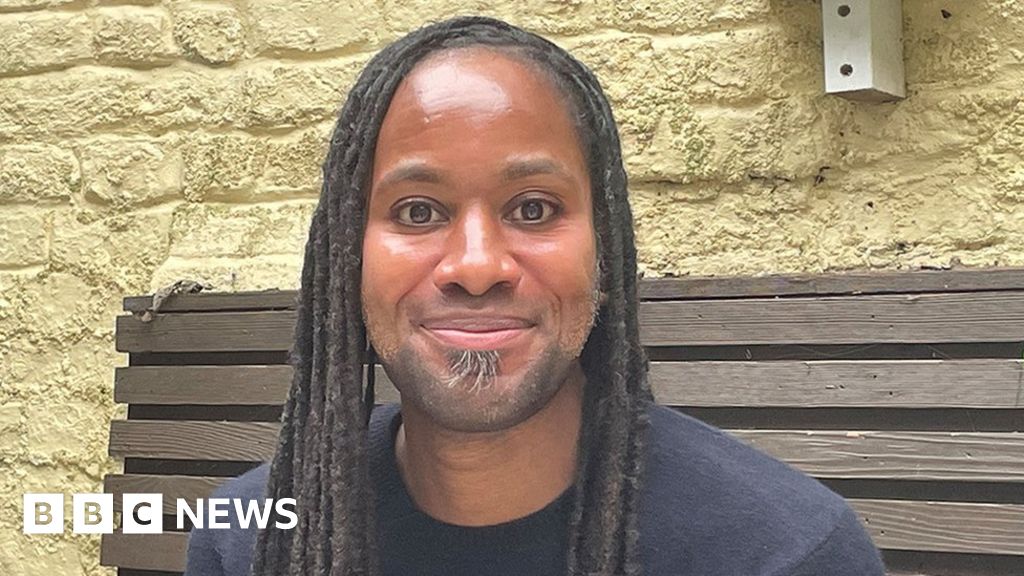
Annette White-Klososky, founding partner at Future Point of View, published a Forbes Tech Council piece dated August 13, 2026 arguing that the AI rollouts she sees fail on trust rather than skill, and she quotes one employee as the diagnosis: "I didn't trust it enough to put my name on what it gave me" [1][0][4]. That sentence matters because it indicts neither the software nor the curriculum, which are the two things a rollout budget usually consists of.
Her description of the pattern is specific. A leadership team she worked with bought licenses, held a kickoff and sent people out excited; months later most had drifted back to old habits and not one of them blamed the software [3]. She says she has had close to the same conversation with executives across industries for two years: tools bought, initiative announced, a training or two run, then months of very little changing while the technology worked fine [2].
The structural claim underneath is that leaders hand AI to IT as a technical problem when it is a workforce-design decision [8]. Training starts at the platform and the prompt library, and skips the part that makes usage durable: what the tool does well, where it falls down, and where the employee's own judgment still decides the matter [7]. Her observation is that the people who adapt best are rarely the most technically proficient, but the ones who have worked out honestly what AI can and cannot do inside their specific job [10].
The intervention she describes costs almost nothing in software. Three questions per role: which parts of my work are really just pattern recognition, where does my work depend on things AI cannot know, and what does good actually look like here [11]. The first sorts the drafts, summaries and feedback-sorting into the machine's column [12]. The second names what stays human: the history of a relationship, the politics in the room, the thing a client said that never made it into an email [14]. The third is the expensive one, because a seasoned person can glance at a draft and feel what is thin or would collapse the moment a client pushed on it, and that is the muscle organizations forget to train [15]. Two of the three questions are about judgment rather than tool operation [22]. Her label for the resulting arrangement, "Humalogical Balance," adds nothing the three questions do not already carry [17].
The mechanism in her case study is worth borrowing even if you discount the framing. At a regional organization of a few hundred people, the hardest resistance came from a respected veteran who read the initiative as an insult to his experience; the turn came when they asked him not to adopt the tool but to tear it apart, testing his judgment against its output, after which he became its loudest advocate and flat adoption began to move [18][19]. Adversarial evaluation, not an adoption mandate.
She also argues the trust runs two ways: employees need to believe leadership is not quietly using AI to thin the payroll, and need to feel safe challenging a tool that can be confidently and articulately wrong [20]. Her example is a junior analyst who caught a polished AI summary that had flipped a key number backward, and a manager who thanked her in front of everyone and said that catching it was now the job [21].
Treat the evidence for what it is: a practitioner's client anecdotes, with no named organizations and no adoption numbers beyond "began to move" [23]. What to watch in your own rollout is not seat utilization but whether people are willing to attach their names to AI-assisted work, and whether the experimentation you can see is roughly all the experimentation happening. White-Klososky's warning is that moving faster than people can absorb fills the gap with anxiety, foot-dragging and unobserved experimentation [9].
Claim ledger
Ranked by verification strength, evidence, and original report placement.
- [0]
The article appeared on forbes.com under Forbes Tech Council with a URL path dated 2026/08/13, titled 'Workforce Development In The Age Of AI: A Framework For Getting Your People Ready'.
ReportedView cited source - [1]
The author is Annette White-Klososky, Founding Partner at Future Point of View, where she says she has spent more than two decades helping organizations through big technology shifts.
- [2]
She writes that over the past two years she has had almost the same conversation with executives across industries: they bought the tools, announced the initiative, ran a training or two, then watched for months as very little changed; the technology worked fine but the people did not use it.
- [3]
A leadership team she worked with recently did everything right on paper: licenses bought, kickoff held, people walking out excited. Months later most had drifted back, and not one blamed the software.
- [4]
What she heard from that team was: 'I didn't trust it enough to put my name on what it gave me.'
- [7]
She writes that almost everyone starts with training - here is the platform, here are some prompts - and skips what makes it stick: helping people grasp what the technology does well, where it falls down, and where their own judgment still carries the day. Skip that and people either trust the tool too much or avoid it altogether.
Sources & coverage · 1 publisher
The reporting this story was synthesized from, earliest first. Every link goes to the original.
- forbes.comAnnette Klososky, Forbes Councils MemberAug 13Workforce Development In The Age Of AI: A Framework For Getting Your People Ready
Additional citations
- Annette White-Klososky, Forbes Tech Council
- Annette White-Klososky
- employee quoted by Annette White-Klososky