Published · 3d agoInvest3 min read
Venezuela hires the money doctor: Hanke to draft a law killing the bolivar and the central bank
The National Assembly named Steve Hanke special adviser and told him to write a full dollarization law. He puts the odds of passage at 50% to 80%.
Context for builders, not their beat.See today for builders
What happened
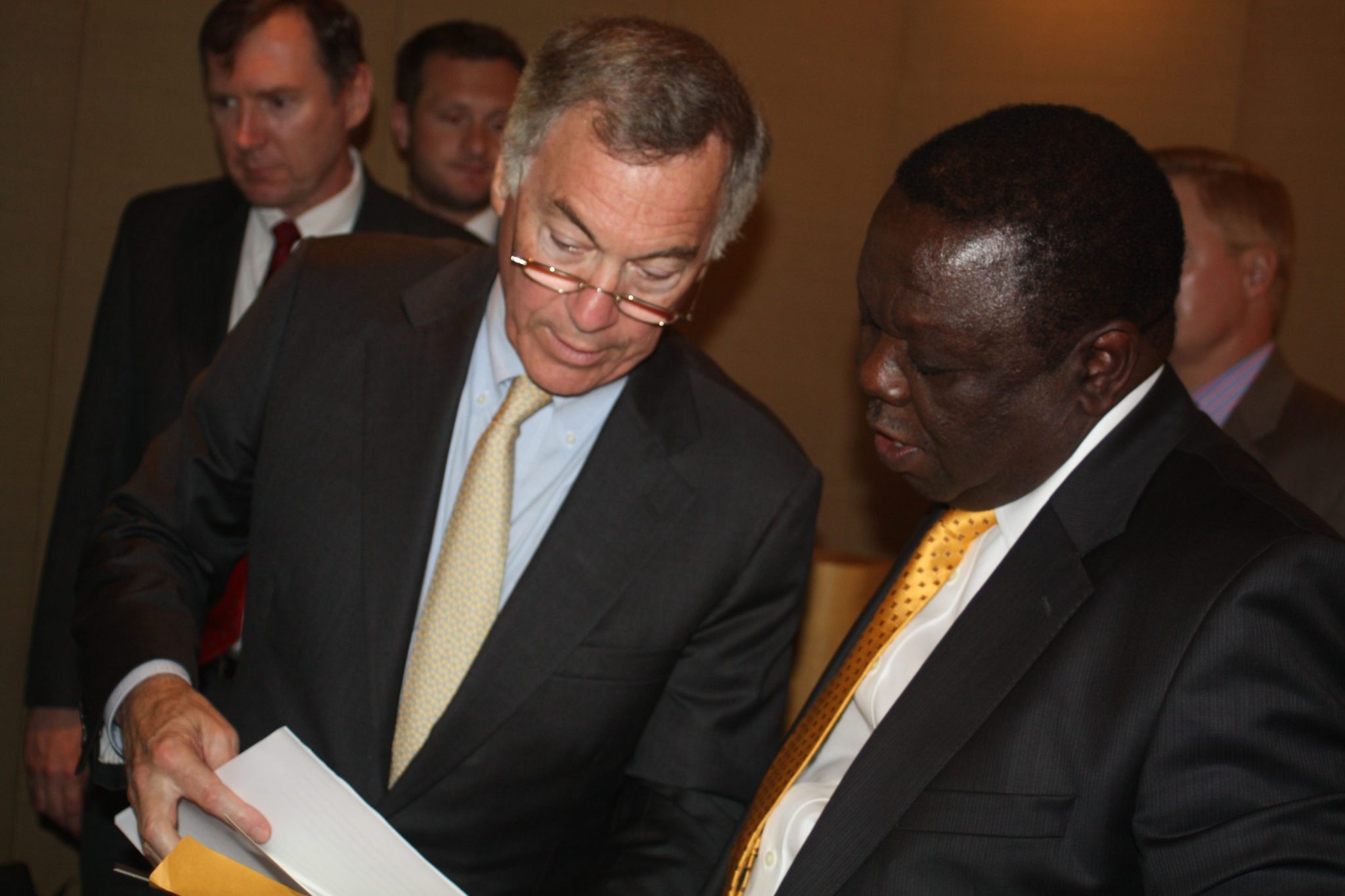
- Venezuela's National Assembly named Steve Hanke, professor of applied economics at Johns Hopkins University, Special Adviser on Economic, Monetary, and Energy Affairs.
- Hanke was tasked with curing hyperinflation now running at a 400% annual clip, the worst in the world.
- Hanke's fix is a full dollarization law that would abolish the bolivar and the central bank outright.
- Hanke told Fortune he puts the odds of passage of the dollarization law at 50% to 80%.
- Venezuela rejected the money doctor's last surgery attempt three decades ago; the current effort is described as the best shot sound money has had there since.
Compiled by The InvestorSomething wrong?How this is made
Why it matters
Venezuela's National Assembly has named Steve Hanke, the Johns Hopkins professor of applied economics, Special Adviser on Economic, Monetary, and Energy Affairs, and tasked him with curing hyperinflation now running at a 400% annual rate, the worst in the world [1][2]. His prescription is a full dollarization law that would abolish the bolivar and the central bank outright, which moves this from commentary to a drafted statute with a sponsor [3].
Hanke told Fortune he puts the odds of passage at 50% to 80% [4]. That is a self-assessment from the man writing the bill, and it is the widest useful range you will see on a legislative outcome; Venezuela rejected his last attempt at the same surgery three decades ago [4][5]. Take the midpoint and you have a coin flip on whether the country still has a domestic monetary authority in a year.
The reason a monetary adviser also holds the energy brief is that the balance sheet runs on crude. Venezuela is producing 1.1 million barrels per day, roughly 1.3% of world output and about one-third of the 3.4 million it managed in 1998 before Chavez [6][7][8]. That is a shortfall of 2.3 million barrels a day against the pre-Chavez mark [1]. Output is only a little over 7% above where it stood before Maduro was removed in a U.S. Special Forces raid on January 3rd, implying a starting point near 1.03 million barrels per day [9][10][2]. Nine months of regime change has bought about 70,000 barrels.
The debt is the reason that matters. Venezuela carries $250 billion, equal to roughly 150% of GDP, the highest ratio in Latin America and fourth in the world [11][12]. That implies an economy of about $167 billion for 29 million people, or roughly $8,600 of debt per head [13][3][4]. Crude accounts for as much as 98% of exports, so in any workout petroleum receipts are effectively the entire hard-currency flow available for principal and interest [14]. The creditor table includes the governments of Russia and China, distressed debt funds, ConocoPhillips and Exxon Mobil [15]. As much as $15 billion of that stack is Beijing loans previously serviced with cargoes of crude, about 6% of the total [16][5].
Which is where the plan meets its constraint. The government of President Delcy Rodriguez has not passed laws that sufficiently safeguard private property rights [17]. U.S. majors are buying Venezuelan barrels for Gulf Coast refineries built for heavy crude, but none has committed capital to rebuilding the upstream, even with the Trump administration effectively acting as decision-maker for PDVSA [18][19]. Exxon Mobil CEO Darren Woods questioned whether Venezuela will "uphold the sanctity of contracts", cited its record of stealing investments, and called the country "uninvestible" [20]. Dollarization removes the printing press as a fiscal tool; it does not create a contract-enforcement regime, and buyers of barrels are not the same people as funders of wells.
Watch three things: whether the Assembly actually votes the dollarization law rather than a currency-board compromise, whether a property-rights statute lands before or after it, and whether production breaks out of the 1.1 million range. "Taming inflation is the key to restoring stability in Venezuela, and all the other progress flows from that," Hanke told Fortune [21]. The order of operations is the whole argument, and the creditors will price whichever one arrives first.
Claim ledger
Ranked by verification strength, evidence, and original report placement.
- [1]
Venezuela's National Assembly named Steve Hanke, professor of applied economics at Johns Hopkins University, Special Adviser on Economic, Monetary, and Energy Affairs.
ReportedView cited source - [2]
Hanke was tasked with curing hyperinflation now running at a 400% annual clip, the worst in the world.
ReportedView cited source - [3]
Hanke's fix is a full dollarization law that would abolish the bolivar and the central bank outright.
ReportedView cited source - [4]
Hanke told Fortune he puts the odds of passage of the dollarization law at 50% to 80%.
- [5]
Venezuela rejected the money doctor's last surgery attempt three decades ago; the current effort is described as the best shot sound money has had there since.
ReportedView cited source
Sources & coverage · 1 publisher
The reporting this story was synthesized from, earliest first. Every link goes to the original.
- fortune.comJim Edwards2d agoBond traders believe Bessent’s ‘band-aid’ was ‘a heinous financial crime’
Additional citations
- Steve Hanke, to Fortune
- Darren Woods, CEO of Exxon Mobil