Published Invest3 min read
Paris Puts a Price on the Helmet: 135 Euros, and the Bill Starts Moving
A Paris police order turns helmet advice into a fine, on the back of 79 micromobility deaths and a 33% jump in serious injuries. The interesting question is not the fine. It is who ends up paying the compliance cost.
Context for builders, not their beat.See today for builders
What happened
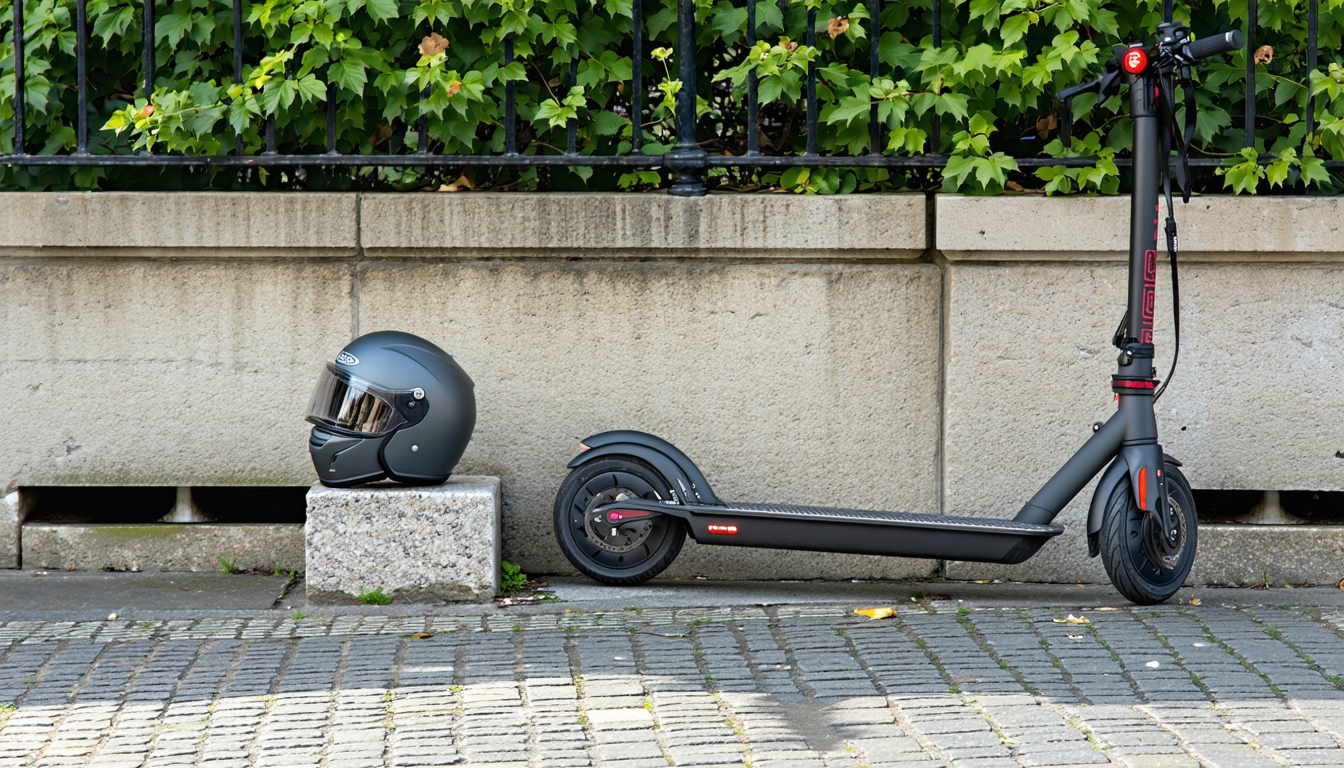
- Paris police issued an administrative order on the 7th requiring safety gear for users of e-scooters, Segways, electric unicycles and hoverboards.
- The requirement applies to riders of e-scooters and other personal mobility devices in Paris and its surrounding region.
- Violators face a fine of 135 euros for failing to wear a helmet and 35 euros for not wearing a reflective vest.
- AFP reported the order on the 14th; the publisher's report is dated 14 August 2026.
- The new safety rule goes beyond earlier recommendations by imposing fines on violators.
Compiled by The InvestorSomething wrong?How this is made
Why it matters
Paris police issued an administrative order on the 7th requiring riders of e-scooters, Segways, electric unicycles and hoverboards in Paris and the surrounding region to wear a helmet and a reflective vest, with fines of 135 euros for no helmet and 35 euros for no high-visibility gear, according to an AFP report on the 14th [1][2][3][4]. The substance is not the safety message, which existed before as a recommendation [5]. It is that the recommendation now has a number attached, and numbers attached to rider behaviour tend to migrate onto operator balance sheets.
The rule tightens in two directions at once. Helmets are mandatory on public roads at any hour, meaning daytime riding is now covered rather than just night [6][7]. And the fine structure is lopsided: the helmet penalty is roughly 3.9 times the vest penalty [8], which tells you which failure the prefecture regards as the expensive one.
The casualty data behind it is national, not municipal. French government figures show 79 deaths in accidents involving personal mobility devices last year, 34 more than the year before [9]. That implies 45 deaths in the prior year and an increase of about 76% [10]. Serious injuries rose 33% in a year to about 1,100 [11], which implies roughly 830 the year before and about 270 additional serious-injury cases in twelve months [12]. A doubling-scale death curve is the kind of trend that produces enforcement rather than campaigns.
What is missing from the Paris announcement, as reported, is a compliance baseline. The only helmet-wearing figure in the material comes from elsewhere: researchers at Sheffield Children's Hospital examined under-16s treated for e-scooter accidents at three major UK pediatric trauma centres between 2019 and 2024 and found fewer than 2% had been wearing a helmet [13][14]. Among those with head injuries, one in ten had severe trauma [15]. That is a different country and a child cohort, so it does not transfer to Parisian adults. It does establish the shape of the problem: if wearing rates are anywhere near that low, a 135-euro fine is not a marginal correction, it is a large latent liability spread across the rider base. The UK has recorded at least 59 e-scooter-related deaths since 2019 [16].
For anyone running a shared fleet, the more instructive jurisdiction is South Korea, which is already several steps into the compliance phase. E-scooters are classified as personal mobility devices under road traffic law, with top speed capped at 25 km/h and a motorised bicycle licence required, which excludes under-16s outright [17][18][19]. Helmets are mandatory and two-up riding is banned [20]. The National Assembly has discussed requiring rental operators to verify users' ages and licences and to confirm completion of safety training [21]. That is the version that touches unit economics: age and licence verification is per-user cost and per-ride friction, and it sits with the operator, not the rider.
Paris has so far priced the rider. Watch whether enforcement produces a measurable change in wearing rates, whether the duty extends to helmet provision or verification at the operator level, whether Korea's rental-operator proposals move from discussion to statute, and whether next year's French figures bend after a year of fines [9][11][21].
Claim ledger
Ranked by verification strength, evidence, and original report placement.
- [1]
Paris police issued an administrative order on the 7th requiring safety gear for users of e-scooters, Segways, electric unicycles and hoverboards.
- [2]
The requirement applies to riders of e-scooters and other personal mobility devices in Paris and its surrounding region.
ReportedView cited source - [3]
Violators face a fine of 135 euros for failing to wear a helmet and 35 euros for not wearing a reflective vest.
ReportedView cited source - [4]
AFP reported the order on the 14th; the publisher's report is dated 14 August 2026.
- [5]
The new safety rule goes beyond earlier recommendations by imposing fines on violators.
ReportedView cited source - [6]
Helmets are mandatory on public roads at any hour, along with high-visibility equipment such as reflective vests.
ReportedView cited source
Sources & coverage · 1 publisher
The reporting this story was synthesized from, earliest first. Every link goes to the original.
- en.sedaily.comAug 13Paris Fines E-Scooter Riders Up to €135 for Skipping Helmets, Vests
Cited in this coverage: AFP, via en.sedaily.com
Cited in this coverage: en.sedaily.com
Cited in this coverage: French government data cited by en.sedaily.com
Cited in this coverage: Sheffield Children's Hospital researchers, via en.sedaily.com