Published · 17h agoInvest3 min read
Liberia said it got nothing; State Department records show $5 million for 1,200 deportees
The paperwork puts a per-head price on third-country removals: about $4,167, paid in January out of a refugee protection account, months before Monrovia denied being paid.
Context for builders, not their beat.See today for builders
What happened
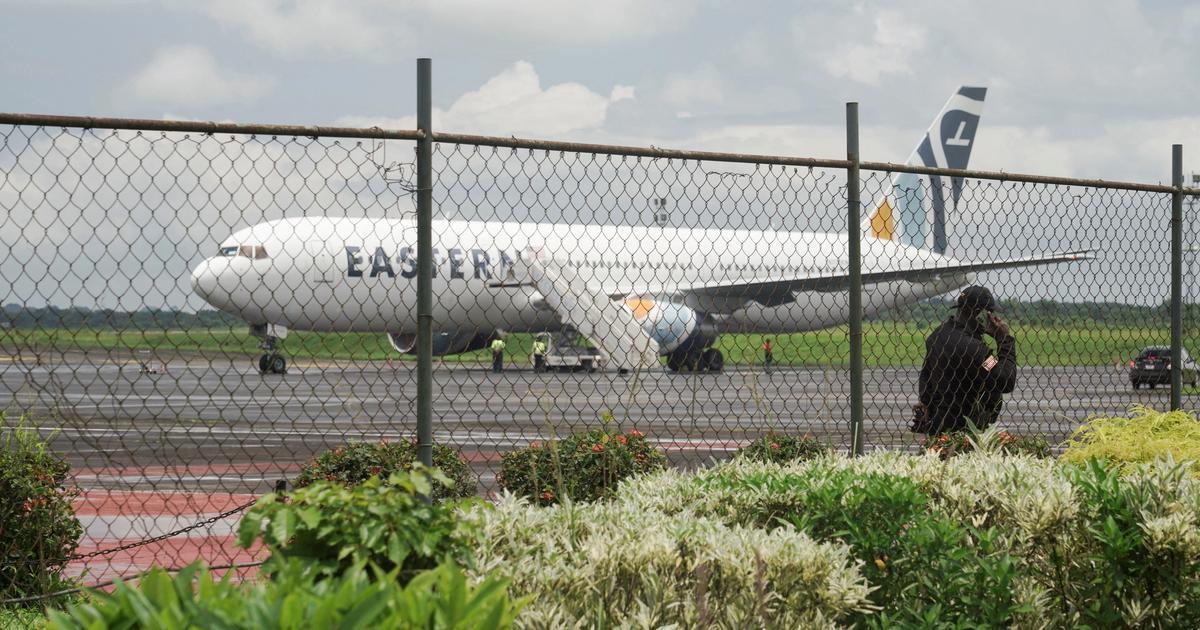
- The United States paid Liberia $5 million (about 7 billion won) to take in up to 1,200 migrants deported from the U.S.; State Department documents show the U.S. government approved the payment, according to The New York Times on the 21st.
- Liberia agreed to accept up to 1,200 migrants deported from the U.S. over the coming year.
- The State Department approved the $5 million payment last December, and public spending records show the actual disbursement was made in January this year under the label "migration management activities".
- When Liberia's government disclosed the agreement on the 18th, it said it had neither requested nor received any compensation or promise of compensation from the U.S. in return for accepting the migrants, but said it would receive support to run the program and to strengthen its own immigration system.
- The Liberian government has insisted the deal is "not a transaction with a quid pro quo".
Compiled by The InvestorSomething wrong?How this is made
Why it matters
Divide the payment by the headcount and the arrangement has a unit price: about $4,167 per person, if Liberia takes the full 1,200 [1]. That figure is now the reference point for whichever government the State Department approaches next. Equatorial Guinea's $7.5 million [12] is half again as large [4], but no headcount has been published alongside it, so Liberia's is the only per-head number in the open.
Where the money came from does more work than its size. The $5 million was drawn from the Migration and Refugee Assistance account, which exists to fund refugee protection and assistance worldwide [8], and the documents permit spending on Liberia's immigration system and on shelter, food and job training for the arrivals [7]. That gives Monrovia its defence: it said it would get support to run the program and to strengthen its own immigration system while denying that it asked for or received compensation [4], and it later called the deal "not a transaction with a quid pro quo" [5]. The documents do not draw the line Liberia is drawing between a payment for taking people and a payment for keeping the people you agreed to take.
The timing is harder to square. Approval came in December and the money moved in January under the label "migration management activities" [3]. Liberia's statement that nothing had been requested or received came on the 18th [4], roughly seven months later [5]. Reuters had already reported the transfer for migration management [6]; what the State Department records add is the link between that line item and a specific number of people.
Robert Blair, a Brown University professor who studies Liberian politics, told Semafor the no-quid-pro-quo claim is "very hard to imagine" being true, and that Monrovia likely expects "some sort of favorable treatment" from Washington later [14]. An immigration attorney who has represented clients removed under earlier third-country deals put the underlying problem to Semafor: "Everyone is basically speculating because so little is written down" [15].
The first flight shows why the written part matters. Five of the 20 people who landed resisted release and were sent on to Equatorial Guinea [11], a quarter of the cohort [2], and that cohort is 1.7% of what Liberia agreed to accept [3]. The assurance the State Department judged credible before releasing the money, that deportees would not be persecuted on grounds such as race or religion, was Liberia's own [9]. It does not travel with anyone to a fourth country. The same lawyer noted that Ghana's earlier deal appeared designed so that migrants without passports could be moved onward by Ghanaian authorities under the ECOWAS passport-free travel zone, of which Liberia is also a member, and Blair said he would not be terribly surprised if Liberia were willing to do that [16].
The State Department declined to discuss the Liberia arrangement, calling implementation of the president's immigration policies a "top priority" [17].
Claim ledger
Ranked by verification strength, evidence, and original report placement.
- [1]
The United States paid Liberia $5 million (about 7 billion won) to take in up to 1,200 migrants deported from the U.S.; State Department documents show the U.S. government approved the payment, according to The New York Times on the 21st.
- [2]
Liberia agreed to accept up to 1,200 migrants deported from the U.S. over the coming year.
ReportedView cited source - [3]
The State Department approved the $5 million payment last December, and public spending records show the actual disbursement was made in January this year under the label "migration management activities".
- [4]
When Liberia's government disclosed the agreement on the 18th, it said it had neither requested nor received any compensation or promise of compensation from the U.S. in return for accepting the migrants, but said it would receive support to run the program and to strengthen its own immigration system.
ReportedView cited source - [5]
The Liberian government has insisted the deal is "not a transaction with a quid pro quo".
ReportedView cited source - [6]
Reuters reported that Liberia received $5 million from the US for "migration management activities" earlier this year, which could ostensibly be used for taking in the deportees.
Sources & coverage · 2 publishers
The reporting this story was synthesized from, earliest first. Every link goes to the original.
- semafor.comAdrian Elimian2d agoMystery surrounds US deportations to Liberia
- en.sedaily.comyesterdayLiberia Got $5 Million to Take In 1,200 Deportees From U.S.
Cited in this coverage: The New York Times, via en.sedaily.com
Cited in this coverage: Human Rights First and The New York Times, via en.sedaily.com