Published Invest3 min read
A crude exporter buying Indian gasoline: Russia's refining base is the lasting break
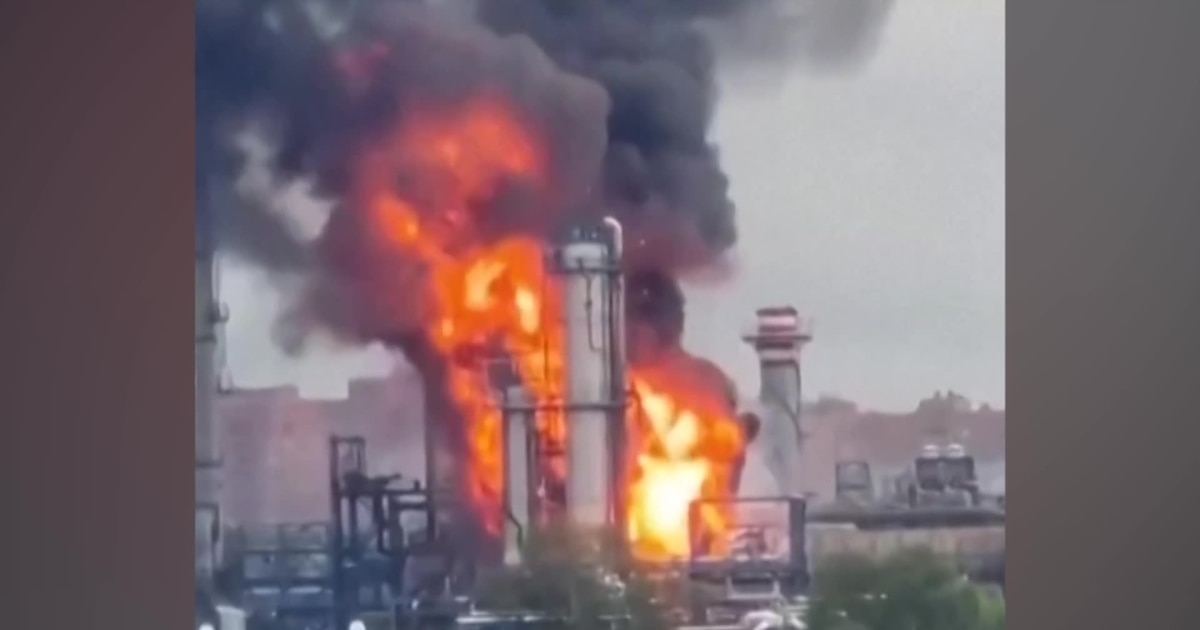
More than 300 drone strikes have taken an estimated 15 to 40 percent of Russian refining capacity out, with rationing reported across nearly all 83 regions.
Context for builders, not their beat.See today for builders
What happened
- Russia decided to import gasoline by sea from India, with an initial shipment of at least 60,000 metric tons.
- Since the 2022 invasion, Ukrainian forces have carried out more than 300 drone strikes on Russian oil facilities.
- Strikes on refineries and fuel depots have carved an estimated 15% to 40% out of Russia's domestic refining capacity, depending on the source and the timing of the assessment.
- Russia can still pump and export raw crude but increasingly cannot turn that crude into the refined products its own economy needs.
- The 15% to 40% capacity-loss estimate is a spread of 25 percentage points.
Compiled by The InvestorSomething wrong?How this is made
Why it matters
Russia has started importing gasoline by sea from India, with an initial shipment of at least 60,000 metric tons, according to a report from cryptobriefing.com [1]. The same report puts more than 300 Ukrainian drone strikes on Russian oil facilities since the 2022 invasion, with an estimated 15 to 40 percent of domestic refining capacity removed depending on the source and the timing of the assessment [2][3].
Crude exports are the number everyone watches, because that is where sanctions and price caps live. Refining is the part that has actually broken. Russia can still pump and ship raw crude but increasingly cannot convert it into the refined products its own economy consumes [4]. That is a supply-side distortion inside the country, not a trade headline, and it does not reverse on a ceasefire rumour.
Note the width of the damage estimate. A 15 to 40 percent range is a spread of 25 percentage points [5], which is another way of saying nobody outside Russia has a reliable read on operating throughput. Downstream capacity is measured unit by unit, and units come back in stages. Anyone quoting a precise figure is guessing.
What is observable is the rationing. The report describes fuel restrictions across nearly all of Russia's 83 regions, with local rationing, queues, and in some cases temporary states of emergency [6], and says restrictions had become the norm rather than the exception by early July 2026 [7]. Recent strikes hit infrastructure at Omsk and Nizhnekamsk, causing casualties [8]. President Vladimir Putin acknowledged in late June 2026 that the attacks were causing a "certain shortage" [9].
The response tells you more than the acknowledgment. Moscow has temporarily relaxed fuel quality standards to Euro-3, a lower-grade specification that lets surviving refineries push out more volume with dirtier fuel [10]. That is a deliberate trade of quality for barrels, which is what an operator does when capacity, not demand, is the binding constraint. Alongside that: hardening defences around refinery complexes and price controls to stop gouging at the pump [11]. Capped prices plus physical shortage means the imbalance clears through queues and allocation rather than through the price signal, which is why the rationing story runs longer than the strike story.
The India leg is the durable structural change. India has been a major buyer of discounted Russian crude since Western sanctions reshaped the trade, and is now also selling refined fuel back [12]. That is a round trip in which the refining margin sits outside Russia [13]. Rebuilding damaged crude distillation and catalytic cracking capacity under repeated attack is slower than signing an import contract, so the offshore arrangement tends to persist.
Then the second-order exposure. The report notes agriculture has been particularly affected, with major grain-producing regions short of fuel during growing and harvesting periods [14], and that constrained planting, harvest or transport in one of the world's top grain exporters could carry into global food commodity markets [15]. That is a conditional chain, not a fact, and worth treating as such.
Watch three things: whether the Indian gasoline cargo becomes a standing programme or stays a one-off, whether the Euro-3 waiver is extended past its stated temporary window, and whether repair rates keep pace with strike tempo, which accelerated sharply from spring 2025 [16]. All three come from a single report; the capacity numbers in particular deserve corroboration before anyone trades on them.
Claim ledger
Ranked by verification strength, evidence, and original report placement.
- [1]
Russia decided to import gasoline by sea from India, with an initial shipment of at least 60,000 metric tons.
- [2]
Since the 2022 invasion, Ukrainian forces have carried out more than 300 drone strikes on Russian oil facilities.
- [3]
Strikes on refineries and fuel depots have carved an estimated 15% to 40% out of Russia's domestic refining capacity, depending on the source and the timing of the assessment.
- [4]
Russia can still pump and export raw crude but increasingly cannot turn that crude into the refined products its own economy needs.
- [6]
The fuel crisis has spread across nearly all of Russia's 83 regions, with local governments resorting to rationing, extended queues at gas stations, and in some cases temporary states of emergency.
- [7]
By early July 2026, fuel supply restrictions had become the norm rather than the exception across Russia.
Sources & coverage · 1 publisher
The reporting this story was synthesized from, earliest first. Every link goes to the original.
- cryptobriefing.comEditorial TeamAug 13Russia faces renewed fuel shortages as Ukraine resumes attacks on refineries
Cited in this coverage: cryptobriefing.com