Published Invest3 min read
A 33x rebar number, and what it does not yet prove about Korean steel
Korean mills shipped 483,500 tons of rebar to the US in the first half, against 14,500 a year earlier. POSCO wants 1 million tons of AI-market sales by 2030. The base was close to nothing.
Context for builders, not their beat.See today for builders
What happened
- South Korea's steel and petrochemical industries, long squeezed by a weak market and a glut of Chinese supply, are seeking to bounce back by riding surging global demand for AI infrastructure.
- The global AI infrastructure market is expected to keep growing more than 20% a year.
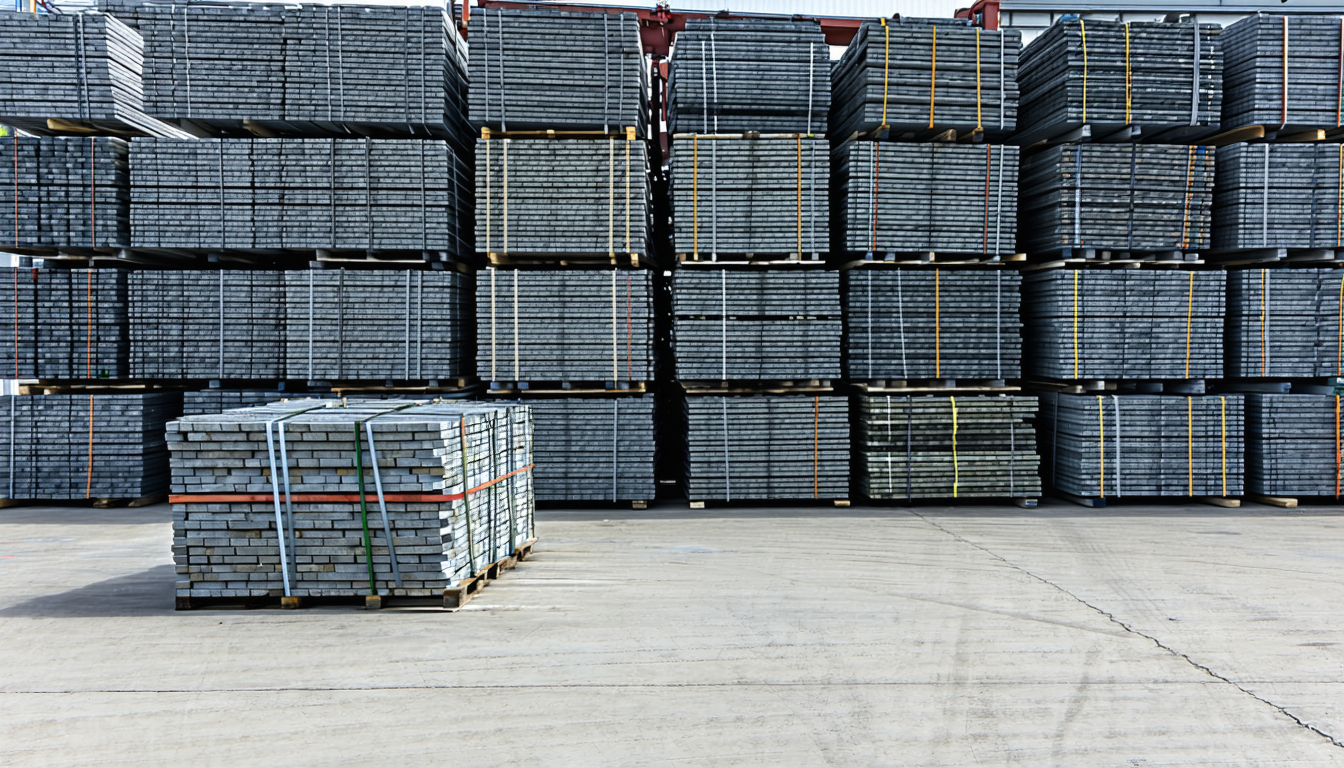
- Korean steelmakers exported about 483,500 tons of rebar to the U.S. in the first half of this year, more than 33 times the roughly 14,500 tons shipped in the same period a year earlier.
- Rebar is one of the most widely used steel products in building structures such as data centers.
- A data center is typically estimated to require 180,000 to 200,000 tons of steel per gigawatt of capacity.
Compiled by The InvestorSomething wrong?How this is made
Why it matters
Korean steelmakers exported about 483,500 tons of rebar to the United States in the first half of this year, more than 33 times the roughly 14,500 tons shipped in the same period a year earlier, according to the Korea Iron & Steel Association [3]. For an industry that spent years squeezed between weak demand and Chinese oversupply [1], the AI data center build-out is now the demand story management teams are organising around, and the market is starting to price these names on order books rather than on spot steel [1][6][8].
Take the multiple apart first. The prior-year base of 14,500 tons is about 3 percent of this year's volume [20], so 33x is arithmetic off close to nothing rather than evidence of a structural share gain. The source also stops short of attributing the surge to data centers specifically: it says rebar is one of the most widely used products in building structures such as data centers [4]. A useful scale check is the industry rule of thumb that a data center requires 180,000 to 200,000 tons of steel per gigawatt of capacity [5]. Even if every ton of that were rebar, the half-year US shipment covers only about 2.4 to 2.7 GW [24]. This is a real volume, not a wave.
The corporate commitments are more concrete than the trade data. Hyundai Steel set up a task force in March aimed at next-generation power infrastructure and has since won seven contracts to supply steel for AI data centers [6], and told an earnings call this month it would push a "total package" strategy spanning rebar, section steel, hot- and cold-rolled products and heavy plate [7]. POSCO created a dedicated AI transformation organisation last month [8], is developing specialty steel for cooling-water tanks and thermal insulation sold with application solutions [9], and is accelerating electrical steel sheets for transformers and humanoid actuators [10]. Its target is to lift AX-market sales from 380,000 tons last year to 520,000 tons in 2028 and 1 million tons in 2030 [11] - a 2.6x increase, with the harder part back-loaded, since 520,000 to 1 million requires 92 percent growth in two years [21]. At the per-gigawatt rule of thumb, 1 million tons is the total steel content of roughly 5.0 to 5.6 GW [22]. Dongkuk Steel says its in-house D-MegaBeam welded section steel is running two to three months behind on orders, according to industry accounts cited in the report [12].
The petrochemical leg is thinner. LG Chem reversed a plan to cut separator line utilisation as ESS demand grew [14], and its advanced materials division posted a 19.9 billion won ($14.4 million) second-quarter operating profit, back in the black [15]. Annualised, that is roughly 80 billion won [25]. SKC hit a record 254 billion won in quarterly revenue on copper foil [17]; Lotte Chemical is moving into ESS housings, electrolyte solvents and vanadium-ion batteries [16]. Meanwhile Samsung E&A booked about 7.6 trillion won ($5.5 billion) of power infrastructure orders in the first half alone [18], and SK ecoplant is assembling power, telecom and cooling experience on the SK Ulsan AI data center project [19].
Watch three things. Whether second-half US rebar volumes hold once the base normalises; POSCO's 520,000-ton 2028 milestone, the first falsifiable checkpoint on the 2030 number [11]; and Korean government project awards, which Mirae Asset Securities analyst Kim Ki-ryong ties directly to order growth, saying orders will increase gradually as the three mega-projects are announced and large AI data centers are built [13]. Note also that the dollar figures are conversions at an implied rate near 1,382 won [23], from a report the publisher says was machine-translated from Korean [26].
Claim ledger
Ranked by verification strength, evidence, and original report placement.
- [1]
South Korea's steel and petrochemical industries, long squeezed by a weak market and a glut of Chinese supply, are seeking to bounce back by riding surging global demand for AI infrastructure.
- [2]
The global AI infrastructure market is expected to keep growing more than 20% a year.
- [3]
Korean steelmakers exported about 483,500 tons of rebar to the U.S. in the first half of this year, more than 33 times the roughly 14,500 tons shipped in the same period a year earlier.
- [4]
Rebar is one of the most widely used steel products in building structures such as data centers.
- [5]
A data center is typically estimated to require 180,000 to 200,000 tons of steel per gigawatt of capacity.
- [6]
Hyundai Steel (004020.KS) set up a task force in March to target the next-generation power infrastructure market and has since won seven contracts to supply steel for AI data centers.
Sources & coverage · 1 publisher
The reporting this story was synthesized from, earliest first. Every link goes to the original.