Published Build3 min read
Zaporizhzhia utility starts building its own 35 kV disconnectors rather than queue for them
Zaporizhzhiaoblenergo says supplier batches can take months while strikes on its substations have tripled, so it built the tooling and tested a first prototype in-house.
Written for builders.See today for builders
What happened
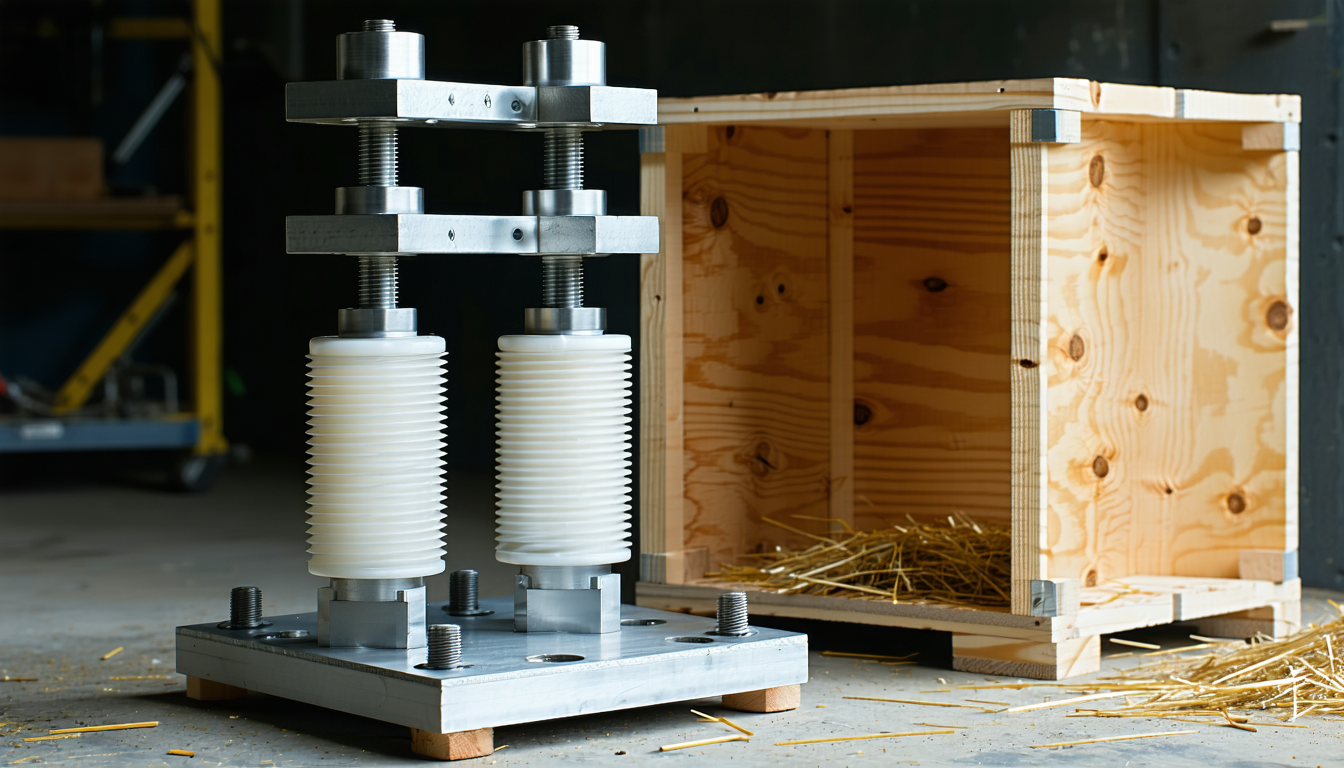
- JSC Zaporizhzhiaoblenergo has started manufacturing disconnectors rated at 35 kV, intended for high-voltage substations. The new production direction is the first in the enterprise's history.
- The announcement was made in a Telegram post by Andrii Stasevskyi, head of the company.
- Stasevskyi said the need for disconnectors is currently high, while supply of new batches of equipment from manufacturers can be delayed by several months.
- Stasevskyi: 35 kV disconnectors are switching devices necessary for the coordinated operation of equipment installed at a substation, so their damage causes a failure in the functioning of the entire energy facility and, as a consequence, blackouts for between several thousand and tens of thousands of consumers.
- Disconnectors are key switching equipment at substations, and the operation of other elements of an energy facility depends on their working order.
Compiled by The EngineerSomething wrong?How this is made
Why it matters
JSC Zaporizhzhiaoblenergo has begun manufacturing 35 kV disconnectors for high-voltage substations, the first production line of its kind in the company's history, according to chief executive Andrii Stasevskyi in a Telegram post [1][2]. The stated reason is queue length: Stasevskyi says demand for the part is currently high while deliveries of new batches from manufacturers can stretch to several months [3].
The part is unglamorous and load-bearing. Disconnectors are switching apparatus required for the coordinated operation of equipment installed at a substation, so damage to one disrupts the functioning of the whole facility and can cut power to between a few thousand and tens of thousands of consumers, according to Stasevskyi [4]. The working order of other elements at an energy site depends on them [5].
The demand side is not speculative. Six strikes were recorded on Zaporizhzhia substation sites from the start of August, which the company says is three times last year's average [6]. Taken at face value, that implies a comparable prior-year baseline of about two [1], though the source does not specify the period the average covers. Protective structures help reduce the scale of damage in most cases, but substation equipment remains under threat of attack [7].
What exists so far is a capability, not a volume. The company created the necessary production base and developed new design documentation, and the first experimental unit passed testing the day before the announcement, with mass production named as the next stage [8]. Nothing has been published on unit cost, planned output rate, or how many disconnectors the network actually needs, so the claim that in-house builds will shorten substation repair time and speed restoration after shelling [9] is a forecast rather than a measured result.
This is the second such move rather than a one-off. The utility launched its own transformer production last year [10], which makes disconnectors the second in-house line stood up in roughly a year [2]. The wider supply picture supports the logic: DTEK chief executive Maksym Tymchenko has said 30 to 40 percent of transformers arriving in Ukraine come from China because European manufacturing capacity is short [11]. When the nearest source of a critical component is a continent away, a workshop with drawings and a test bench starts to compete on lead time even if it cannot compete on unit price.
The repair load is continuous. Over one weekend, Russian shelling damaged Zaporizhzhiaoblenergo networks including package transformer substations and overhead lines, with crews laying backup lines and gradually returning supply to thousands of households [12]. On the temporarily occupied territory of Zaporizhzhia oblast, large-scale damage to energy infrastructure has left most subscribers without electricity [13].
Three things to watch. First, whether mass production gets a date and a monthly unit figure, because a single tested prototype and a serial line are different assets. Second, whether the design documentation the company wrote [8] travels to other regional operators facing the same wait, or stays a Zaporizhzhia-only fix. Third, whether the strike tempo of six hits since the start of August [6] continues, since the case for owning the tooling rests on the assumption that these parts will keep being consumed rather than merely stocked.
Claim ledger
Ranked by verification strength, evidence, and original report placement.
- [1]
JSC Zaporizhzhiaoblenergo has started manufacturing disconnectors rated at 35 kV, intended for high-voltage substations. The new production direction is the first in the enterprise's history.
- [2]
The announcement was made in a Telegram post by Andrii Stasevskyi, head of the company.
- [3]
Stasevskyi said the need for disconnectors is currently high, while supply of new batches of equipment from manufacturers can be delayed by several months.
- [4]
Stasevskyi: 35 kV disconnectors are switching devices necessary for the coordinated operation of equipment installed at a substation, so their damage causes a failure in the functioning of the entire energy facility and, as a consequence, blackouts for between several thousand and tens of thousands of consumers.
- [5]
Disconnectors are key switching equipment at substations, and the operation of other elements of an energy facility depends on their working order.
- [6]
Since the start of August, six strikes were recorded on the territory of Zaporizhzhia substations, which is three times higher than last year's average indicator.
Sources & coverage · 1 publisher
The reporting this story was synthesized from, earliest first. Every link goes to the original.
- mezha.netyaroslavAug 14Запоріжжяобленерго розпочало виробництво роз’єднувачів 35 кВ для швидшого відновлення підстанцій
Cited in this coverage: mezha.net, citing Andrii Stasevskyi
Cited in this coverage: mezha.net
Cited in this coverage: Andrii Stasevskyi via mezha.net
Cited in this coverage: Maksym Tymchenko via mezha.net