Product1 publisher2 min readPublished
Singular Photonics' Litavis times photons at one sixteenth of the resolution it counts them
Singular Photonics says its new Litavis sensor counts, times and histograms photons inside the pixel array, so less raw data leaves the chip. Its first buyers will be the ones to measure how much less.
The Product Desk · Product desk
What happened
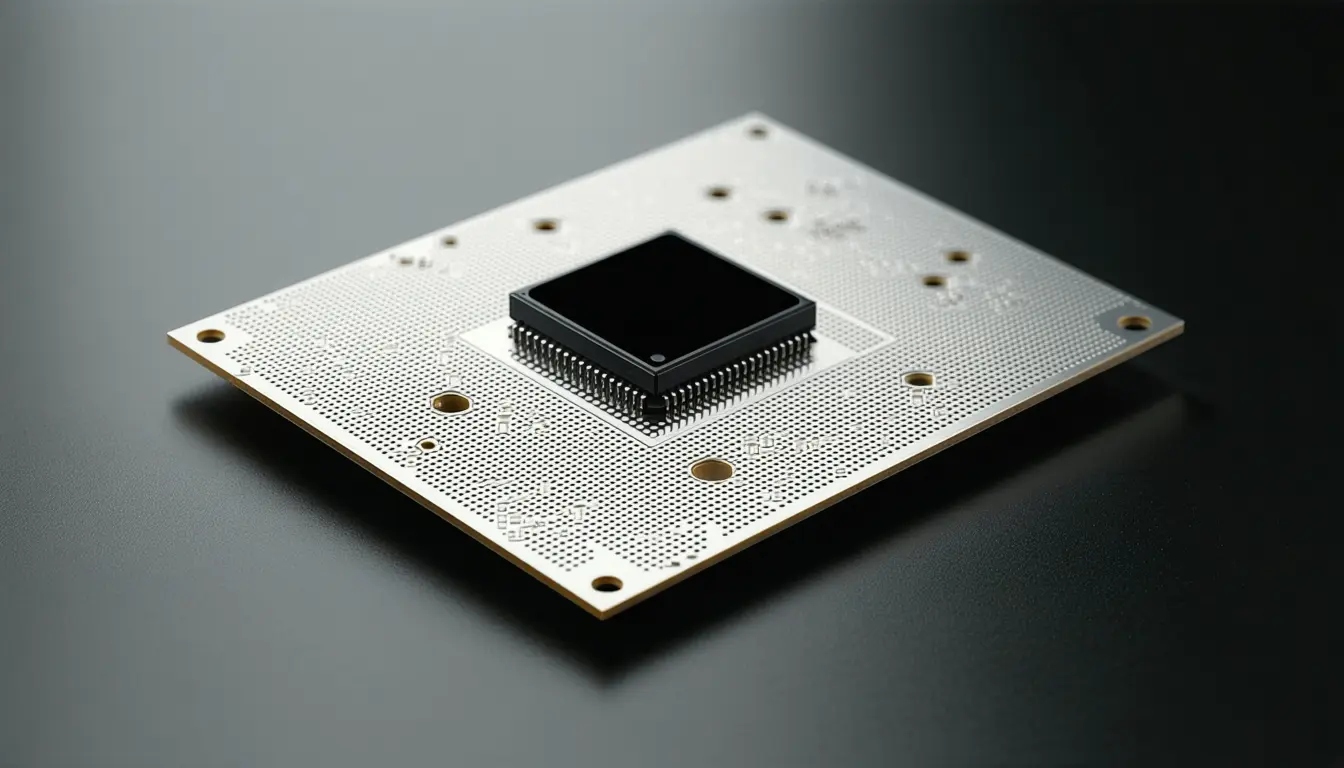
- Singular Photonics, based in Edinburgh, launched Litavis and describes it as the first SPAD image sensor to combine imaging, timing, histogramming and photon statistics with the processing inside the pixel array.
- The sensor produces a continuous low-light photon-counting image while timestamping photon arrivals at picosecond resolution, and can assign several photons from a single excitation cycle to separate time bins.
- The company says the same hardware can be reconfigured for different imaging tasks without a new sensor design, and expects that to cut the number of separate sensor architectures developers build.
- Singular Photonics describes its international pre-orders as significant, and will demonstrate the sensor at SPIE Sensors + Imaging in Edinburgh and later at VISION in Stuttgart.
Compiled by The Product DeskSomething wrong?How this is made
Why it matters
- decision A team can commit to the hardware before it has settled its acquisition mode, moving the decision that usually goes wrong out of procurement and into firmware.
- cost The pre-order customers pay the evaluation cost, because they will be the first to measure the data-transfer and power saving against whatever off-chip setup they run now.
- capability Fluorescence lifetime imaging, dynamic light scattering and quantum sensing work can share a board with an ordinary low-light camera, according to the company's account of what in-pixel histogramming supports.
- constraint The promised shorter development cycles only accrue to groups whose next several projects all fit inside one timing geometry; the project that does not fit still needs its own sensor.
Litavis runs its continuous photon-counting image at 256 x 256 and puts the timestamped events on a 64 x 64 macropixel grid [3][4]. That is 65,536 counting pixels feeding 4,096 timing channels, so one timing channel covers a 4 x 4 block of 16 pixels [15].
Whether one sixteenth is enough depends on what the timing is for. Depth sensing sits on the company's own list of target uses, alongside machine vision, robotics, spectroscopy, medical imaging and quantum technologies [14]. A designer who needs a range value at every one of those 65,536 pixels will not get it here, and reconfiguration does not change pixel geometry [7].
The configurability covers acquisition. Modes include photon-counting imaging, programmable time gating, several time-to-digital converter configurations, time-correlated single-photon counting, coincidence detection, and timestamping combined with imaging [5]. If a team changes its mind about time gating after the first prototype, it edits firmware [7].
Singular Photonics says keeping part of the analysis inside the sensor cuts data transfer requirements and delivers lower latency and better power efficiency [6]. Until a customer measures a working system, the case rests on the specification and the mode list. The company did not publish figures for any of the three [16].
Shahida Imani, the chief executive, said Litavis "combines the sensitivity advantages of SPAD technology with the adaptability and scalability increasingly required by modern multimodal imaging" [11].
Coarse timing plus an unsettled mode describes the buyer this part was built for. Coarse timing plus a mode frozen two years ago means the reconfigurability gets set once and never touched again. Per-pixel timing puts a designer back on custom silicon whatever the mode list says. I would expect buyers in the first group to settle on two or three modes after their first prototype and stay there. The saving then lands in development time. Singular Photonics frames the benefit the same way, as shorter development cycles [8].
What to watch
- A customer at SPIE or VISION publishing measured data rate and power numbers against an off-chip TCSPC rig.
- Any disclosure of price, sample availability, or how many pre-orders the company is actually holding.
- A follow-on part that raises the 64 x 64 timing grid closer to the counting resolution.