Science1 publisher2 min readPublished
One Huntington variant concentrates very large repeat expansions in the neurons that die
Carriers of the CAG-CCG loss-of-interruption variant start having motor symptoms up to 12.5 years earlier than other Huntington patients. A UBC-led team measured the long expansions in their isolated striatal neurons, and saw no matching signal in blood.
The Scientist · Science desk
What happened
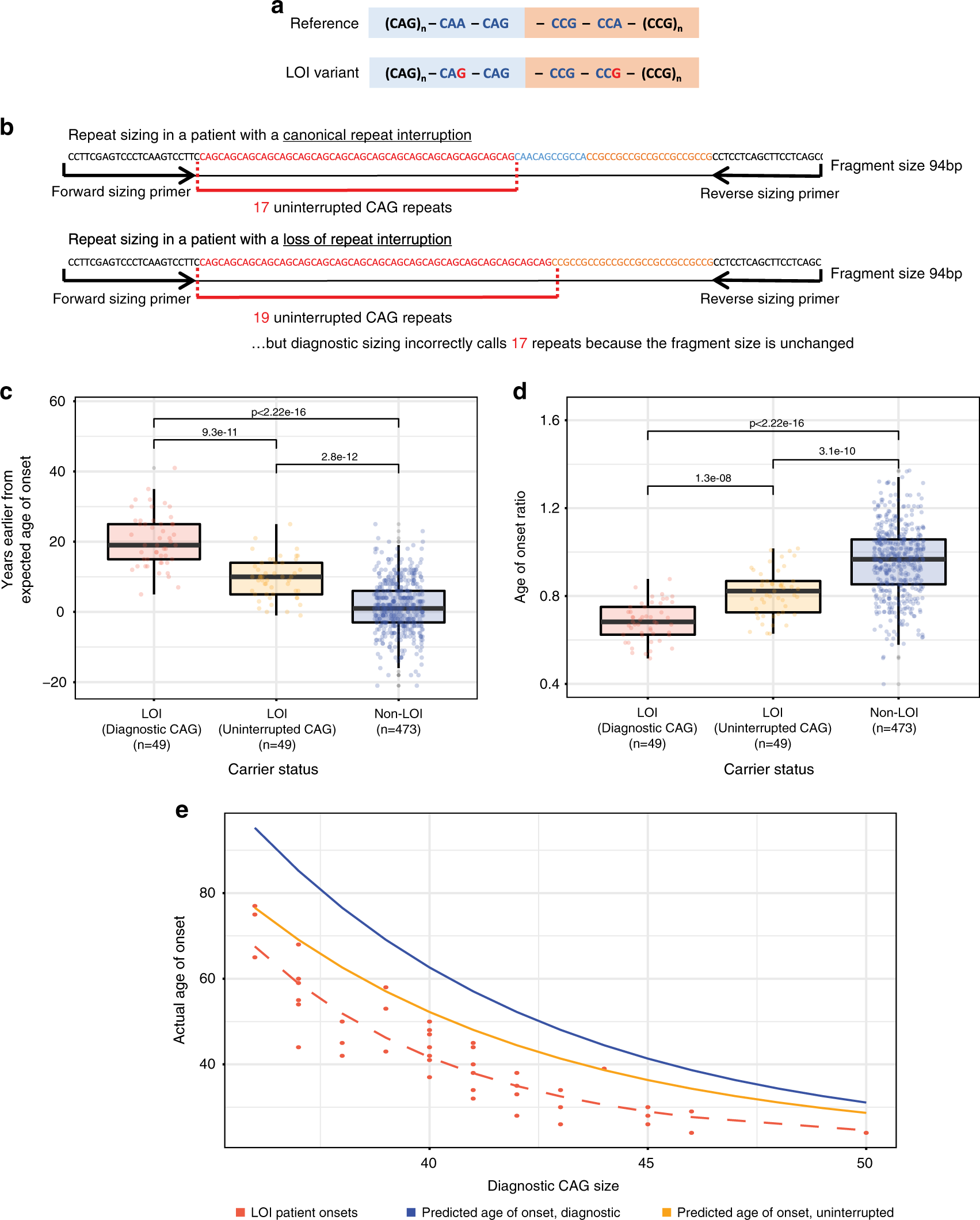
- A UBC-led team reports in Neuron that the CAG-CCG loss-of-interruption variant in HTT hastens the onset of Huntington motor symptoms by up to 12.5 years and speeds clinical measures of progression.
- The researchers measured somatic HTT CAG expansion in peripheral blood, post-mortem brain tissue and isolated medium spiny neurons from patients with and without the variant, and counted neuron loss in the caudate of carrier donors.
- Inside carriers' neurons, the larger expansions of the Huntington mutation turned up about five times more often than in patients without the variant.
- Carriers also had fewer surviving neurons and lost the most vulnerable nerve cells earlier than patients with the canonical repeat sequence.
Compiled by The ScientistSomething wrong?How this is made
Why it matters
- constraint Blood is the tissue a trial can sample repeatedly, and in these donors it showed no increase in expansion from the variant. A somatic expansion readout taken from blood would not report what the variant does in striatal neurons.
- capability Onset timing depends partly on a process that continues inside neurons through life. A therapy that slowed expansion would have something to act on, which an inherited repeat count fixed at conception does not offer.
- decision Any study comparing onset ages across Huntington cohorts now has a reason to genotype the interruption, because a small carrier subgroup can move a group mean by years.
Inherited repeat length is the number the field measures. Thirty-six or more uninterrupted CAG repeats in exon 1 of HTT cause Huntington disease, and the inherited count is the primary determinant of when symptoms appear [6]. The expansions the UBC group counted in affected striatal medium spiny neurons sit well above that. Their large category begins at 111 repeats and the very large one above 150 [9], about three times the 36-repeat threshold at the low end and more than four times at the high end [16].
None of that length is inherited. The repeat keeps expanding inside neurons over time, and as it grows it interferes with normal cell function and leaves the cell more open to damage and death [17]. The mutation sits in every cell of the body, and the damage is concentrated in the brain [19]. "The mutational expansion seems to be selective for the brain," said Michael Hayden, a professor at UBC's Centre for Molecular Medicine and Therapeutics and the paper's senior author [13][3].
The paper's title says the loss of interruption is "associated with" increased somatic expansion and loss of medium spiny neurons [1]. Brain measurements came from post-mortem tissue [8], a single point at the end of the illness, so the data do not establish whether the long expansions preceded the cell loss. Hayden argues the direction. "When we looked at the neurons that are dying in Huntington disease, we saw much greater expansion of the genetic mutation. This continues to strengthen the argument that DNA expansion is an important cause of disease," he said [12]. Before this work, how somatic expansion related to medium spiny neuron pathology was unclear [7]. The report does not give the number of donors.
That a small group of Huntington patients carry this variant and develop the disease earlier has been known for years [15]. What the study adds is a place to look for the reason, and a process to aim at. "This work answers that question and provides dramatic evidence that repeated expansion of the mutation is an important driver of Huntington disease and a potential treatment target," Hayden said [5]. There is currently no cure for Huntington disease and no treatment that slows its progression [14].
What to watch
- Whether an independent cohort reproduces the MSN expansion difference with donor counts reported and inherited repeat lengths matched between carriers and non-carriers.
- Whether any candidate drug aimed at slowing somatic expansion can show an effect in striatal neurons, given that blood does not register the variant's effect.
- Whether Huntington trial protocols begin genotyping the CAG-CCG interruption at enrolment.