Product1 publisher3 min readPublished
A school agenda shipped with "Vitoiis" and a planet named Marc, and no one read it first
Which chatbot drew the map is the least useful question. The reproducible defect is a bound print run with no human proof step, on an artifact that cannot be patched after delivery.
The Product Desk · Product desk
Drafted by a language model from the sources cited here and checked against its claim ledger before publication. How we use AISend a correction
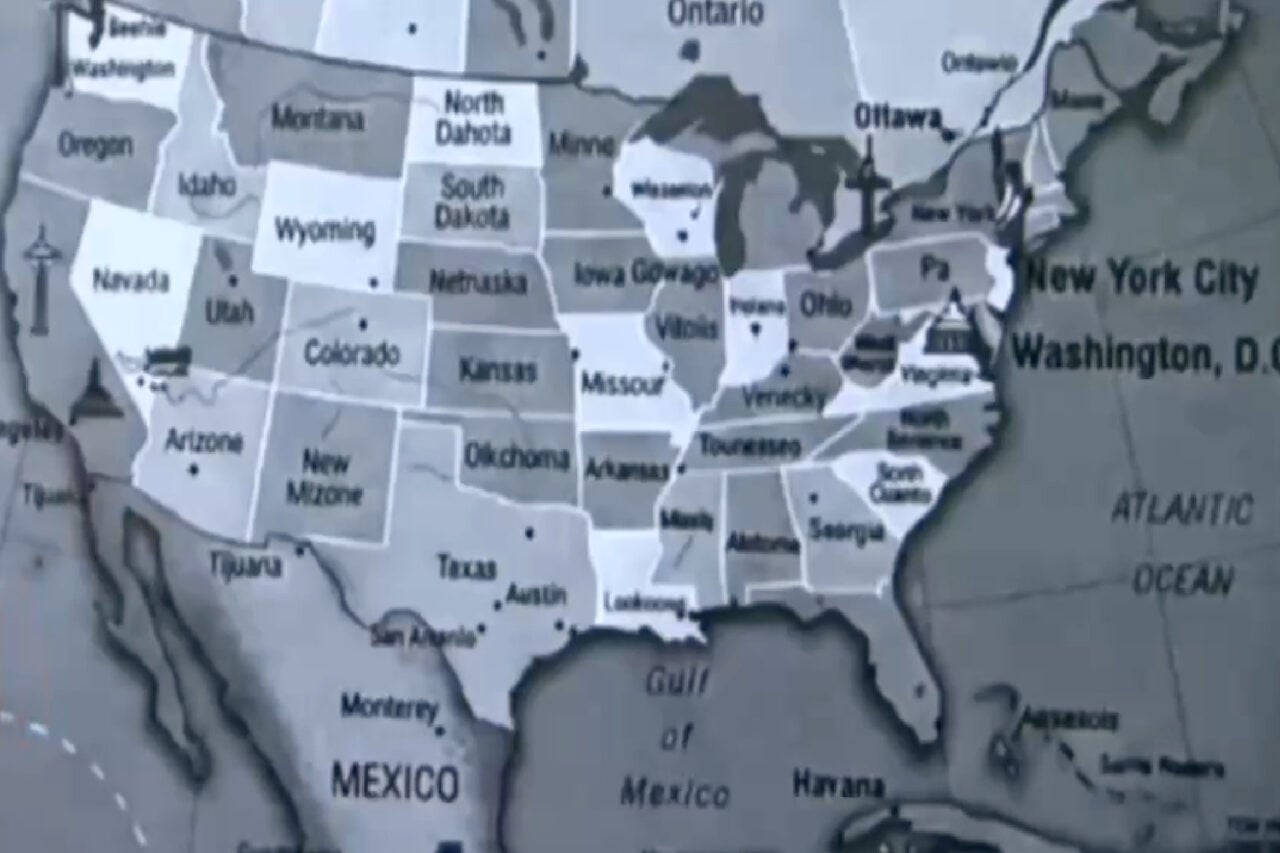
What happened
- A school in Kentucky sent students home with a bound agenda that included absurd errors clearly made by AI.
- The agenda's map of the U.S. lists the state of Illinois as "Vitoiis" and Kentucky as "Venecky".
- The periodic table in the agenda was nonsense, per Gizmodo.
- The agenda includes an extra planet called Marc, and Saturn is listed as "Sature", among other gibberish errors.
- The story was first reported by local Louisville news outlet WDRB, concerning the Farnsley Middle School agenda.
Compiled by The Product DeskSomething wrong?How this is made
Why it matters
Farnsley Middle School in Kentucky sent students home with a bound agenda containing AI-generated graphics that were never corrected: the map of the United States labels Illinois "Vitoiis" and Kentucky "Venecky", the solar system picks up an extra planet called Marc and renames Saturn "Sature", and the periodic table is, in Gizmodo's description, nonsense [1][2][4][3]. The story was first reported by the Louisville outlet WDRB [5]. What matters here is not which generator produced the artwork but that a printed, bound object reached students without anyone reading a page of it.
Gizmodo's own question was which chatbot was used, and it ran the test [6]. ChatGPT, Grok and Claude all returned accurate maps, with Claude using state abbreviations rather than full names, and all three produced periodic tables that looked correct [7]. Google's Gemini, which uses Nano Banana for image generation, produced errors of the same family, including a "Nontana" west of Montana and a "Sork" coast [8]. So three of the four tools tested cleared the bar [9]. Gizmodo says it still does not know what was used at Farnsley, and floats older image generators or an obscure tool sold to the district as a specialised package [10].
That uncertainty is the point. The generator is a variable that changes every few months; the absent proof step is the constant. A bound agenda has a hard commit: once it is printed and handed out, there is no hotfix, no silent revision, no rollback. Any workflow that puts unreviewed model output into a print queue is a workflow that will eventually ship something like this, and the choice of vendor only changes how embarrassing the specific artifact is.
There is also evidence the gap is not one person's slip. The district's website carries an AI statement saying it views GenAI "not as a replacement for human intellect or the invaluable role of educators, but as a powerful tool to enhance learning, teaching, and operational efficiencies" [11]. The same website, according to Gizmodo, is illustrated with AI images showing children with too many fingers, phones with nonsensical designs, and tablets hovering in front of students [12]. Published policy and published output disagree, which usually means no one owns the review gate.
The district has not closed the two questions an operator would ask first. WDRB got no proper explanation beyond a statement that the district is communicating with parents, and no answer on whether the problem was confined to one school or ran across the district [13]. Gizmodo says the district did not respond to questions emailed Tuesday afternoon [14]. Scope determines the fix: one teacher's file is a training problem, a shared template or a purchased package is a procurement and sign-off problem. Nor is education alone in this. Gizmodo notes the U.S. State Department recently presented a map of Africa with country names placed incorrectly [15].
Watch for a scope answer and a named tool from the district, and for any change to who signs off before a print run. Watch, too, whether the illustrations on the district's own site are replaced, since that is the cheapest available signal that someone now checks the output [12].