Product1 publisher3 min readPublished
PJM can now reach inside the fence, and your grid signal is a production change
A one-week DOE emergency order let PJM direct backup generation and storage at large-load sites. Operators who log that as a facilities event have mislabelled a live change to service state.
The Product Desk · Product desk
Drafted by a language model from the sources cited here and checked against its claim ledger before publication. How we use AISend a correction
What happened
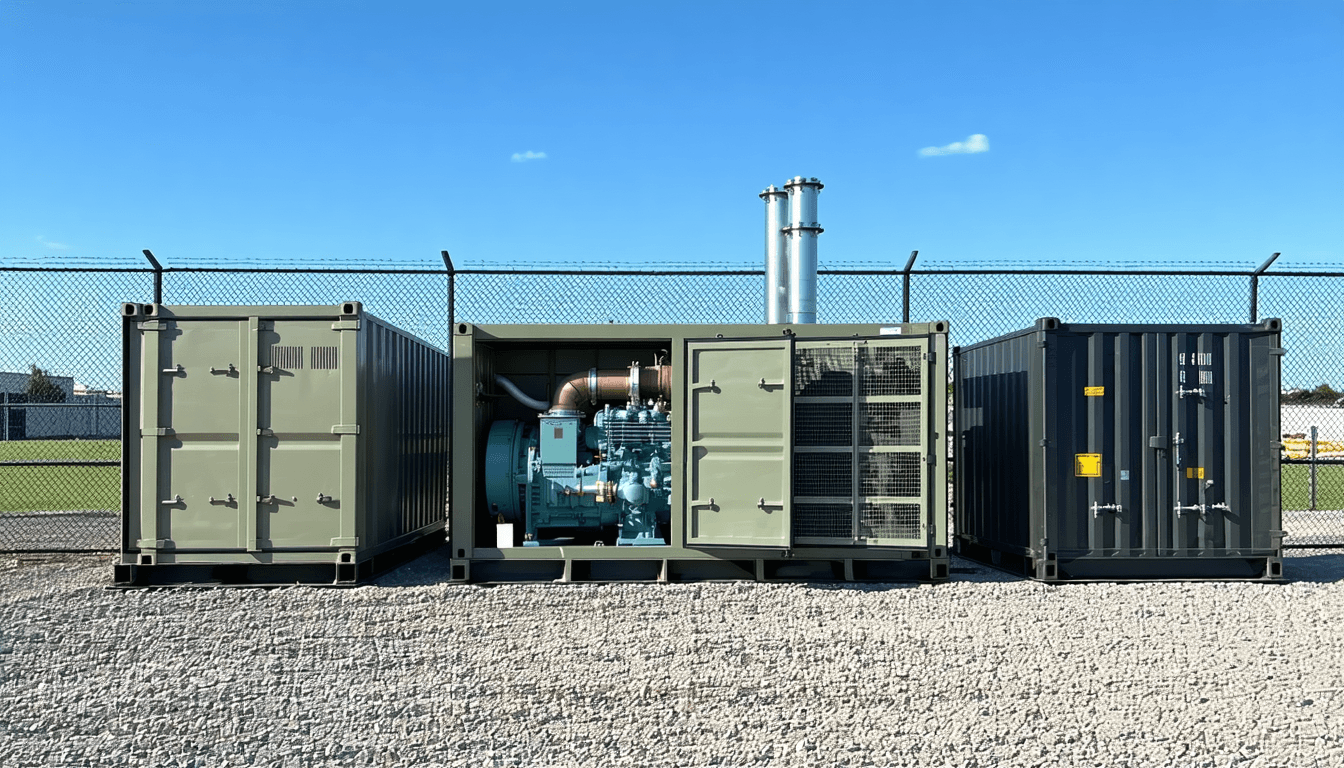
- On July 14, 2026, the US Department of Energy temporarily authorized PJM Interconnection to direct eligible backup resources at large-load sites, including data centers, as a last resort before firm load interruption or during an Energy Emergency Alert Level 3.
- The emergency order covered auxiliary, standby and directly connected generation, battery storage and other backup resources, while excluding assets serving a critical reliability or backup need.
- The order set a one-week term, through July 21, unless renewed.
- The order did not allow PJM simply to switch off servers.
- During the emergency conditions covered by the order, an eligible backup resource at an affected site was no longer exclusively internal; external authority could require a change in live electrical state inside the site boundary.
Compiled by The Product DeskSomething wrong?How this is made
Why it matters
On July 14, 2026, the US Department of Energy temporarily authorized PJM Interconnection to direct eligible backup resources at large-load sites, including data centers, as a last resort before firm load interruption or during an Energy Emergency Alert Level 3 [1]. The order did not permit PJM to switch off servers [4], but it did mean an external authority could require a change in live electrical state inside the site boundary [5], which is a change to service state regardless of which queue it lands in.
The scope was specific: auxiliary, standby and directly connected generation, battery storage and other backup resources, with assets serving a critical reliability or backup need excluded [2]. The term was one week, through July 21, unless renewed [3] - a seven-day window [22]. Short duration is not the same as low consequence. As the DataCenterDynamics opinion piece that flagged the order argues, once an authorized instruction can start generation, discharge storage, change cooling or reschedule compute, it has crossed into production control and should be governed as a production change, because the response can consume reserve, alter customer performance, or change the recovery path after a fault [6].
The mismatch is structural. Data center power architecture is designed inward from the meter: condition power, carry critical load through disturbances, preserve service [7]. The grid sees available megawatts; the site may see a power train under maintenance, protected UPS reserve, no cooling margin, and a tenant who never authorized workload movement [8].
Similar hardware does not carry the same operating contract [10]. A grid-facing BESS can respond fast when state of charge, reserve floor and interconnection allow it, while a UPS battery's first duty is continuity of critical load [9]. Standby generators are not automatically continuous or market-participating generation [11]. Cooling can borrow thermal inertia, but operating conditions and the later rebound bound it [12]. Moving a batch job is not instantaneous curtailment, and accepted demand response is not involuntary load shedding [13].
Contracted flexibility is also not delivered flexibility. In March 2026 Google said it had integrated one gigawatt of data center demand response into long-term US utility contracts by limiting or shifting part of its machine-learning workloads, while also saying that flexibility was limited and available only at certain locations [14]. That is contracted capacity, not a delivery record [15].
The useful distinction is between envelope and permission. A technical flexibility envelope describes what a site can sustain within equipment and recovery limits, which is capability; permission comes from the live state, meaning equipment health, maintenance, weather, fuel or battery state, protected reserves, eligible workloads and customer terms [16]. A two-hour reduction that is safe with full storage and schedulable compute becomes unsafe with a generator down or a customer workload near deadline, with no hardware change at all [17].
Ireland shows where this ends up as a standing dependency. Under the regulator's December 2025 policy, some qualifying data center connections of ten MVA or more must link covered demand to dispatchable generation or storage, and the nominated asset must be delivered before the covered load can come online or ramp [18]. EirGrid's transmission process records an active judicial review [19].
Watch three things: whether DOE renewed the PJM authorization past July 21 [3], the outcome of the Irish judicial review [19], and whether any large operator publishes delivered response against contracted megawatts [15]. Internally, the test is whether an accepted grid response has a named approval owner, defined exclusions, maximum duration, ramp, protected reserve, abort trigger and recovery path [20]. A contract does not make unavailable reserve safe to use [21].