Leadership1 publisher3 min readPublished
Attribution now sees only the 32% of Google searches that end in a click
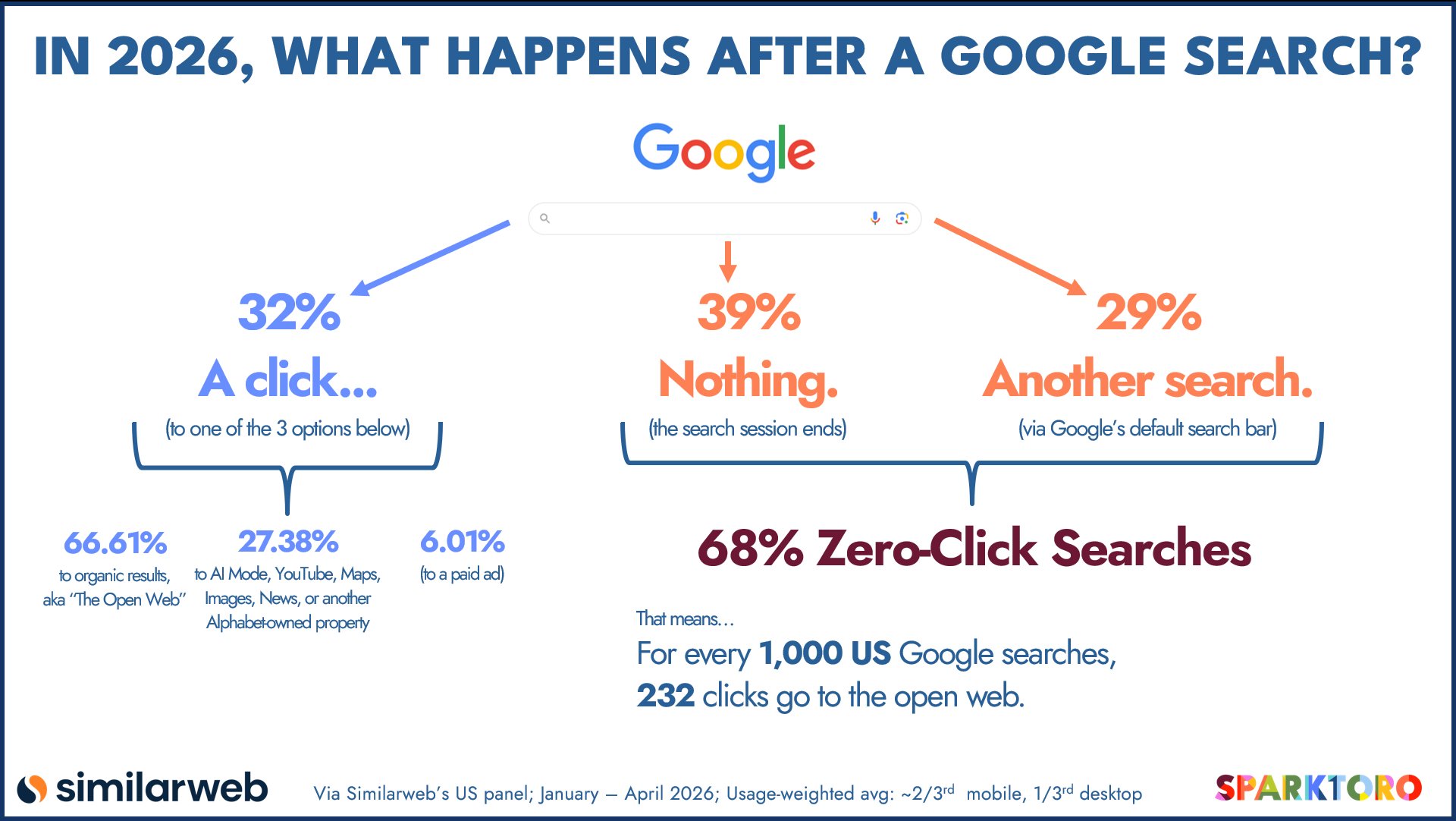
A call-tracking CEO puts zero-click searches at 68% of Google queries in the first four months of 2026 and blames AI overviews. The gap he describes is older than the trend, and the fix he proposes reaches only part of it.
The Board Room · Leadership desk
What happened
- He names Google's AI overviews, the AI-written summaries placed at the top of many results pages, as the main driver, because the summary answers the question the searcher came with.
- Phone calls were already an afterthought in most companies' reporting, if they were counted at all, before any of the zero-click trend began.
- The remedy he sets out is dynamic number insertion, which swaps the phone number shown on a page according to how the visitor arrived so an inbound call can be tied to a campaign.
Compiled by The Board RoomSomething wrong?How this is made
Why it matters
- decision Credit accrues to channels that still produce a traceable visit or form fill. A reallocation made on current reports moves money toward what reports well, and that choice is being made on this quarter's dashboards.
- cost This material does not size the misallocation. A CFO approving a shift in channel spend is pricing an error nobody has measured.
- exposure The diagnosis arrives from someone who sells the prescribed category, so a reader weighing the fix has to discount for the seller while still accounting for the 68%.
Dynamic number insertion changes the phone number on a web page according to how the visitor reached it, so an inbound call can be traced back to the ad, campaign or search term that sent them [8]. The technique needs a site visit. Fisher writes that fewer people now click through to websites before calling, and that "they're arriving already sold on an AI summary they've read" [11]. Someone who read the answer on the results page and dialled from there never loads the page that would have swapped the number. So the method recovers calls from sessions analytics already logged, and the zero-click caller sits outside it.
Take the headline figure at face value. If 68% of Google searches in the first four months of 2026 ended without a click [1], then 32% produced one [13]. Click-based reporting prices that 32%. Fisher also puts the share of searchers who read the summaries at the top of results at 60%. He reports that about half of U.S. adults now use AI chatbots, up from a third in 2024, a rise of roughly 17 percentage points in two years [4][5][14]. None of what happens inside a chatbot thread reaches a company's website analytics, he writes [6].
Budgets follow credit, and credit follows traceability. Google Analytics and HubSpot make it straightforward to tie a site visit or a form submission back to the ad or email that prompted it [17]. The channels that still generate those traces keep accumulating attributed revenue, while demand created in a summary or a chatbot thread has nowhere to land. Spend then moves toward whatever still reports. Fisher writes that the implications "directly impact how businesses allocate spend and evaluate marketing's ROI" [12].
The article states the figure without naming the study behind it or splitting it by search intent [15]. Without that split there is no telling how much of the 68% was ever commercial, and a weather lookup that ends on the results page costs a business nothing. The number therefore bounds how much search behaviour is visible and cannot size the revenue that went missing.
Fisher is co-founder and CEO of CTM, formerly CallTrackingMetrics, and the piece ran under the Forbes Technology Council [2][16]. The diagnosis and the product line sit on the same P&L. The diagnosis can still be right. His claim about the past is the more durable one: "The click was never the whole journey; it was just a piece of the pie that your tools captured" [10]. Phone calls were an afterthought in most dashboards, when counted at all, long before AI overviews existed [7].
That leaves a narrow choice this quarter, which is whether to reallocate budget on reports that now describe under a third of search behaviour [13]. How much of the untracked path converts is not in this material. The sequencing consequence is clearer: cut a channel on click evidence and next quarter's click evidence will agree with the cut, because the traffic you stopped buying is the traffic the report could see. Fisher's recommendation is to pair dynamic number insertion with multi-touch attribution, which credits each step to its specific source instead of the last click before purchase [9].
What to watch
- A zero-click rate broken out by commercial intent would show how much of the 68% ever mattered to a marketing budget.
- Whether call-tracking vendors ship a way to attribute calls placed with no site visit at all, which dynamic number insertion cannot reach.
- Whether analytics platforms start reporting chatbot-referred sessions as a named source alongside paid and organic search.