Invest1 distinct publisher3 min readPublished
The tips and overtime deductions run from 2025 through 2028, but the IRS only revised the forms for 2026, which leaves payers three filing years to report figures their pay statements do not currently isolate.
The Investor · Invest desk

Compiled by The InvestorSomething wrong?How this is made
Follow any of these and your For You feed starts watching them — no settings page required.
invest
IRS gives syndicated easements a permanent desk, and takes the settlement clock away1 distinct publisher
invest
IRS Swaps In FS-2026-14, Resetting The Working Text On The 163(j) Interest Cap1 distinct publisher
invest
Treasury's 10-Basis-Point Rule Turns Trump Accounts Into a Compliance Problem1 distinct publisher
invest
The $28,000 zero-tax IRA draw has a 2028 expiry date and a gap in its arithmetic1 distinct publisher
On a traditional time-and-a-half payment, the qualified portion is the additional half rather than the whole one-and-a-half [9], so $3,000 of gross overtime pay carries $1,000 into the new box, a third of the number the worker reads off the pay statement [3]. The IRS says as much in its instructions, warning that the reported amount is not necessarily all compensation earned during overtime hours [10]. A system that stores only gross overtime dollars cannot reconstruct that split the following January; the regular rate and the section 7 trigger have to be sitting in the record at the time of the run [9].
The occupation code is the harder field. Treasury and the IRS issued final regulations in April 2026, effective June 12, 2026, identifying more than 70 occupations in which workers customarily and regularly receive tips [11], which is 163 days into the tax year those codes describe [5]. Anyone who waited for the list booked five months of tips without the classification that decides whether they can support a deduction at all, and the code is a judgment about what a person does for a living rather than a sum of transactions [12].
The threshold moves the other way. Going from $600 to $2,000 is a 3.33x lift [2][1] that clears out a $1,400 band of payments which used to generate paper and now do not [2], and that is filing logic: the payment is still recorded, the decision about whether a form goes out simply changes. The eight new fields across the 1099-NEC, 1099-MISC and 1099-K are the capture change [6][7][8][4], and capture is the expensive one, since it reaches back into how hours and tips are coded at entry rather than how totals are filtered at year end. Or rather, the more interesting version is that the two changes land on different teams on different calendars, with the cheap one visible to management and the costly one buried in a payroll configuration nobody presents.
This plays out differently depending on which lever moves first. H.R. 1 was signed on July 4, 2025, after systems were already running for the year, and the IRS responded with transition relief and unrevised forms [5], so a second year of accommodation is not a fantasy, in which case early capture spend bought optionality rather than compliance. Sections 224 and 225 also tie both deductions to what was reported to the taxpayer [13], which pushes the work onto preparers reviewing intake rather than onto payers, at least for one season. And the deductions generally run for tax years 2025 through 2028 [4], and with 2025 unreported at the box level that leaves three filing years to amortise the build [6], which is a short life for anything requiring a data-model change.
This is probably wrong, but the view here is that the occupation code is the harder failure point than the arithmetic: a premium calculation is deterministic once the rate is stored, while classifying a worker into one of 70-plus Treasury categories is a policy decision made at scale by whoever runs onboarding [11][12]. What would falsify it is volume. If the $2,000 floor removes more filings than the new fields cost to wire, the net systems bill is negative and this is a quiet win for accounts payable; the source describes the increase as applying to certain payments without enumerating them in the passage available [2], which is precisely the number that decides the sign.
Ranked by verification strength, evidence, and original report placement.
The Working Families Tax Cuts, or H.R. 1, created new federal income tax deductions for qualified tips and qualified overtime compensation, and behind those deductions sit new information-reporting requirements for the 2026 tax year.
The reporting threshold for certain payments has increased from $600 to $2,000.
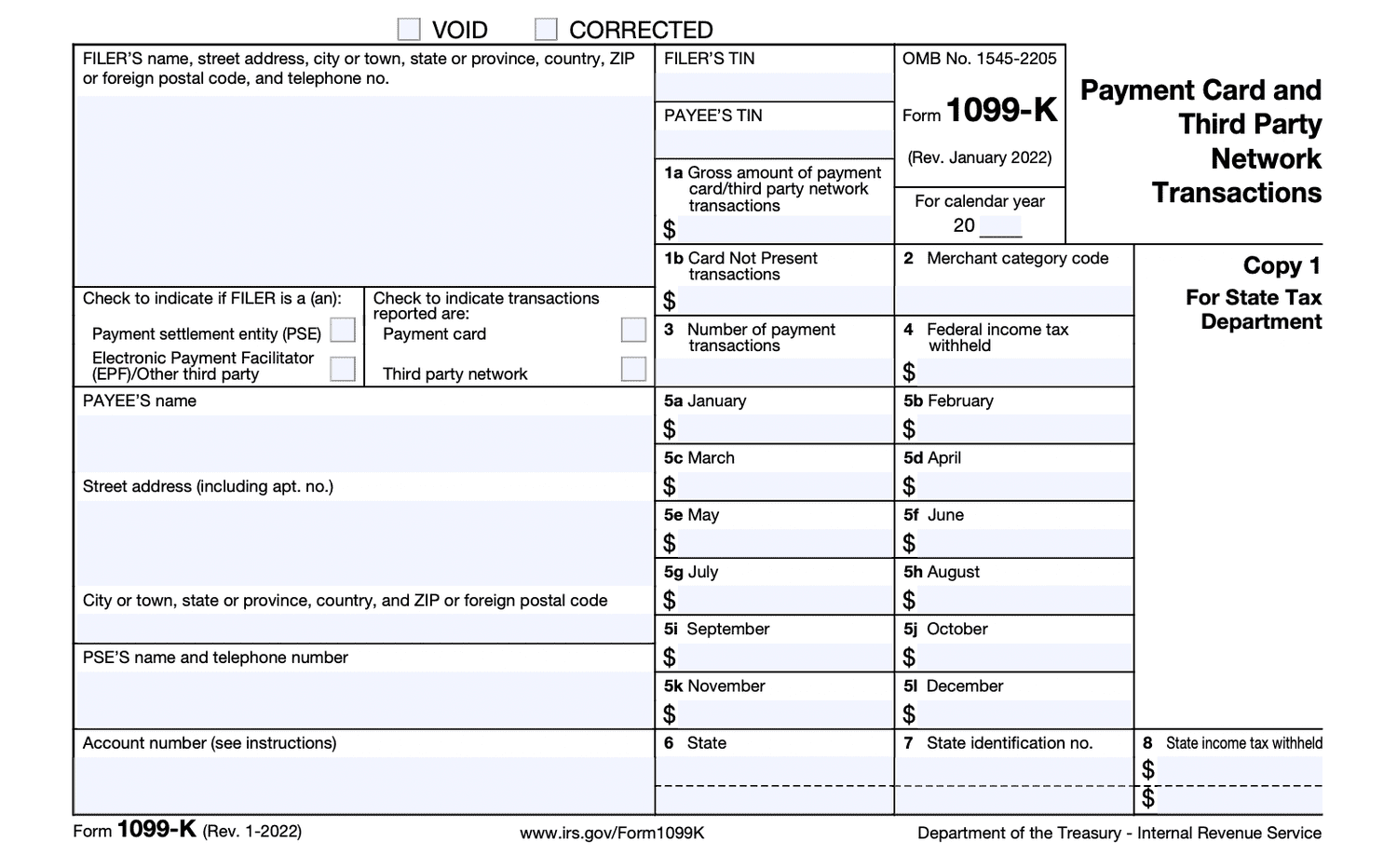
The IRS has updated Forms 1099-NEC, 1099-MISC and 1099-K for 2026 to separately report information related to tips and, where applicable, qualified overtime compensation.
The deductions for qualified tips and qualified overtime generally apply for tax years 2025 through 2028, subject to eligibility requirements and limitations.
The law was enacted on July 4, 2025, after payroll and reporting systems were already operating for the year; the IRS provided transition relief and did not revise Forms W-2, 1099-NEC, 1099-MISC or 1099-K to separately report the new information for 2025.
For 2026, Form 1099-NEC adds Box 1b for cash tips, Box 1c for Treasury Tipped Occupation Codes, and Box 1d for qualified overtime compensation.
Distinct publishers with included, body-backed reporting in this cluster.
1 article · September 1, 2026
Evidence-backed comparisons of source perspectives and observed adoption signals. Read the methodology
Which Builder, Operator, and Investor concerns the observed source mix emphasized—not a truth score.
Evidence, demonstrated adoption, hype gap, incentives, and confidence are assessed independently, each on its own current evidence. How these are measured.
Checkable anchors, one voice
Every fact this story leans on points at a public document a reader can pull: Box 1b through 1d on the 1099-NEC, OBBB section 70433 against IRC 6041, sections 224 and 225, the April 2026 final regulations. That is a firmer footing than most single-source stories get. What it lacks is a second reader — no IRS release is quoted at length, no practitioner is interviewed, and the text stops mid-sentence on the third-party network thresholds, which is precisely the thread that complicates the tidy '$2,000 floor' version of events.
Government side shipped, payer side unobserved
The only uptake anyone has actually observed is the government's own: the forms exist with the fields on them, and the occupation-code regulations are in force. On the side that matters for January 2027 filings — whether payroll, AP and payment platforms are capturing premium-only overtime and cash tips in 2026 records — there is not one data point here. And 2025 already ran with no separate reporting at all, so nobody can point to a prior year of practice to build on.
Our arithmetic is louder than the source
CPA Practice Advisor is notably unexcited: it describes changes, warns preparers twice against over-reading a label or a missing form, and makes no forecast. The amplification is ours. The 'eight boxes' headline count, the $1,400 dead band, the one-third overtime ratio and the 163-days-into-the-year framing are all figures we computed to make the burden feel sharp, and the word 'force' does work the reporting never does.
Written for the people who bill for the confusion
The audience is the tax practice, and the piece says so out loud — now is the time to understand this, consider how it affects client intake, keep client interviews and complete records as important as ever. That is advice aligned with billable review work, and an accounting trade title has an obvious interest in practitioners feeling underprepared. Against that: no product, platform or vendor is named anywhere, and the guidance runs toward caution rather than spend.
Verifiable, but nobody has verified it
We would bet on the box numbers and the statutory citations; they are too specific and too easily falsified to be loose. We would hold back on the shape of the story. Whether payers can produce these figures, how the higher floor interacts with the restored third-party settlement thresholds, and how the mid-year occupation-code regulations play against a full-year reporting duty are questions this single account raises and does not close.