Invest1 publisher3 min readPublished
The collapsed $6bn-$7bn deal is being read as a verdict on Decart's scalability, though no account of what diligence found has surfaced. The firmer number is what the founders passed up for unpriced Anthropic stock.
The Investor · Invest desk

Compiled by The InvestorSomething wrong?How this is made
Take the numbers the reporting does supply and the price looks less like a multiple than an option on scarcity: several tens of millions of dollars of annual revenue at a three-year-old firm of roughly 100 people [4], bought at $6bn to $7bn [1], is somewhere between 86 and 233 times revenue depending on where "several tens" actually sits [19], and $60m to $70m per employee [20]. Neither figure tells you whether the technology works.
The currency does more work. Dean Leitersdorf and Moshe Shalev [3] were willing to take less than Nvidia was reportedly prepared to pay, with much of the consideration in Anthropic shares [11][10], and Anthropic is still private, has not published a prospectus, and expects to list within two months [13]. So the headline range was denominated in an instrument with no public mark, quoted against a rival bid from a company that is already an investor in Decart [10]. The discount reflected the founders' own view of Anthropic's IPO, expressed in equity they will now not receive.
The scalability reading needs care, though. Calcalist's Ctech raises the possibility that Decart's efficiency gains weakened at very large scale, and that the chip-agnostic promise (Nvidia GPUs plus silicon from Google and Amazon) did not hold up [8][7][6], but it raises them as questions, and reports no explanation from Anthropic of what it found [23]. The same piece offers two other candidates: that Anthropic, having seen the internals during diligence, concluded it could build the equivalent, and that Qatar's investment in Anthropic made buying an Israeli company awkward [9].
These three readings point at different assets. If the technology failed at scale, the finding generalises and any buyer reproduces it, which is the version that hurts Decart most. If it was fit, the same article notes that Anthropic sells models and services while Nvidia could fold chip-efficiency work into a performance offering and keep it away from competitors [16][17], and the asset is undamaged. If it was alignment, note that Leitersdorf is 27, finished a computer science doctorate at 24, and has said he wants to build something on the scale of Google or Meta [18], which is exactly why he would take paper over cash, and also exactly what a buyer might worry about when pricing retention.
By walking away, Anthropic avoids spending pre-IPO equity on a nine-figure-revenue-free acquisition weeks before a listing. Calcalist offers the contrast that Musk waited until SpaceX's IPO closed before buying Cursor for $60bn [14], a price between 8.6 and 10 times the Decart range [22]; and the one bidder said to be willing to pay more is currently digesting Hugging Face at $12.9bn [12], roughly 1.8 to 2.2 times what Decart was being valued at [21].
On the evidence available, what's established is the structure of the deal; why it died is not. The falsifier is cheap and public: if Decart signs with another buyer at or above $6bn, then the collapse was about currency and strategic fit and the raised-diligence-bar story loses its only support; if the next bid arrives at half, Calcalist's questions about the chips were the right ones, and every AI target selling efficiency claims should expect its benchmarks reproduced at scale before signing rather than after.
Ranked by verification strength, evidence, and original report placement.
Israeli AI startup Decart was deep into due diligence with Anthropic when a $6 billion to $7 billion acquisition suddenly collapsed at an advanced, almost-signed stage.
Calcalist framed the collapse as raising questions about Decart's technology, scalability and business strategy.
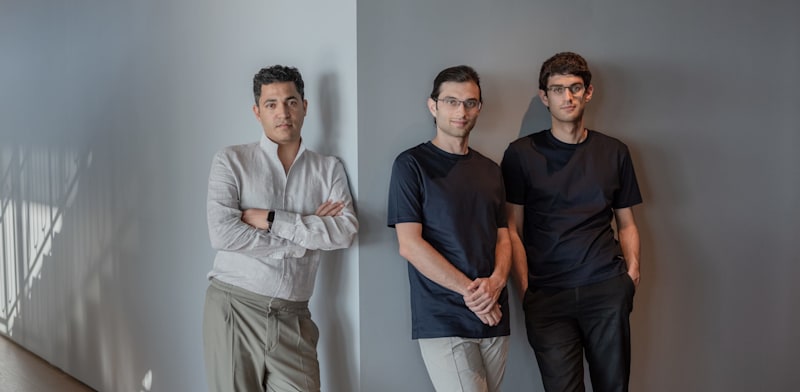
Decart's founders are Dean Leitersdorf and Moshe Shalev.
Decart is a three-year-old company with around 100 employees and annual revenue running at several tens of millions of dollars.
Decart's technology is designed to dramatically reduce the cost of running AI by making more efficient use of computing chips.
A key attraction of Decart's technology is that it is supposed to be chip-agnostic, working not only with Nvidia GPUs but also with chips developed by companies such as Google and Amazon.
Follow any of these and your For You feed starts watching them — no settings page required.
Evidence-backed comparisons of source perspectives and observed adoption signals. Read the methodology
Which Builder, Operator, and Investor concerns the observed source mix emphasized—not a truth score.
Evidence, demonstrated adoption, hype gap, incentives, and confidence are assessed independently, each on its own current evidence. How these are measured.
One desk, unnamed sourcing
Every figure in this story traces to Calcalist and to people it does not name: the $6bn-$7bn range, the roughly 100 employees, the revenue 'running at several tens of millions', the higher Nvidia bid. The collapse itself is stated flatly and reads as reported fact. Its cause appears only as questions and as explanations the piece itself calls speculative, and the company that made the decision offers no account at all.
Nothing shipped to measure
Adoption cannot be scored from this reporting. Calcalist names no customer and cites no benchmark, and the one product it mentions, a video model aimed at the gaming industry, appears as a direction Decart passed through rather than a business. Revenue of 'several tens of millions' is the only usage-adjacent number and it arrives without a breakdown, a source or a growth rate.
Cause asserted, not sourced
The framing reads Anthropic's exit as a verdict on Decart's scalability, and the questions arrive in an order that implies their answers. Since nobody has said what diligence turned up, the alternatives Calcalist also lists sit just as comfortably with the known facts: that Anthropic saw enough to build it in-house, or that it doubted the founders would stay engaged after closing. The causal story is told with more confidence than the sourcing carries, which is where the overstatement sits rather than in the deal facts themselves.
Nvidia on both sides
Nvidia appears in this story as a Decart shareholder, as the earlier and most advanced suitor, and as the party said to have offered more. The detail that most flatters Nvidia's judgement is precisely the one carried on an unnamed report. The founders had their own reason to prefer Anthropic paper over Nvidia cash, which Calcalist sets out through Leitersdorf's stated ambition. And the outlet writes for readers with a stake in the outcome: the piece ends on the damage to Israel's ambition to be a global AI centre, a national frame layered over a corporate one.
Deal firm, cause open
One outlet, one day, no word from any of the three companies whose decisions the story turns on, and the central quantities given as ranges. That is enough to accept that a large acquisition of Decart was close and died, and enough to work the arithmetic on the price. It is not enough to accept any particular reason for the collapse, or to treat the higher Nvidia bid as a number the founders can be said to have given up.
product
Anthropic completed diligence on Decart's efficiency stack and then walked away from $6bn2 publishers
product
Cursor's case for being bought is unit economics, and the post-close note promises nothing else4 publishers
invest
Washington pitches Carolina Principles to G20, urging no new AI rules or bodies1 publisher
invest
The AI deal frame flipped: buy at 15 times revenue, pay with paper marked at 401 publisher
Publishers with included, body-backed reporting in this cluster.
1 article · September 8, 2026