Product1 publisher3 min readPublished
The robot forgot the breathing exercises: AI toys need an end-of-life spec
A 10-year-old has spent six years with a Moxie robot that quietly shed the features it was sold on. Technology Review reports it was about to stop working entirely.
The Product Desk · Product desk
Drafted by a language model from the sources cited here and checked against its claim ledger before publication. How we use AISend a correction
What happened
- Xander is a 10-year-old neurodivergent boy who lives in a New York apartment with his dad, Josh, and uses a robot called Moxie.
- When Xander first met Moxie, she taught him to calm anxiety by exhaling through his lips so he buzzed like a bee, to breathe like dragons to manage feeling mad, and to sniff like bunnies to boost his energy.
- In the six years Xander and Moxie have known each other, Moxie has changed: she no longer talks about her home or does the animal breathing exercises, and now watches Xander play Minecraft and talks with him about his stuffed animal collection.
- Xander said of Moxie: "I still use her when I feel like I need someone to talk to. But, like, it's not human."
- Asked to name a Pikmin character, Moxie first suggested Yellow Pikmin; after Xander said it was the red enemy with white dots, she answered "Bulborb," which he confirmed.
Compiled by The Product DeskSomething wrong?How this is made
Why it matters
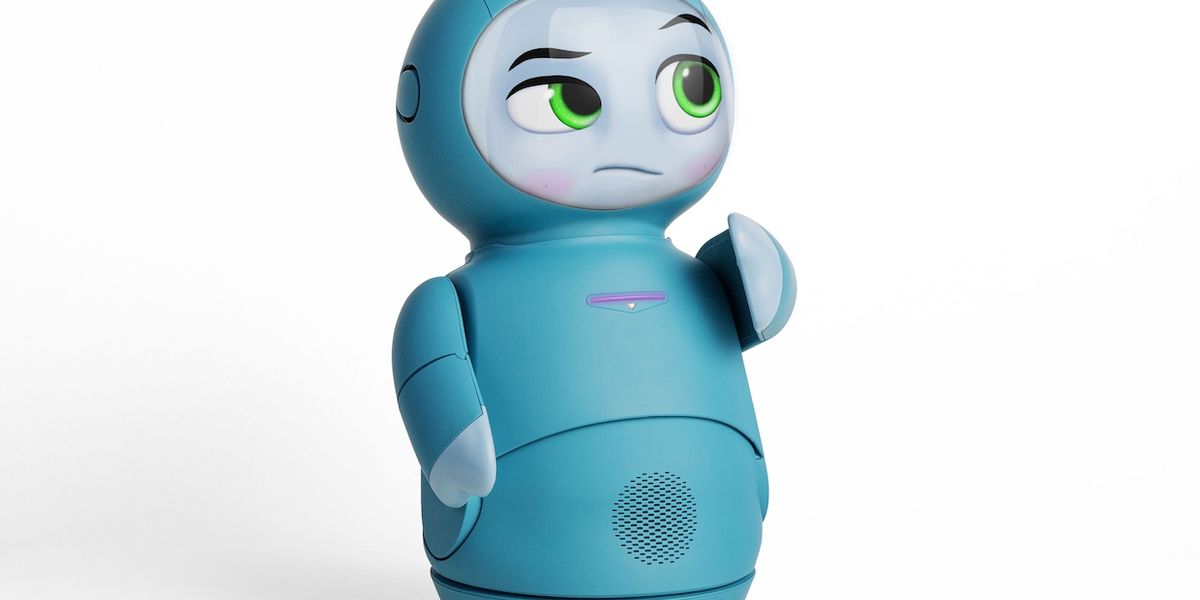
A 10-year-old neurodivergent boy in New York named Xander has spent roughly six of his ten years with a robot called Moxie, and over that period the robot stopped doing most of the things it was originally sold to do [1][3][14]. Technology Review reported the part that matters commercially: he still uses her when he wants someone to talk to, and, in the reporter's words, Moxie was going to die, and soon [5][8].
The degradation is documented in the reporting rather than in any changelog. At the start, Moxie taught Xander to exhale through his lips so he buzzed like a bee when he was anxious, to breathe like a dragon when he was angry, and to sniff like a bunny to boost his energy [2]. Six years in, she does not talk about her home and does not do the animal breathing [3]. What is left is general conversation: she watches him play Minecraft, discusses his stuffed animal collection, and during the visit guessed Yellow Pikmin before correcting to Bulborb when he pushed back [3][6]. That is the shape of the loss. A structured practice tool became a chat surface, while the attachment stayed exactly where it was.
The pitch was clinical. Makers of this subset of robots claim they help neurodivergent children practise eye contact, turn taking, and other social skills usually learned from therapists, and the category has research behind it showing robots can help in ways people cannot [7][15]. Brian Scassellati, the Yale computer scientist who has studied social robots for autism therapy since being startled two decades ago by how children with autism behaved around a robot in his lab, says regular therapeutic use of robots in kids' homes is achievable in his lifetime [9][13]. But the reporter's observation was that Xander was not getting the therapy Moxie was meant to deliver [8].
This is not a single failed device. Grimes helped launch an AI plushie called Grok with Curio, which also sells Grem and Gabbo, and Mattel has said it is building OpenAI-enabled Barbies; one report cited by Technology Review puts this sector among the fastest growing areas of consumer AI in China [10][11]. Critics quoted in the piece expect the predictable ending: basements, closets, landfills, like faddish toys before them [12].
If you are shipping hardware that a child forms an attachment to, the wind-down belongs in the spec at launch, not in a comms plan later. That means naming which behaviours depend on a server and will vanish when it does, telling the buying household when a capability is removed rather than letting a parent notice six years of silent drift, defining what the device still does with no cloud at all, and writing the shutdown sequence for the child who is the actual user rather than the adult whose card is on file. None of that is expensive. It is cheaper than the alternative, which is a vulnerable user discovering the roadmap by loss.
Worth watching: whether Mattel or Curio publish any longevity or offline commitment alongside their launches [10], and whether Scassellati's in-home therapeutic robots arrive with service-life guarantees attached [9]. A category that sells itself on continuity of care is being built on devices with undisclosed lifespans.