Science1 publisher3 min readPublished
The H5 route into most overseas cat cases ran through the food bowl
Australia has recorded no H5 infection in a pet, so the veterinary advice arriving now is precautionary by construction, and only one of the four exposure routes it names comes with any account of how often it has actually infected cats.
The Scientist · Science desk
What happened
- A veterinarian who studies infectious diseases in cats says Australia has recorded no H5 bird flu in a pet so far, and that the risk to most cats and dogs remains very low.
- No veterinary clinic can run the test in house, so respiratory swabs go to a dedicated government laboratory and only when the coordinating government veterinarian directs it.
- There is no vaccine for pets and only limited data on whether existing influenza antivirals are safe and effective in cats and dogs.
Compiled by The ScientistSomething wrong?How this is made
Why it matters
- decision Households that raw-feed a cat face the one change with a stated link to real infections, while the cheaper environmental fixes come with no stated effect size at all.
- constraint Because confirmation runs through a government laboratory, a suspect cat is managed on suspicion, and clinics absorb the isolation and protective-equipment cost before any diagnosis exists.
- exposure Listing clothing, shoes and equipment as a route puts poultry workers and backyard-flock keepers who also own cats in the group most reachable by their own daily movement.
- capability Owners get a usable warning only once signs turn neurological, by which point the clinical window in cats has largely closed.
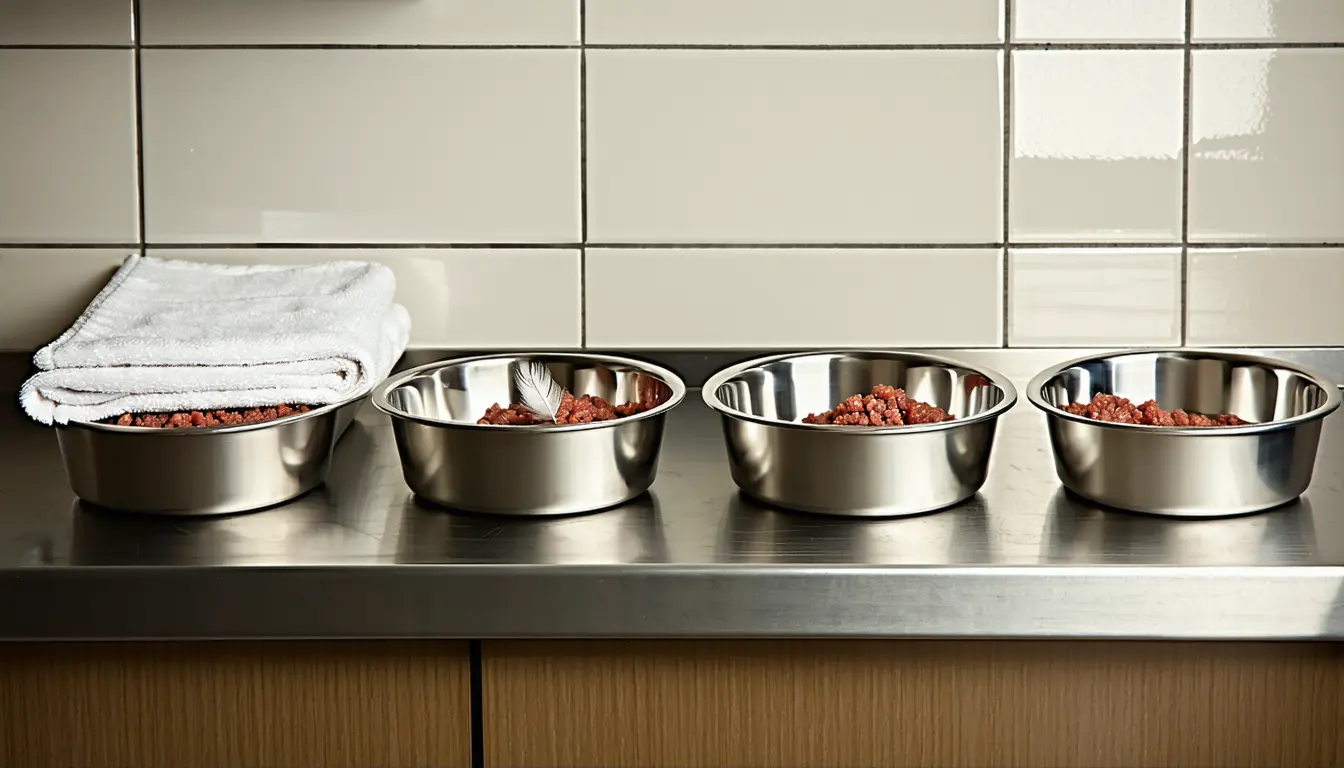
The one comparative statement in the guidance is the one worth building on. Of the four exposure routes named, only the raw-food route comes with an account of how often it has done the infecting: most feline cases overseas occurred when cats ate raw meat, unpasteurised dairy or improperly processed pet food later found to be contaminated with the virus [16]. The other three routes are ordered by physical proximity to the animal, not by observed frequency [4], which leaves exactly one of four with any weighting attached [18].
That ranking has practical consequences, because the recommended controls are not equally cheap or equally supported. Bringing bowls in when not in use, roofing an outdoor cat run and moving bird baths away from where the cat goes are all low-cost, and the veterinarian notes the virus can persist in droppings, feathers, carcasses and standing water for days or weeks depending on conditions [14][15]. None of those steps comes with an estimate of how much it reduces risk. Diet is the only lever with a stated link to real cases.
The severity claim deserves the same reading. Outbreaks in Poland, South Korea and Belgium suggest infected cats can deteriorate quickly and often die within days of exposure [5], while dogs are described as less vulnerable, many with mild signs or none [6]. The denominator is missing here: how many exposed cats became infected, and how many infected cats were mildly ill and never sampled. Confirmation runs through a dedicated government laboratory, where swabs are sent, and only when the coordinating government veterinarian directs it [12]. Cats pushed down that pathway are the ones already sick enough to justify the trip, so the picture of feline H5 is drawn from its most severe end.
Early signs are the ordinary ones, according to the veterinarian: fever, lethargy, loss of appetite, coughing, laboured breathing, discharge from eyes or nose [8]. The signs specific enough to raise suspicion in a cat, including tremors, seizures and sudden blindness, arrive after the disease has progressed [9]. That is why the call-ahead instruction, and the possibility of an assessment done outside the building in protective clothing [10][11], is carrying triage weight that no same-day test is available to carry.
The 7.7 million Australian households with a pet [3] is a count of pet-keeping homes, not of cats allowed outdoors or fed raw, and the exposed subset is the one that matters here. With no confirmed case in an Australian pet so far and the risk to most cats and dogs described as very low [2], every element of this advice is transferred from overseas outbreaks rather than tested locally as a package. There is no pet vaccine, and evidence on whether existing influenza antivirals are safe and effective in cats and dogs is thin [7]. On the veterinarian's own account, the control with the clearest link to actual infections is the contents of the bowl.
What to watch
- A first confirmed H5 case in an Australian pet, and whether the exposure traces to raw food or to a household route such as shoes or clothing.
- Any published tally of overseas feline cases with exposure route and outcome, which would supply the denominator this guidance lacks.
- Evidence on influenza antivirals in cats and dogs, or the arrival of a pet vaccine, either of which would move H5 out of prevention-only management.