Product1 distinct publisher3 min readUpdated
Raytheon says its radar tracked and shared data aboard USS Jack H. Lucas during Pacific Dragon near Hawaii. Seven navies took part, and nothing was fired.
The Product Desk · Product desk
Compiled by The Product DeskSomething wrong?How this is made
Interoperability is a word that usually survives a press release without ever being cashed out, so it is worth noting that this account spells out the mechanism. One country's ship detects a missile, pushes the track over a tactical data link, and the ships receiving it can ready weapons, add their own sensor returns to the same track, or take the engagement themselves [16]. The radar does none of that on its own. It feeds the Aegis combat system, and Aegis is the thing that shares [8]. SPY-6 makes targeting-quality data and hands it over; it destroys nothing [9].
That distinction sets the ceiling on what was actually proven off Hawaii. By the source's own description, the exercise consisted of information-sharing and target-tracking events meant to test and improve the participating nations' air and missile defence capabilities [6], with no live firing [7]. Passing tracks is the half that has to work before the shooting half is worth rehearsing, so the sequence is sensible. It is also the half that is cheapest to declare a success.
The evidence behind it is thinner than the framing. The only party quoted is Raytheon, in a social media post, which places the radar aboard Jack H. Lucas during "Pacific Dragon 2026 (PD26)" alongside the Missile Defense Agency and allied forces [13], and says that enhancing interoperability across the fleet and with allied forces is helping strengthen readiness and support regional security [14]. No Navy or Missile Defense Agency statement appears in the account [17]. A contractor confirming its own hardware behaved is useful, and it is not a test report.
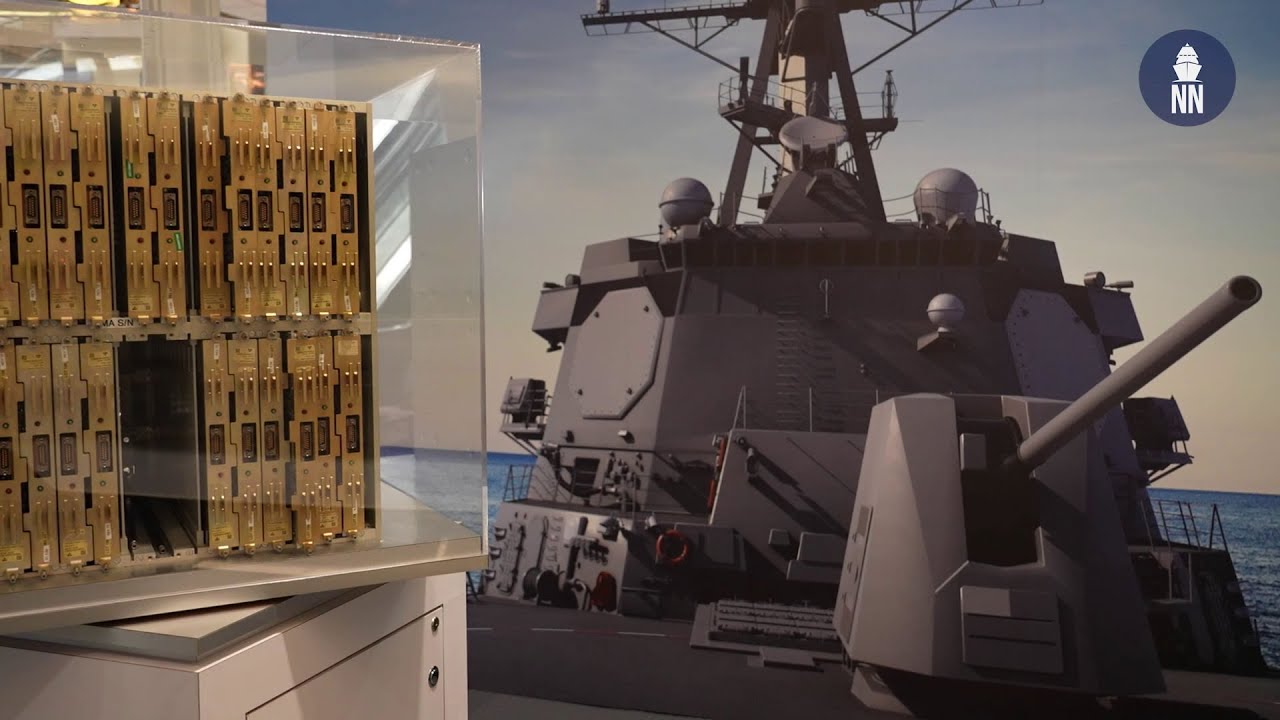
Modularity is where this reaches budgets. The building block is a Radar Modular Assembly, a self-contained radar unit, and different counts of them are combined for destroyers, carriers, frigates and amphibious ships [11]. The Flight III installation is considerably more capable than the smaller variants intended for other vessels [12]. So the network rehearsed near Hawaii is not made of equivalent nodes: what any hull contributes to the shared picture depends on how much radar it was fitted with, and the demonstration ran on the large end of that range [4][12].
Jack H. Lucas is the first Flight III Arleigh Burke, carrying Baseline 10 and AN/SPY-6 [5], and the publisher's headline puts the ship at 9,700 tons [15]. The tonnage is the least interesting number here. The pairing of Baseline 10 with SPY-6 is now the configuration that seven navies have practised feeding and reading [3], and sensor-sharing plans written after that exercise are written against it. That is a slower form of commitment than an acceptance milestone, and a harder one to walk back.
Follow any of these and your For You feed starts watching them — no settings page required.
Ranked by verification strength, evidence, and original report placement.
Raytheon reports that its SPY-6 radar was successfully tested during the recent Pacific Dragon missile-defense exercise near Hawaii.
During the exercise the system was tested onboard the US Navy destroyer USS Jack H. Lucas (DDG-125).
Raytheon said in a social media post: "During Pacific Dragon 2026 (PD26), SPY-6 participated aboard USS Jack H. Lucas (DDG 125), the Navy's first Flight III destroyer equipped with Baseline 10 and AN/SPY-6, alongside the Missile Defense Agency and allied forces."
The exercise featured assets from the United States, Australia, Italy, Japan, the Republic of Korea, Chile and Spain.
USS Jack H. Lucas is the Navy's first Flight III Arleigh Burke-class destroyer, equipped with Aegis Baseline 10 and AN/SPY-6.
The exercise included a series of information-sharing and target-tracking events designed to test and improve the participating nations' air and missile-defense capabilities.
Evidence-backed comparisons of source perspectives and observed adoption signals. Read the methodology
Which Builder, Operator, and Investor concerns the observed source mix emphasized—not a truth score.
Evidence, demonstrated adoption, hype gap, incentives, and confidence are assessed independently, each on its own current evidence. How these are measured.
Single-source vendor account, no measured results
The cluster contains one article from one publisher whose direct quotes all come from a Raytheon social-media post. No Navy or Missile Defense Agency statement, no exercise after-action detail, and no performance metrics (track counts, ranges, discrimination, timelines) are provided; the sole hedged fact — no live firing — is attributed to unnamed 'reports'. The verifiable core is thin but internally consistent: a named ship, a named exercise, a named combat-system baseline, and a named participant list.
Fielded on lead Flight III hull in a multinational exercise
Adoption is real rather than prospective: the radar is installed and operating on an in-service US Navy destroyer that took part in a multinational exercise with assets from seven nations, integrated with Aegis Baseline 10. It is nonetheless a narrow footprint as evidenced here — a single named hull, a single named exercise, no fleet-wide install counts, delivery totals or other-class fittings reported, and no allied procurement of the radar itself disclosed.
Vendor framing outruns the reported test
The language — 'successfully tested', 'strengthen readiness and support regional security', a threat list extending to hypersonic targets — is materially stronger than what is actually documented: a no-live-fire tracking and information-sharing exercise reported through the manufacturer with zero published results. The underlying event is genuine and the sensor-not-weapon caveat is stated plainly, which keeps the gap moderate rather than severe.
Manufacturer promotion relayed with minimal friction
The originating communication is a Raytheon social-media post about Raytheon's own product, published while the company competes for radar and combat-system work across destroyer, carrier, frigate and amphibious classes; the vendor has a direct commercial interest in framing an exercise appearance as proven readiness. The publisher relays that framing and its capability list without seeking government comment or independent assessment, and adds an unsourced tonnage figure in the headline.
Low — one publisher, one vendor voice
Confidence is limited by cluster structure: a single article from a single publisher, sourced to a single vendor post. The factual skeleton (ship, exercise, baseline, participant list, no live fire) is specific enough to be checkable and unlikely to be fabricated, but nothing in the supplied material independently confirms it, and the capability and readiness claims cannot be assessed at all from what is present.
product
Boeing locks in seven years of SM-3 parts before anyone commits to a missile count1 distinct publisher
product
Tomahawk's $22.9B award turns surge talk into a rate hundreds of suppliers must hold1 distinct publisher
product
Navy moves countermeasure qualification off the jet and onto a 578-foot rail1 distinct publisher
build
A "$100M contract" that is a prize ceiling: how to read a vendor's procurement claim1 distinct publisher
Distinct publishers with included, body-backed reporting in this cluster.
1 article · August 22, 2026