Product1 distinct publisher3 min readPublished
Patria's new plant in Nokia now builds F135 engines for Finland's incoming F-35s, but the overhaul capability that would keep heavy engine work inside the country is still a framework and a line conversion away.
The Product Desk · Product desk

Compiled by The Product DeskSomething wrong?How this is made
Finland has settled where new F135 engines get assembled, and deferred the question of where used ones get overhauled. Someone still has to sign for where the module goes and how long the airframe sits without it.
Linnavuori does final assembly. Patria is responsible for assembling Finland's F135s, and maintenance, repair and overhaul is what the company will eventually do there [2]. The overhaul half runs on a framework agreement and on adapting the same production line for MRO&U work [10][6]. Those are two capital projects wearing one ribbon, and only one of them has a finished product to show.
Seven months passed between the agreed February start of final assembly in Finland and the first completed engine on September 3 [1]. The build programme has roughly four years and four months left before its 2030 end date [2]. Patria's own employment estimate averages out near eight direct jobs a year across the six-year window [3]. That is a small shop, and Patria's argument is that its people become the sustainment workforce [14].
Interesting Engineering describes the F-35 support network as becoming increasingly distributed across partner nations as operators build local capability [15]. Held against the documented scope, that is a claim about direction, not about this contract. The account carries no engine count for the line, no turnaround time, no contract value, and nothing about handling another operator's F135s [16]. The Finnish Air Force's F-35 programme director, Colonel (ret.) Henrik Elo, framed the gain as domestic security of supply [7], which is narrower and more defensible than a Nordic depot. The case for better fleet availability, in the same account, is written in the conditional [11].
Who this is for, in order. The wing at Rovaniemi that starts taking aircraft this autumn and would rather have engine expertise in its own time zone [8]. Patria, which converts a build contract into a service business if the conversion lands. And Pratt & Whitney, which gains a partner-funded node it does not have to staff.
If you are negotiating industrial participation on someone else's platform, the announcement gets easier to price once you split it into four questions. Which units the local plant touches, new-build only or in-service returns. Which work scope is authorised, line maintenance or full teardown. Who holds the parts and the technical data when a repair-or-replace call is disputed. And what capital and what date sit behind the changeover. Finland has a public answer to the first, a framework for the second, silence on the third, and "preparing to adapt" on the fourth. That is an ordinary position roughly two years after the sustainment framework was signed [4], and it is also why sovereign sustainment reads better at a ribbon-cutting than in a monthly availability report.
Ranked by verification strength, evidence, and original report placement.
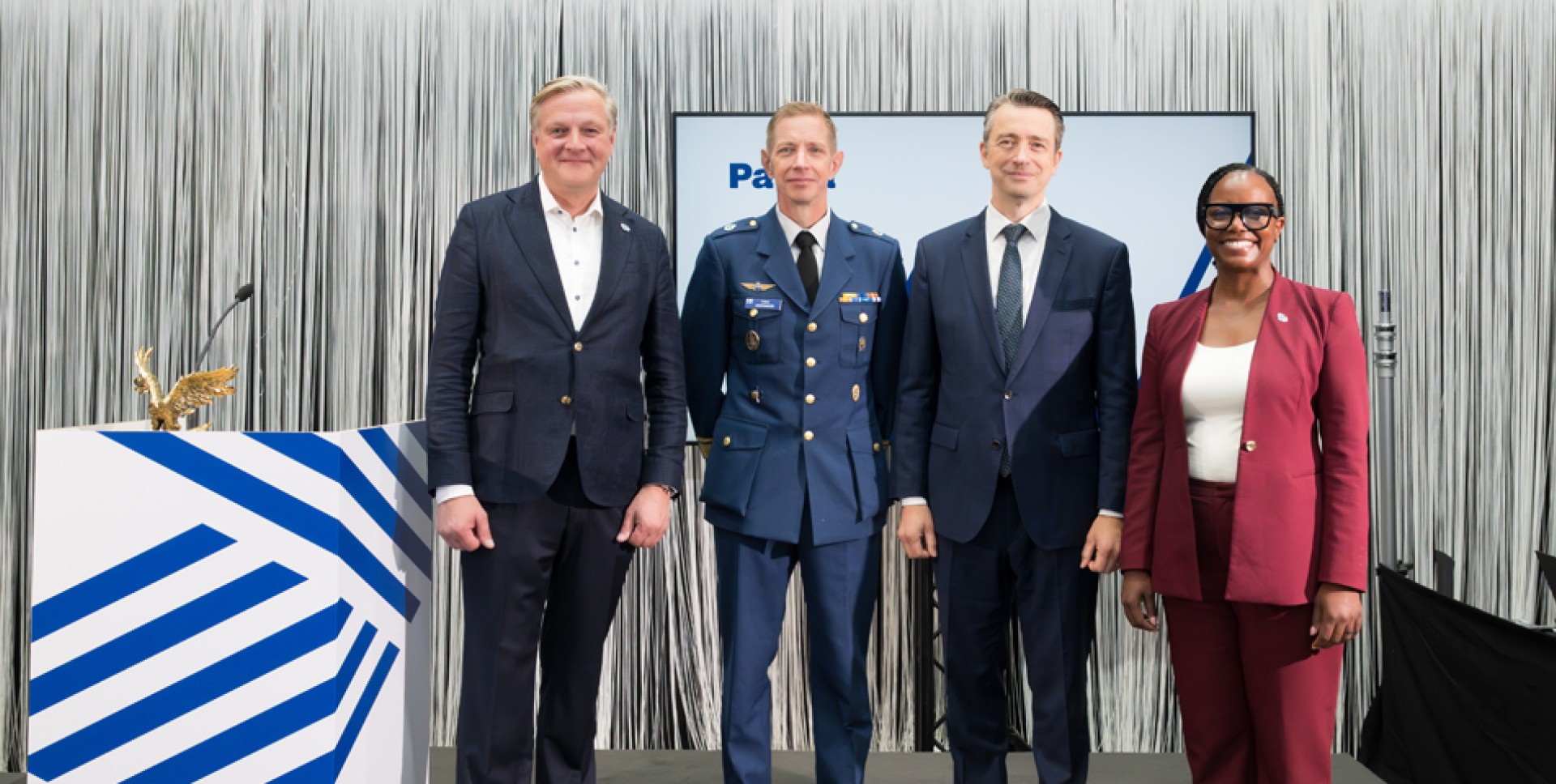
Finland has completed assembly of its first F135 fighter engine, establishing a new domestic capability for supporting the F-35.
The engine was assembled by Finnish defence company Patria at its new facility in Linnavuori, Nokia, where Patria is responsible for assembling Finland's F135 engines and will eventually carry out their maintenance, repair and overhaul.
Patria and Pratt & Whitney, an RTX business, agreed to begin final assembly of the engines in Finland in February 2026.
Completion of the first engine was celebrated at an event at Patria's Linnavuori facility on September 3, 2026.
The facility will support the F135 fleet throughout the F-35's service life in Finland, with Patria preparing to adapt the production line for Maintenance, Repair, Overhaul and Upgrade (MRO&U) activities.
Colonel (ret.) Henrik Elo, F-35 Program Director of the Finnish Air Force, called the completion "a significant milestone" and said having engines assembled in Finland strengthens Finland's domestic security of supply.
Distinct publishers with included, body-backed reporting in this cluster.
1 article · September 5, 2026
Follow any of these and your For You feed starts watching them — no settings page required.
invest
The binding constraint on defense payouts is now an executive order1 distinct publisher
invest
Importers Get No Vote on a Midnight Tariff: $20bn of Canadian Goods, 50%, Decided Overnight1 distinct publisher
product
On the F-35, cooling is the upgrade budget: Collins finishes EPACS altitude testing1 distinct publisher
invest
1,051 trades in one month, and a $185 million window where the number should be1 distinct publisher
Evidence-backed comparisons of source perspectives and observed adoption signals. Read the methodology
Which Builder, Operator, and Investor concerns the observed source mix emphasized—not a truth score.
Evidence, demonstrated adoption, hype gap, incentives, and confidence are assessed independently, each on its own current evidence. How these are measured.
One outlet, and inside it only the participants
Interesting Engineering is the sole account, and every substantive line traces to Patria, to Pratt & Whitney, or to the Finnish Air Force's programme director. Specificity is what keeps this off the floor: a named plant in Linnavuori, a dated event on 3 September 2026, a 64-aircraft order, all checkable later. But nobody outside the programme has checked any of it yet, and that is what holds it down.
A real engine, a single engine
A finished F135 is hardware, not intent, and the September event puts a date on it. Set against that, the count stands at one, no annual rate is given, and the capability Finland actually needs for availability, deep engine servicing, is still a framework agreement from 2024 plus a line conversion Patria is only preparing for.
Framing runs ahead of the servicing capability
The headline reaches for 'world's most powerful operational fighter jet engine' where the substance is a first article off a new line that Patria expects to employ about fifty people by 2030. Security of supply is written as achieved, while the heavy servicing that would deliver it is described in the same piece as still being prepared for. The dated facts hold up fine on their own; it is the packaging around them that oversells.
Three quoted parties, all selling the same milestone
Patria wants more of this programme, Pratt & Whitney wants its international sustainment network to look deep, and the Finnish Air Force wants the domestic-industry half of a 64-aircraft purchase to show a return. Those are the only voices in the story, and the jobs figure that quantifies the benefit is the contractor's own estimate.
Solid on the event, thin on what it buys
An event on a date at a named plant, a 64-aircraft order and an autumn arrival at Rovaniemi are all easy to stand behind. The variables that decide whether this changes Finland's position, engine throughput and whether Linnavuori ever overhauls anything, are absent, so our reading of the significance stays provisional.