Product1 distinct publisher2 min readUpdated
StandardAero is named on a $342.2 million IDIQ for C-130 engine overhaul. The structure matters more than the number: price is settled once, volume is allocated task order by task order.
The Product Desk · Product desk
Compiled by The Product DeskSomething wrong?How this is made
Firm-fixed-price is the phrase doing the work in this award [3]. Depot overhaul on a turboprop family whose design the source traces back to the T38 of 1954 is a business where the state of the core is discovered on the bench [13]. Agreeing prices in advance moves the difference between the quote and what the module actually needs onto whoever holds the task order [3][4].
Then the arithmetic nobody puts in the release. A ceiling of $342.2 million spread across at least ten years averages about $34.2 million a year [14]. Set that against the stated scope: engines, modules and components for a global fleet of more than 1,200 C-130s serving the Air Force, the Navy and Foreign Military Sales customers [6]. That is roughly $285,000 per airframe for the entire decade [15]. No overhaul price appears in the source, so the figure is best read backwards: this ceiling is a slice of T56 depot demand for that fleet, which fits StandardAero being described as one of the suppliers rather than the supplier [1].
The scope number itself wobbles inside the source. It puts more than 1,200 C-130s in the covered fleet [6], while noting that newer C-130J variants moved to the AE 2100 from around 1994 [12], and it dates Allison's production of these engines to around 1995 despite the 1954 lineage [13]. Read 1,200 as fleet size, not as a count of T56-powered tails on the ramp.
There is a quieter tension in the award. The Series 3 to Series 3.5 conversion, which StandardAero performed on Air Force engines, delivered better fuel efficiency and longer engine life, and in practice fewer engine removals and more aircraft ready to fly [9][10]. Fewer removals means less depot volume to order. A ten-year framework priced per turn therefore sits on a demand curve the same vendor helped bend downward. Rick Pataky, who runs StandardAero's San Antonio operation, frames the award as continuity on a fleet the company has supported for more than 25 years [11], and the program relationship does date to around 1999 [8]. Continuity is the argument available to it: the ceiling caps what the Air Force may spend, not what any one shop will be given.
Follow any of these and your For You feed starts watching them — no settings page required.
Ranked by verification strength, evidence, and original report placement.
As an approved contractor, it is not clear whether StandardAero will be guaranteed the total contract value or only a portion of it.
StandardAero has been a US Air Force partner under the T56 program since around 1999, and the new agreement effectively extends that arrangement.
The Series 3.5 upgrade delivered improved fuel efficiency and extended engine lifespan, meaning lower operating costs, fewer engine removals and more aircraft ready to fly.
Rick Pataky, Vice President and General Manager of StandardAero San Antonio, said the award reflects the team's proven technical expertise after supporting the Air Force's T56 fleet for more than 25 years.
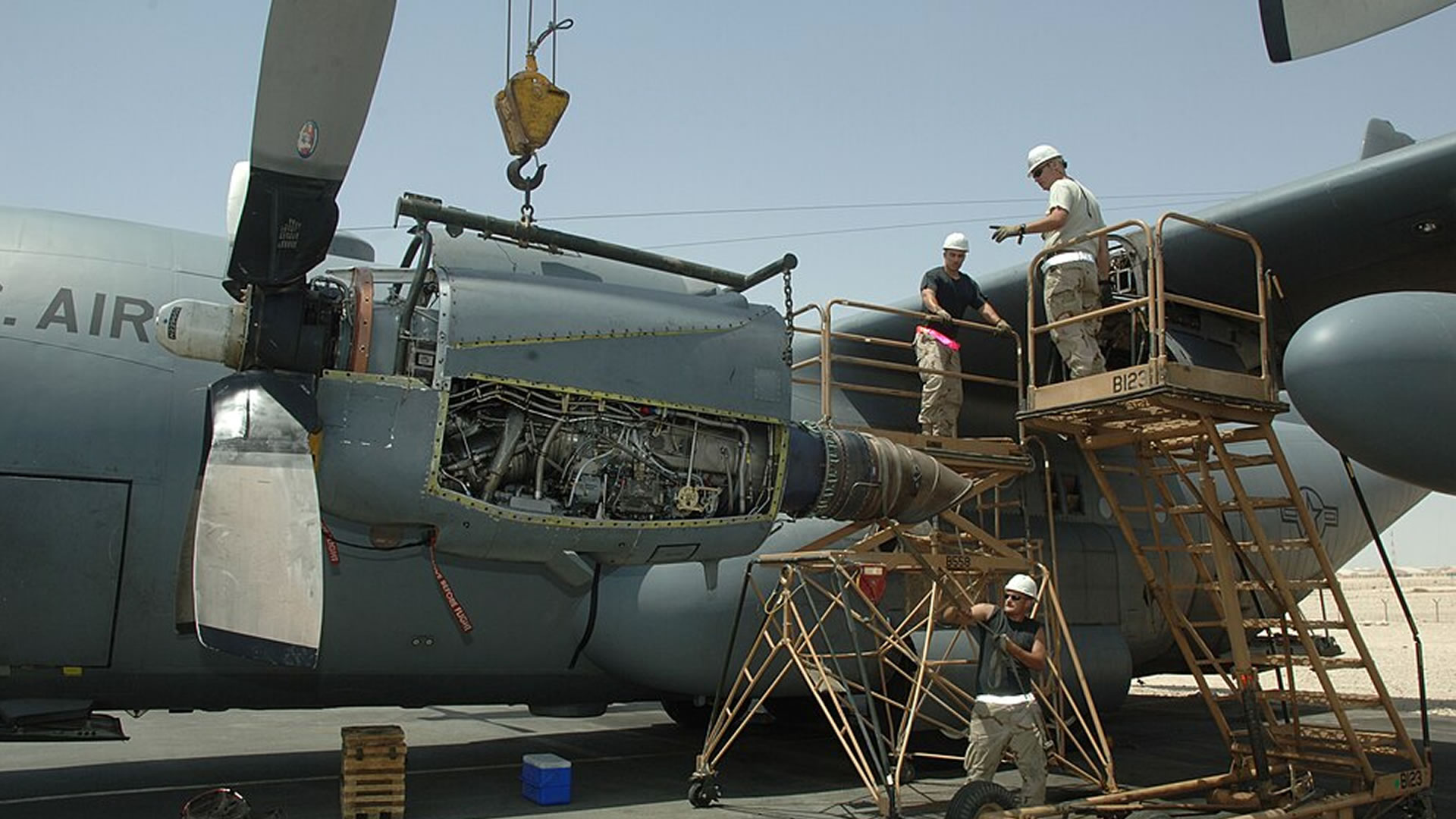
The US Air Force selected StandardAero as one of its suppliers for maintenance, repair and overhaul on its C-130 Hercules fleet, authorising the company to work on Rolls-Royce T56 turboprop engines.
The agreement will last at least ten years and covers work on American and allied fleets.
Evidence-backed comparisons of source perspectives and observed adoption signals. Read the methodology
Which Builder, Operator, and Investor concerns the observed source mix emphasized—not a truth score.
Evidence, demonstrated adoption, hype gap, incentives, and confidence are assessed independently, each on its own current evidence. How these are measured.
Single press-release-derived account with specific terms but no primary confirmation
Contract type, ceiling, term and scope are stated precisely, and the article is candid about what it does not know. But every load-bearing detail traces to one company press release relayed by one publisher: there is no award date, contracting office, solicitation reference or DoD announcement, no named co-awardees, and the piece contains unresolved dating inconsistencies about the engine's origins.
Real, long-running depot work on a large installed base; task-order volume unknown
This is not a pilot: the source describes an incumbency dating to around 1999, prior execution of the Series 3 to 3.5 conversion, and a global installed base of more than 1,200 T56-powered C-130s across USAF, USN and FMS customers. Adoption is capped below high because no task orders, throughput figures or committed quantities are disclosed, and the article says it is unclear whether the company will work on all of the fleet.
Headline framing runs ahead of a ceiling-and-task-order reality the article itself concedes
The headline reads as a signed decade-long overhaul deal and leads with $342.2 million, while the body clarifies this is a multi-supplier IDIQ ceiling with no guaranteed share and unconfirmed fleet coverage. Readiness benefits are asserted from vendor language without independent data. The gap is moderate rather than severe precisely because the same piece discloses the qualifiers, and Clarity's own dek foregrounds the structure over the number.
Vendor-originated announcement with promotional framing carried largely intact
The article states outright that it draws on a company press release, quotes promotional language about being a 'trusted partner' and 'strengthens StandardAero's position', and closes with a named executive quote. The supplier has a clear interest in publicising a ceiling value that may not fully accrue to it. The score is not higher because the publisher adds independent caveats about IDIQ mechanics and unguaranteed value.
Directionally credible, poorly corroborated
That an incumbent T56 depot provider was placed on a long-term Air Force MRO vehicle is plausible and internally consistent with the disclosed history. But confidence is limited by one publisher, one vendor-originated document, absent award identifiers, unnamed co-awardees, unresolved date errors, and no visibility into task-order flow or C-130H fleet-retirement risk to future demand.
product
The Air Force just published its shopping list of threat signatures it wants to shoot at cheaply1 distinct publisher
product
The Air Force's JASSM bet: a second engine source beats a better engine1 distinct publisher
product
Navy moves countermeasure qualification off the jet and onto a 578-foot rail1 distinct publisher
build
A "$100M contract" that is a prize ceiling: how to read a vendor's procurement claim1 distinct publisher
Distinct publishers with included, body-backed reporting in this cluster.
1 article · August 22, 2026