Product1 publisher3 min readPublished
The Air Force cut its B-52 parts backlog from more than 450 shortages to about 160
Interesting Engineering reports that the North Star campaign made 40 percent more B-52s flyable by pulling supply, engineering and depot work into a single effort, on a fleet that is still about 76 airframes.
The Product Desk · Product desk
What happened
- The Air Force's North Star Readiness Campaign has raised the number of flyable B-52s by 40 percent, according to Interesting Engineering, by clearing aircraft out of maintenance and logistics queues.
- Serious parts shortages logged as Mission Impaired Capability Awaiting Parts fell from more than 450 cases to about 160, in reports the publication cites.
- The fleet is on the order of 76 B-52s with about three-quarters in active service, and roughly a dozen more airframes sit at Davis-Monthan as parts donors.
Compiled by The Product DeskSomething wrong?How this is made
Why it matters
- capability Commanders get a bigger usable bomber force with no new tail numbers, and because the gain lives in the support chain rather than the hangar, it can be handed back as soon as the cross-organisation coordination lapses.
- decision Anyone with a fixed install base now has a comparison to make with the next dollar: buy another unit, or pay to shorten the queue that keeps the units already owned sitting idle.
- contradiction Interesting Engineering reports the 40 percent as established and then demonstrates it with figures it calls an illustration. A reader cannot check the readiness baseline the percentage came from.
- precedent Extending the same campaign to the B-1 sets the expectation that small-fleet availability gets attacked in the depot and the supply system before it turns into a budget request.
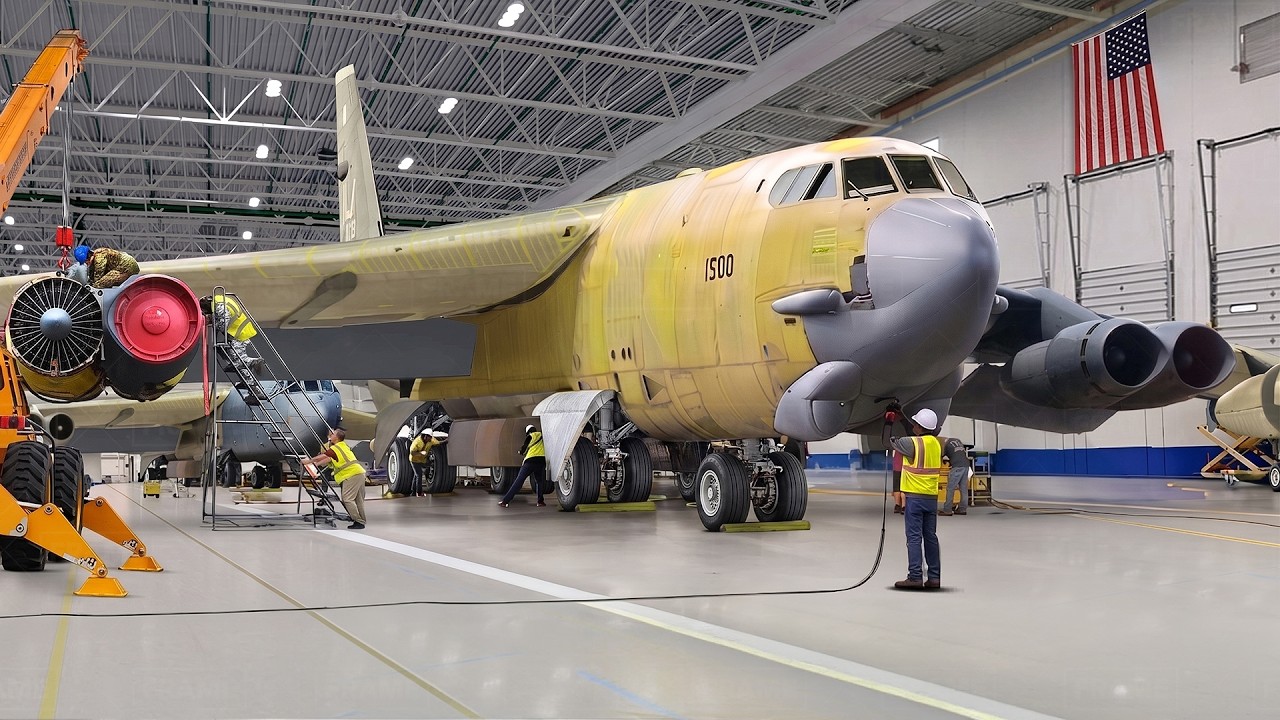
A B-52 can be mechanically sound and still not fly. Interesting Engineering's account of the readiness problem is blunt about why: an aircraft sits waiting for a spare part, an engineering decision, depot work, or some other bit of support [3]. The airframe is in a queue.
The queue has a number attached to it. MICAP, the status code for a parts shortage serious enough to keep an aircraft from being fully operational, went from more than 450 cases to about 160, in reports cited by Interesting Engineering [6]. That is a fall of roughly 290 cases, about 64 percent [13]. The Air Force operates on the order of 76 B-52s [4]. If those shortages are all B-52 ones, 450 across the fleet averages almost six open shortages per airframe, and 160 averages about two [14].
The campaign pulls maintenance, logistics, supply, engineering and depot organisations into one effort to get aircraft back to service faster [7]. Interesting Engineering describes it as an Air Force-wide effort to attack those bottlenecks [10]. Something that used to take a week or more to reach an aircraft can now arrive in days [8], and on a fleet this small, taking several days off every repair means several more aircraft available at any given moment [16].
One caveat sits in the reporting itself. Interesting Engineering does not publish a before-and-after count of flyable B-52s, and gives the MICAP figures without saying whether they cover the B-52 alone; its worked example of 30 available aircraft becoming 42 is labelled an illustration that could be higher or lower in reality [12].
The transferable part is the first cut you make when something you own is not producing. One pile is the units that cannot work; the other is the units that could work and are waiting. After that the waits divide by authority: waits one team can clear, and waits that need two or three organisations to agree. A unit parked on a decision that needs three signatures will not move if you hire more mechanics, and a support team measured on repair time will not be graded on the four days a part spent in transit. So the count is the waits and who owns each queue, and the number that matters is how many queues have no owner who can shorten them.
The reason the Air Force is doing this now is the B-21 Raider. Until it is fully in service, the B-52 and the B-1 have to carry long-range strike while some of those same aircraft are in depot for maintenance and modernization [11]. The B-1 is getting the same treatment [9]. About a dozen B-52 airframes sit in deep storage at the Davis-Monthan boneyard as donors for spare parts [5].
What to watch
- Whether the Air Force publishes a B-52 mission-capable rate and MICAP count that can be checked against the 40 percent figure.
- Whether the B-1 fleet shows a comparable drop in parts shortages under the same campaign.
- Whether the gains hold once B-21 modernization work starts competing for the same depot capacity.