Science1 publisher2 min readPublished
Zagreb's urban daisy fleabane withstands chamber heat and drought better than its rural kin
UF/IFAS researchers found daisy fleabane grown from Zagreb's urban seeds handled simulated heat and drought better than plants from rural seeds. The work covers one species tested in growth chambers, and the study did not measure whether such plants spread further as the climate warms.
The Scientist · Science desk
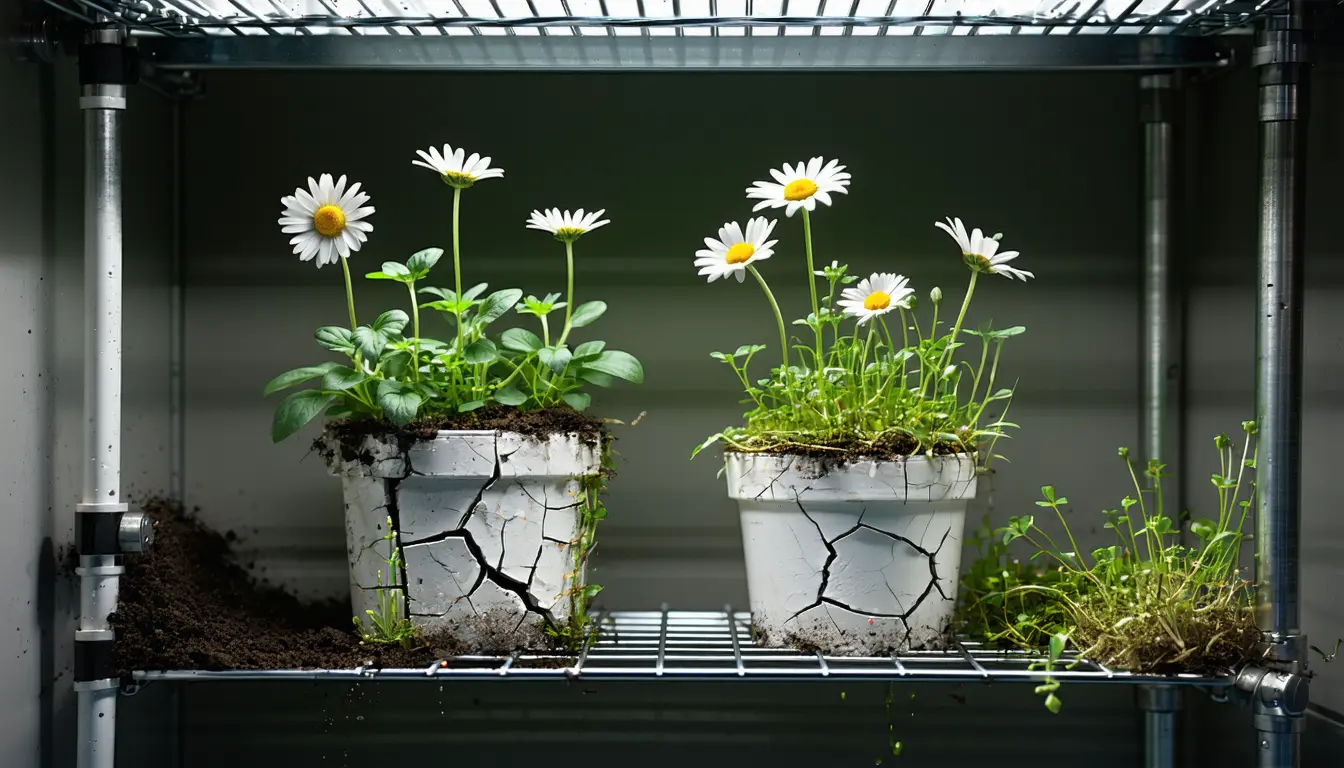
What happened
- The test plant, daisy fleabane, is native to North America and has become a widespread invader in Europe and parts of Asia.
- Seeds from urban and rural populations around Zagreb, Croatia, were grown in UF growth chambers under warmer temperatures, drought, or both.
- Under controlled conditions the urban plants grew smaller than the rural ones, a sign of more conservative growth according to the researchers.
Compiled by The ScientistSomething wrong?How this is made
Why it matters
- decision If city stands produce stress-adapted populations as well as new arrivals, as the researchers propose, managers of land around cities would have reason to put urban weed control ahead of rural patches.
- constraint Because the urban plants were smaller in mild conditions, their advantage appears under stress, so surveys run in a cool, wet year could miss it entirely.
- constraint A management rule built on this would rest on one species' populations from one region, so it cannot yet tell managers which other urban invaders carry the same tolerance.
Growing both sets of seeds in the same chambers takes the city out of the comparison [3]. With the street heat and dry soil gone, any difference that persists between urban and rural plants came in with the seed. The stronger result is a gradient. Tolerance of heat and drought rose with the level of urbanization at the site where each population's seeds were collected [6]. One unusual rural patch could produce a two-group split by chance. It is much harder for chance to line populations up along a scale of how urban their home is.
The thing this doesn't tell you is whether the city did the selecting. The paper's title calls the plant urban evolved [16]. Cities are major entry points for invasive species because of travel, trade and the movement of people and materials [10]. Urban and rural stands around Zagreb could descend from different introductions that already differed in tolerance before they reached a city street. The phys.org account does not give the number of populations sampled, figures for the size of the differences, or whether the team raised a generation under common conditions before testing. That last step is the usual way to separate inherited tolerance from effects of the conditions the mother plant grew in.
Drew Hiatt, a doctoral student and the study's co-author [15], expects the chamber gap to understate what happens outdoors. "In reality, environmental stressors rarely behave so regularly, and it's likely that we would see even greater differences under a more prolonged drought or a more intense summer heat wave," he said [8]. The treatments the team actually ran followed conservative predictions for the area [7].
Luke Flory, director of the UF/IFAS Invasion Science Institute [14], carries the result to management. "Urban-evolved invasive species may be well suited to future climate conditions, providing them an advantage over native species and complicating management efforts," he said [9]. That step depends on two things. Cities have to be hotter and drier than the land around them, as many are [13]. Urban-adapted plants then have to move into surrounding areas as the climate warms, a step the researchers propose [17] and the chamber work did not test.
I think the Zagreb result is a well-designed first test in one species, and a good reason to run the same urban-rural comparison on other invaders. The researchers say more work is needed to learn how common the pattern is among invasive species and whether these adaptations consistently make urban-evolved invaders more successful [12].
What to watch
- A follow-up that raises a generation of Zagreb fleabane under common conditions before stress testing, separating inherited tolerance from maternal effects.
- Whether the same urban-rural comparison in other invasive species and other cities turns up the same urbanization gradient.
- Field or competition trials that pit urban-origin fleabane against native plants under heat and drought.