Product1 publisher3 min readPublished
Twin1's $20M bet: the unit of enterprise AI is one employee, not the org
Twin1 AI launched with $20 million to give each knowledge worker a persistent digital twin. The engineering that matters is not the model, it is deciding who may query whose twin.
The Product Desk · Product desk
Drafted by a language model from the sources cited here and checked against its claim ledger before publication. How we use AISend a correction
What happened
- Twin1 AI Inc. launched with $20 million in seed funding to build AI-powered digital twins that carry an individual professional's expertise across their organization.
- Twin1 pairs each worker with a persistent model of their own knowledge, judgment and working context that can answer questions and act on that person's behalf.
- Twin1 AI is based in San Mateo, California, and also runs a team in London.
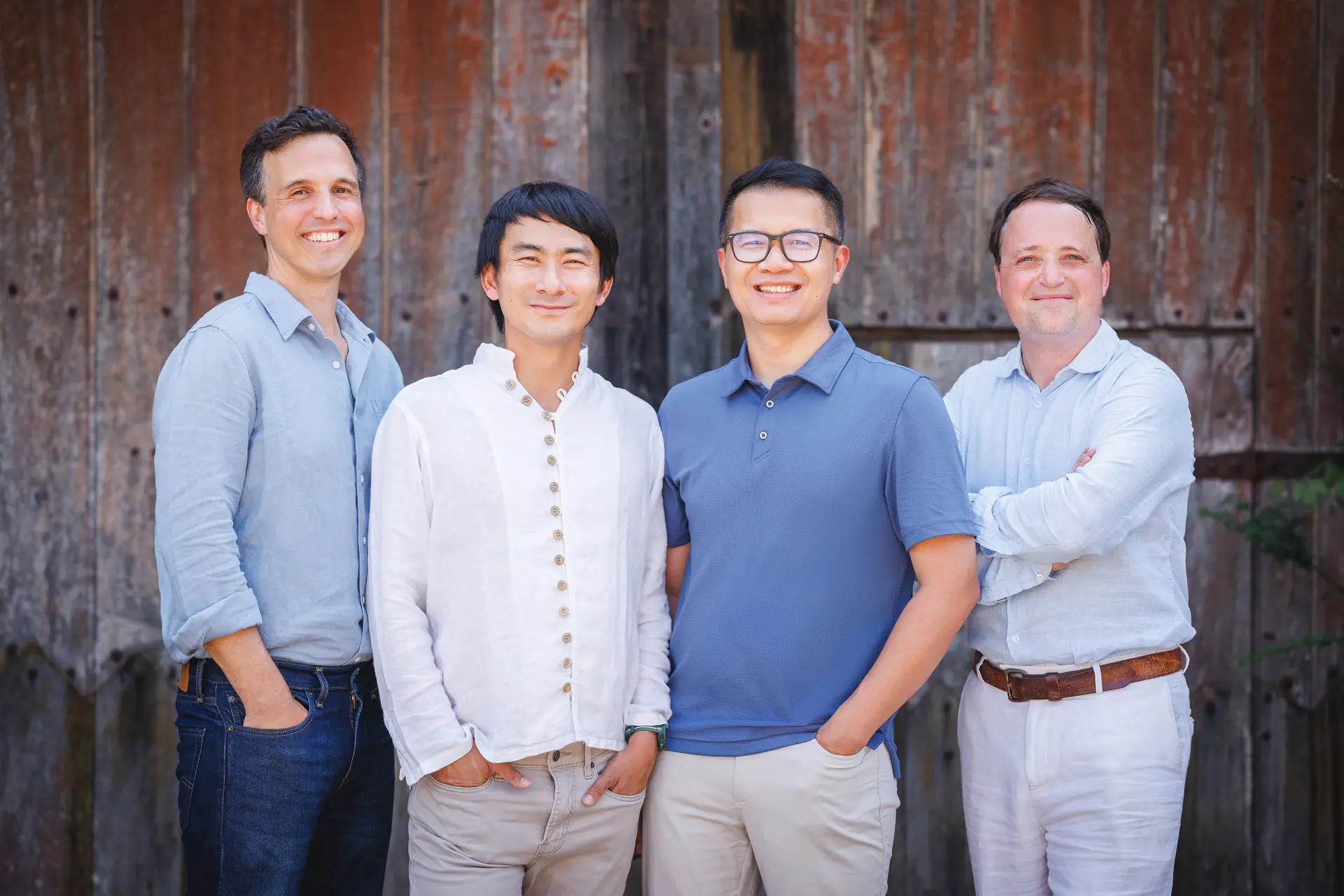
- Twin1 was founded in 2025 by Lewis Liu, Tom Cahn, Huiting Liu and Jonathan Budd.
- Permissions run through the user, who sets which sources the twin reads and which colleagues are allowed to query it.
Compiled by The Product DeskSomething wrong?How this is made
Why it matters
Twin1 AI Inc. launched with $20 million in seed funding to pair every knowledge worker with a persistent model of their own knowledge, judgment and working context that can answer questions and act on their behalf [1][2]. The interesting part is not the model. It is that permissions run through the individual, who decides which sources the twin reads and which colleagues are allowed to query it [5].
The San Mateo company, which also runs a team in London, was founded in 2025 by Lewis Liu, Tom Cahn, Huiting Liu and Jonathan Budd [3][4]. Three of the four came out of Eigen Technologies, the London document AI company that sold to SirionLabs in 2024 after raising more than $80 million, with Liu a co-founder who led it through the sale [6]. The new seed is roughly a quarter of what Eigen raised over its life [22].
Mechanically, a twin reads its user's email, meeting records, documents and connected workplace systems, and operates inside Slack, Microsoft Teams, Outlook, Gmail, Google Drive and SharePoint [7]. On top of that sits the control problem. Twin1 layers six sets of rules-based and AI-based controls across both peer-to-peer and peer-to-AI exchanges, mixing corporate policy, inherited permissions and human sign-off, with the stated goal that a twin surfaces information only where the requester was already entitled to see it [8]. A coordination layer called the Twin Network is meant to locate the right colleague, gather permission-aware knowledge and hand work between teams [9], and an enterprise Model Context Protocol server lets other agents and applications pull governed context from one twin or the network [10].
That is a lot of machinery to build in front of a chat box, and it is the honest cost of the premise. Liu's argument is that the human is the atomic unit of knowledge in a knowledge organization, and that most enterprise AI averages out what individual employees know [14][15]. If you refuse the average, you inherit every question about who is allowed to ask whom, which an org-wide assistant answers by flattening it.
Twin1 did not arrive cold: it says it has been running with customers in legal, financial services and energy for more than a year, naming Linklaters, Orrick, Dechert, Customers Bank and Aegis Energy [11][12]. The company says those customers report the platform handling 30% to 50% of the communications work their knowledge workers would otherwise do themselves [13] - a vendor-reported range, not an audited one. Orrick Chief Innovation Officer Wendy Butler Curtis said the platform lets the firm mine its collective data and called it "one of the most exciting developments in the practice today" [16]; Orrick also took a strategic stake in the round [17], which is worth holding in mind when reading the reference.
Bessemer Venture Partners, Tribeca Venture Partners and Aramco Ventures co-led, with Lakestar, Notion Capital, F-Prime Capital and others participating, plus angels including Wiz co-founder Roy Reznik [18]; several backers had been in Eigen [19]. The money goes to hiring in San Mateo and London, sales and marketing, and more platform work [20].
Two things to watch. First, whether the 30% to 50% figure survives customer-side measurement, and whether human sign-off inside the control stack stays tolerable as query volume rises [13][8]. Second, the planned self-service product for smaller firms and individual professionals, sold into a pipeline Liu told Artificial Lawyer runs past 400 prospects [21]: inherited permissions need an enterprise directory to inherit from [8], and it is not yet clear what the governance layer reduces to without one.