Science1 publisher2 min readPublished
Ancient genome duplications and millions of years of rewiring built CAM in Clusia trees
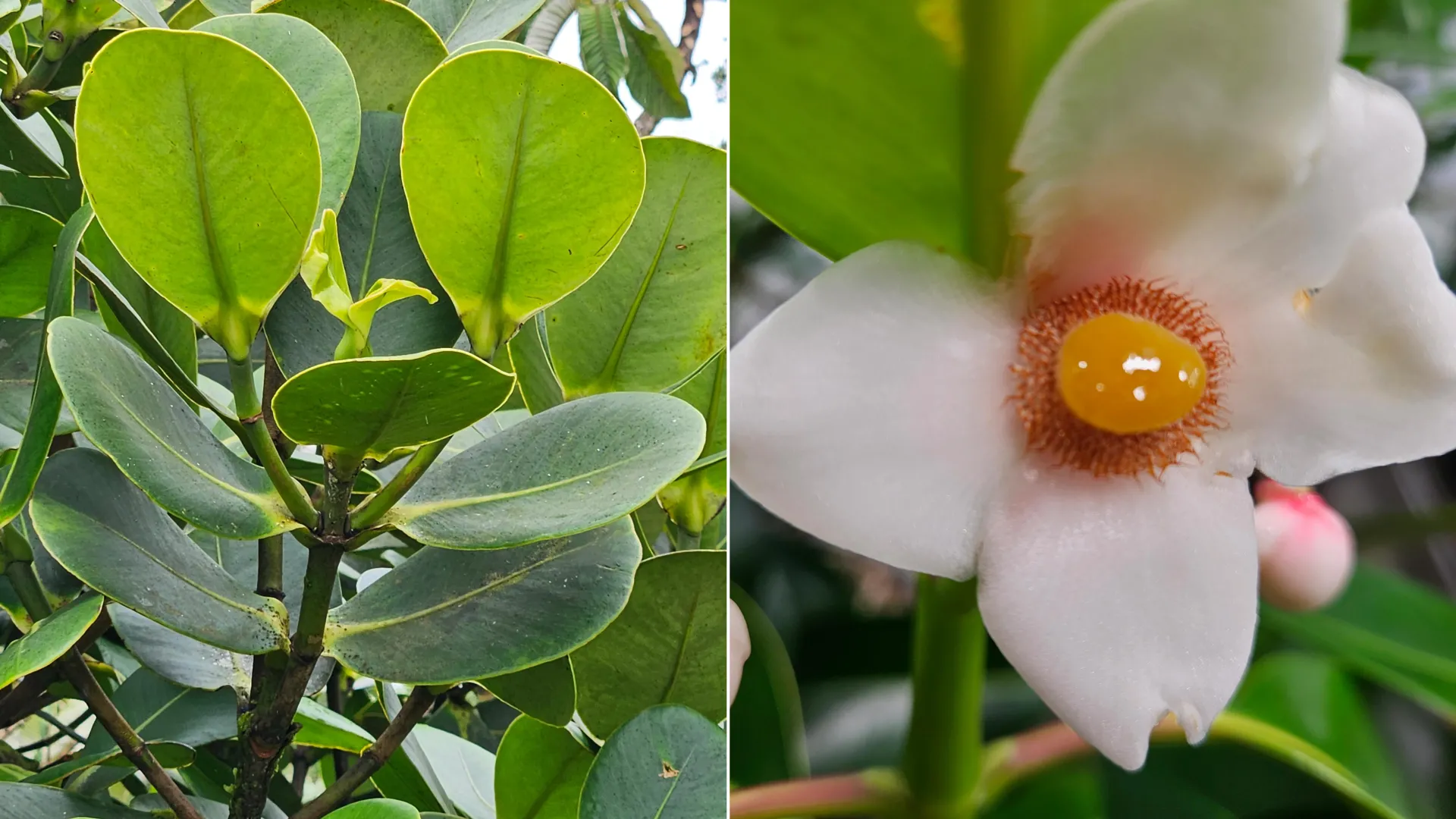
A Vienna-led comparison of three Clusia species finds all three are ancient polyploids whose duplicated genes for night-time CO2 storage were lost, switched off or given new jobs. The paper is in Nature Communications.
The Scientist · Science desk
What happened
- Researchers led by Wolfram Weckwerth at the University of Vienna compared the genomes of three Clusia species and published the result in Nature Communications.
- All three species turned out to be ancient polyploids whose multiplied genomes were later reorganized and reduced over long stretches of evolutionary time.
- The strategies on display run from strong CAM to stress-triggered and hybrid forms, which the Vienna summary presents as evidence against a single evolutionary switch.
Compiled by The ScientistSomething wrong?How this is made
Why it matters
- constraint A trait built from duplicate copies that diverged over millions of years offers no single locus to pick up and move, so anyone aiming at night-time CO2 uptake in a crop is coordinating several regulators at once.
- capability One genus that runs from C3 to strong CAM lets the question be asked between close relatives, where gene histories still line up, instead of across distant plant families.
- decision Anyone funding drought-tolerance work on the strength of the crop line in the Vienna summary has to judge how far three greenhouse trees are from a field trait.
Around 1800, Alexander von Humboldt put a leaf from a tropical tree in water and found it made none of the oxygen bubbles he had seen before, even in sunlight [11]. The reason is a schedule. The pores stay shut while the sun is up, CO2 is taken in at night, bound chemically and held as malic acid, and closed pores in the heat mean less water lost to evaporation [8].
All three genomes the Vienna group compared carry the signature of an ancient multiplication, followed by reorganization and reduction [4]. The plants did not simply keep extra copies of the same genes; over time the duplicated genomes were transformed into something different [14]. Lead author Hannes Kramml said: "In the process, gene copies are lost, deactivated or take on new functions" [5]. The copies involved were not a random draw from the genome. "Genes crucial for nocturnal CO2 storage in CAM metabolism are particularly affected," second lead author Johannes Herpell said [6].
Weckwerth attributes the differences between species to that reorganization. "The genomes have not simply multiplied; over millions of years, they have been reorganized, reduced and functionally rewired. This enormous plasticity explains the physiological diversity of CAM in the genus Clusia," he said [7].
The comparison covers three genomes, from Clusia rosea, Clusia minor and Clusia major, one lineage for each of three different CAM phenotypes [2][13]. That design links genome structure to physiology across three points. It cannot separate the rearrangements that produced a phenotype from the ones that came along with it, and with one genome per phenotype there is no replication within a strategy. The physiology itself came from trees monitored through the day in near-natural greenhouse conditions with water availability varied [10]. Those were controlled dry-downs under glass, a step short of a field season.
The University of Vienna summary says the work could inspire drought-resistant crops [12]. What it describes is a genome comparison plus greenhouse measurement [15]. If night-time CO2 uptake in Clusia rests on duplicate copies whose functions diverged over millions of years [5][6], then the target for engineering is a set of regulatory relationships across many copies. Clusia is a good place to keep asking: it holds the only known CAM trees, and its species span conventional C3 photosynthesis to very strong CAM [9].
What to watch
- Gene-level tables in the Nature Communications paper showing which nocturnal CO2 storage copies were lost, silenced or given new functions in each species.
- Whether the physiological measurements assign strong CAM, stress-triggered CAM and hybrid behaviour to specific species, which the release does not do.
- Any experiment that puts candidate Clusia regulators into a C3 plant and measures night-time CO2 uptake.