Invest1 publisher3 min readPublished
Xi's red-carpet summit ends in a two-month truce that leaves the rare-earth squeeze in place
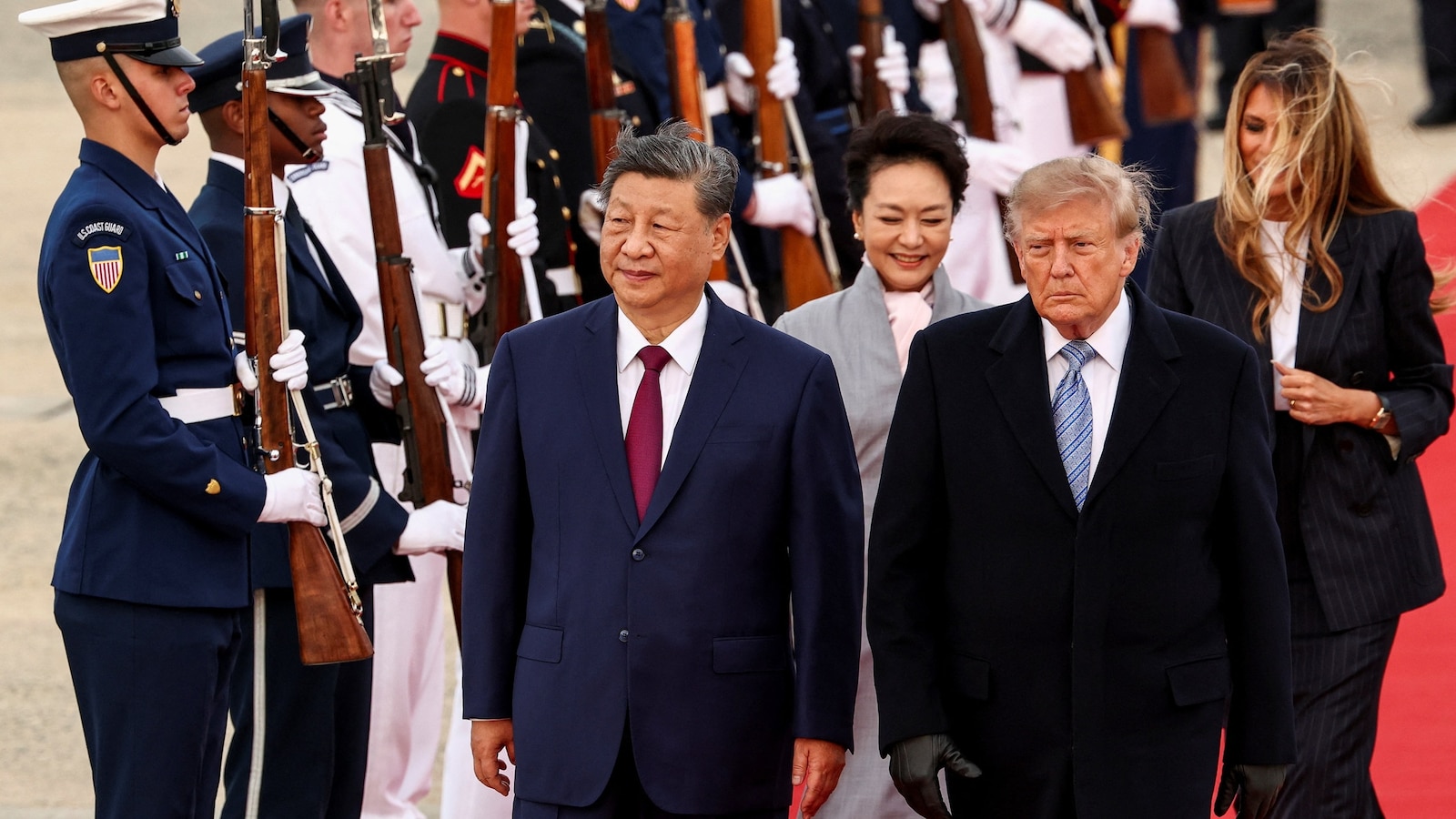
Trump gave Xi the first presidential greeting at Joint Base Andrews since 1962 and got a two-month trade-truce extension in return. With Beijing still squeezing rare-earth flows, buyers of Chinese inputs face tariff terms that could reset six times a year.
The Investor · Invest desk
What happened
- Trump met Xi at the foot of the plane stairs at Joint Base Andrews, the first time a president has greeted a foreign leader there since Kennedy met Macmillan in 1962.
- The summit's concrete results were an agreement to extend the trade truce by two months and talk of an AI hotline for national-security risks.
- Semafor reports that Beijing is still squeezing rare-earth flows to extract concessions from the US and to coerce allies including Japan.
Compiled by The InvestorSomething wrong?How this is made
Why it matters
- constraint Companies buying Chinese inputs have to plan around a tariff truce that could come up for renewal six times a year if it keeps rolling in two-month pieces.
- precedent Tariffs above 140% have already been withdrawn once under a rare-earth threat, so Beijing goes into any future US escalation with a response it knows has worked.
- exposure Japan and other US allies remain targets of rare-earth pressure while the US-China truce holds, so an allied supplier that depends on Chinese rare earths faces the same squeeze.
- contradiction Trump's promise of 'tremendous things' and Doshi's view that Beijing thinks it has 'basically tamed' the US cannot both describe the balance of leverage, and the two-month term fits Doshi's version.
In classic diplomacy, protocol giveaways are supposed to be repaid with substantive concessions, as Semafor's account of the summit puts it [8]. Washington's side of this exchange ran to a 21-gun salute and a B-1B flyover, well beyond the courtesies Trump received in Beijing in May [2], and a state dinner [16]. Beijing's side included two pandas, Ping Ping and Fu Shuang, for the Atlanta zoo [7].
The imbalance started with a tariff bill. At a rate above 140%, a $100 Chinese import cost more than $240 once the duty was paid [9], and China's threat to cut off rare earths was enough to make Trump back down, according to Semafor [3]. Rush Doshi, a Georgetown University professor and former Biden administration official, wrote at the time that China had proved itself a "true peer" of the US [4]. His view of this week's ceremony, as Semafor reports it, is that China believes "they've basically tamed the United States" [10].
The reception is thin evidence that supply chains set the terms. Semafor describes the pageantry as seemingly designed to flatter Xi and awe a domestic audience, an aim undercut by the absence of TV cameras at the Rose Garden [13]. A show put on for voters says a lot about Trump's politics and little about rare-earth supply [13]. The term sheet says more. A two-month truce, renewed on the same terms, gives a buyer of Chinese inputs six renewal dates a year [11], and Semafor reports the squeeze on rare-earth flows continues in between [6].
If the next extension runs a year or longer and rare-earth flows ease, China will have sold its leverage for something, and the price will be visible [5][6]. If the truce keeps rolling in two-month pieces while flows stay restricted, Beijing's control of supply is setting US trade terms [5][6]. A fresh US tariff increase would test directly whether the threat still works [3].
On this record I would expect the second outcome. The counter-case is that a short term also serves Washington, since it can reopen tariffs as often as Beijing can tighten supply. This week it took the extension instead [5]. Previous presidents pressed Chinese leaders for concessions on human rights and market access at joint news conferences; Semafor calls this week "an exercise in shallow bonhomie" [12]. Before the summit, Senate Armed Services Committee chairman Roger Wicker questioned why Trump was offering a "lavish welcome" to a "brutal, unelected, and oppressive dictator" [14].
The view is wrong if the US raises tariffs again and Beijing does not answer with rare earths [3], or if flows to Japan ease without a matching concession from Washington or Tokyo [6]. The account does not include rare-earth volumes or prices, so the size of the squeeze cannot be checked. Trump posted on Friday that "Tremendous things will be happening" [15].
What to watch
- Whether the next truce extension runs longer than two months, and what Washington gives for it.
- Any easing or tightening of Chinese rare-earth flows to Japan and other US allies.
- A new US tariff increase on Chinese goods, and whether Beijing answers it with rare-earth restrictions.