Product1 publisher3 min readPublished
Ebola vaccine trials in the DRC depend on the contact tracing violence has disrupted
Doses of Oxford's Bundibugyo vaccine were manufactured at record speed. The efficacy trials that would prove them need contact tracing in DRC communities where humanitarian workers are distrusted and attacked.
The Product Desk · Product desk
What happened
- More than 7,000 people in the Democratic Republic of Congo have contracted the Bundibugyo Ebola virus since May and around half have died, according to government data compiled by the World Health Organization.
- Uganda's outbreak was closed out with contact tracing, isolation and clinical care, but in the DRC millions displaced by violence have made tracing what Nicole Lurie of CEPI calls a struggle, and cases keep climbing.
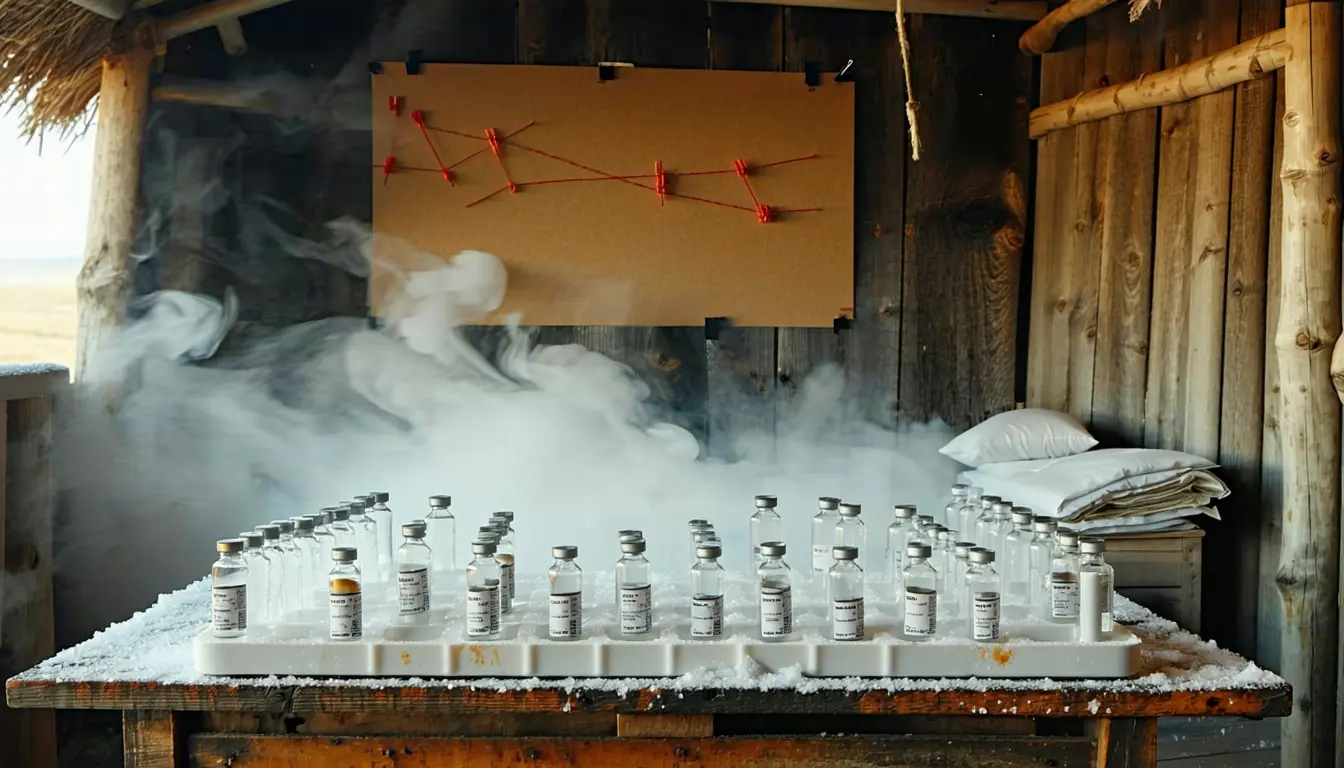
- CEPI funding paid scientists at the Serum Institute of India to manufacture doses of Oxford University's ChAdOx1 BDBV vaccine at record speed.
- The Oxford vaccine and a Moderna candidate, also CEPI-supported, are in safety trials, with efficacy trials expected to start this month.
- Lurie told WIRED that CEPI will run out of funds for its Ebola program by December unless it raises more money.
Compiled by The Product DeskSomething wrong?How this is made
Why it matters
- cost In the DRC, roughly 3,500 of the more than 7,000 reported cases have already ended in death while the outbreak waits for a licensed product.
- constraint Doses made at record speed can sit in cold storage while trial teams wait to be let into households.
- decision Donor governments have to choose whether to fund a vaccine program before any efficacy data exists, and Lurie says all of them need to play a role.
Locals have attacked Red Cross volunteers, destroyed medical equipment including ambulances, and delayed safe burial teams [7]. Distrust of outside humanitarian workers has made isolating and treating cases difficult [8]. The vaccine being tested needs those same doors opened, because any trial requires contact tracing and is likely to meet the same resistance in the same communities [13].
Nicole Lurie has worked for the Coalition for Epidemic Preparedness Innovations since 2017 and is its executive director for preparedness and response as well as its US director [3]. "I don't think we're going to be able to bring this to an end without a vaccine," she said [9]. She told WIRED: "This is the most rapidly growing Ebola outbreak that we've seen. It's probably on pace to be the worst the world has ever seen" [2].
Teresa Lambe, the vaccinology and immunology professor who is lead scientific investigator on the Oxford safety trials [14], said her bigger worry is distrust. "The thing that worries me is vaccine distrust and mistrust," she said. "And even if we get vaccines that are fabulous, will they be used?" [15]
Shortly after the first Bundibugyo cases were reported in May, CEPI redirected $100 million of internal funding to vaccine development [10]. The US government committed $50 million in June to support CEPI's work on countermeasures [22], half of what CEPI had already moved from its own accounts [2]. CEPI was set up in 2017 with funding from several governments and the Bill & Melinda Gates Foundation [24].
Global responder organisations have been short of staff since the US withdrew from the World Health Organization and dismantled USAID at the start of President Donald Trump's second term [18]. The administration's foreign aid cuts have also left responders short of basic equipment such as masks, hand sanitisers and testing gear [19]. Emily Hillard, press secretary for the Department of Health and Human Services, wrote that "CDC teams and partners are strengthening preparedness in the region by supporting surveillance, contact tracing, laboratory diagnostics, infection prevention and control, border health activities, community engagement, and other outbreak containment efforts in coordination with the governments of the DRC, Uganda, and other partners" [20]. The State Department did not respond to WIRED's request for comment [21].
For anyone rolling something out to a population that did not ask for it, there are two separate things to track. The first is supply readiness: doses manufactured, sites opened, protocol approved. The second is consent readiness, meaning whether the people whose cooperation the plan assumes will answer the door and agree. Lambe drew the comparison with 2020. "Covid was in some ways easier," she said. "We're not in a lockdown, we're not in a situation where people even know or care about what's going on in the DRC ... You're not all pulling in the same direction because day-to-day life continues" [16]. Lambe said she has not taken a day off since May [17].
What to watch
- Whether enrolment figures from the first efficacy trial sites are published, and from which districts.
- Whether any government other than the US puts money behind CEPI's Ebola program before its December cut-off.
- Whether attacks on responders continue once vaccination teams begin knocking on doors.