Science1 publisher2 min readPublished
Bangladesh has counted 175,198 suspected measles cases since mid-March
Bangladesh's first-dose measles coverage stood near 97 percent in 2019, second-dose near 93, and the country was heading toward elimination. What has followed since March is its deadliest measles outbreak since 2005.
The Scientist · Science desk
What happened
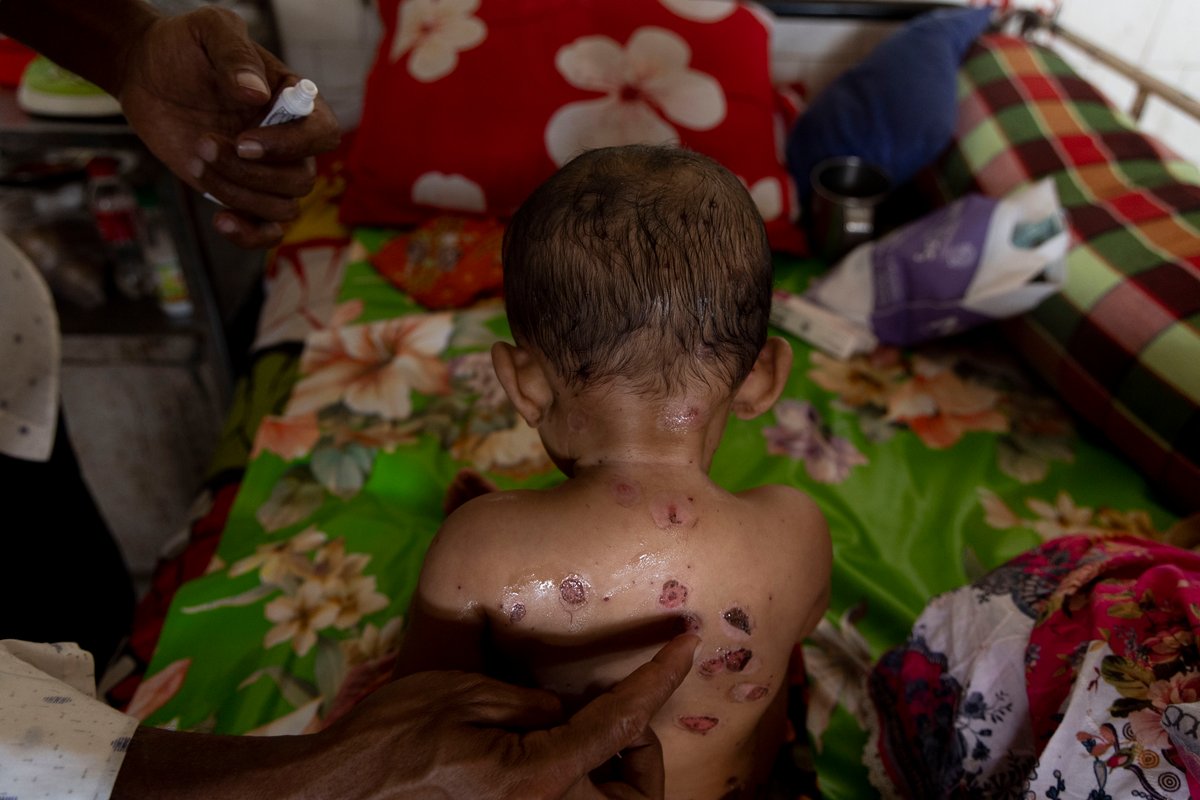
- Bangladesh's Directorate General of Health Services reported at least 175,198 suspected measles cases and 1,044 confirmed and suspected deaths between March 15 and September 16.
- Most of the infections were in unvaccinated children younger than two, the age group that has not completed the two recommended doses.
- Routine childhood vaccination rates in Bangladesh dropped in 2020 during the COVID pandemic, as they did in many other countries.
- Faizullah said an interim government's 2024 overhaul of vaccine procurement may have limited stockpiles, and that political unrest may have delayed supplemental measles immunization programs.
- Confirmed measles cases in the United States have reached 3,294 this year, and Pennsylvania this week reported its fourth measles-related death.
Compiled by The ScientistSomething wrong?How this is made
Why it matters
- constraint Herd immunity against measles takes 95 percent coverage, and a national average above that line can sit on top of districts well below it.
- decision Bangladesh's break came through purchasing and campaign scheduling. That puts stockpile and tender decisions inside outbreak risk, and those decisions sit with administrators.
- contradiction Scientific American reports that cases surged despite increased vaccination rates: the outbreak grew while the current year's coverage number was going up.
- precedent A disease once on the path to worldwide eradication is now circulating widely enough that importation is a routine event. What a coverage gap costs any single jurisdiction has changed.
The reported death-to-case ratio is 0.6 percent, or one death for every 168 suspected cases [21]. That figure mixes categories. Its numerator counts confirmed and suspected deaths together and its denominator counts suspected cases alone [1], and Scientific American reports that experts expect both totals to be undercounts, particularly in rural areas that have struggled to obtain vaccines and resources [3]. The directorate did not respond to Scientific American's request for comment [20].
Against Bangladesh's own recent record the number is very large. The country's measles counts ran about 100 to 300 cases in total between 2021 and 2025 [5], so 175,198 suspected cases in six months is at least 584 times the top of that range [22]. Jennifer Nuzzo, an epidemiologist who directs the Pandemic Center at Brown University, called it a "stunningly big outbreak that is clearly tied to an unusual drop in the vaccination coverage" [6].
Bangladesh had been unusually good at this. A national immunization program launched in the 1970s raised uptake nationwide, and community-based organizations kept children current on routine shots [9]. "When I was growing up in Bangladesh, you trusted the community health workers," said Ayesha Mahmud, a demographer at the University of California, Berkeley [10]. Sakil Faizullah, a health communications researcher at Texas A&M University and a former communications specialist at UNICEF Bangladesh, said the country had for decades been a "poster boy for vaccination" [25].
"If there is a break in the regular vaccination process, they will just attack, and that is what happened in Bangladesh," Faizullah said of measles viruses [7]. Populations need coverage of 95 percent or higher for herd immunity against measles, and that margin is what protects people who cannot receive the two recommended doses, including very young infants, according to Walter Orenstein, an epidemiologist and expert in measles epidemics [16]. Measles itself starts as a blotchy rash and flulike symptoms and can progress to pneumonia or brain swelling [23].
Scientific American reports that vaccination gaps are the common thread across the recent upticks in Canada, Mexico and the United States, and that the pattern has prompted questions about whether more catastrophic outbreaks are near [15][26]. That account reports US case totals without coverage rates by state or county [24]. The comparison it supports is about how a break happens: a pool of susceptible children builds over several years, then an importation reaches infants too young to be vaccinated on schedule. "We don't want hundreds of deaths to get people involved," Orenstein said [17].
What to watch
- Whether laboratory confirmation revises the 175,198 suspected cases and the 1,044 confirmed and suspected deaths in either direction.
- Whether Bangladesh runs the delayed supplemental immunization campaigns, and how much of the cohort that missed doses since 2020 they reach.
- Whether US state and county MMR coverage data show sustained pockets below the 95 percent herd-immunity threshold.