Invest1 publisher3 min readPublished
The finalized Travel Rule takes effect on 27 February 2027. Its hardest duty is proving that the venue at the other end is properly authorized, since undocumented transfers will not move after that date.
The Investor · Invest desk

Compiled by The InvestorSomething wrong?How this is made
Taken in order of cost rather than the order the notification lists them, the second duty is the one that changes the business: before moving anything, an operator has to gather data on the counterparty, confirm the receiving service provider is properly authorized, and check whatever intermediary sits in the routing path [5]. Set that beside the flat statement that non-compliant transfers will not be permitted once the deadline arrives [15], and a licensed Thai platform's withdrawal map narrows to the set of venues that can answer a data request in a form it accepts. Attaching originator and beneficiary details to a transfer order [6] is the cheap engineering; maintaining the list of who is allowed to receive them is the standing cost.
The threshold carries a piece of arithmetic worth pulling out. The extra-data trigger is 30,000 baht, described as the local equivalent of the FATF's roughly 1,000-dollar line [9], which implies a working rate near 30 baht to the dollar [2]. Because the trigger is written in baht, the dollar value of that line drifts with the currency without anyone reopening the notification, and so does the share of transfers pulled into the heavier tier.
There's an awkward structural fact here: this is an interim SEC measure, developed with the Anti-Money Laundering Office while AMLO prepares longer-term rules under the Anti-Money Laundering Act [11]. Operators are committing capital (secure transmission channels, transaction monitoring, staff trained to ask customers for more [14]) inside the 178 days between the 2 September announcement and the 27 February 2027 start [1], for a rule whose author has said a successor is in drafting. The retention duty outlasts that question: five years of quickly retrievable records [7] puts day-one data within supervisory reach into 2032 [3].
The reported detail includes no cost estimate and no count of the operators in scope, so sizing the burden means working from the named tasks rather than a number. The ways this runs differ mostly in where volume ends up. Flows may concentrate on the venues that already hold foreign counterparty relationships wired for this work, which is what broad support at the March-April and June-July 2026 hearings [12] would imply if the supporters were firms that had already built for other jurisdictions, though the source records the support without recording who gave it [12]. Volume may instead leak toward self-custody and offshore venues, since self-hosted wallets are not banned, only gated by an ownership or control check before a licensed platform will process the movement [10]. Or it lands as paperwork, visible to users mainly when they move coins to a private wallet or send larger amounts [16].
Concentration is where I would put weight, and the regulator's own framing points the same way: SEC Secretary-General Pornanong Budsaratragoon presents the payoff as closer FATF alignment and support for longer-term links with international markets [13], and the firms that get those links are the ones that can pass the data. What would break that read is self-custody withdrawal volumes holding steady through the spring of 2027 despite the ownership checks [10], or the smaller licensed venues arriving at February with working travel-rule channels of their own.
Ranked by verification strength, evidence, and original report placement.
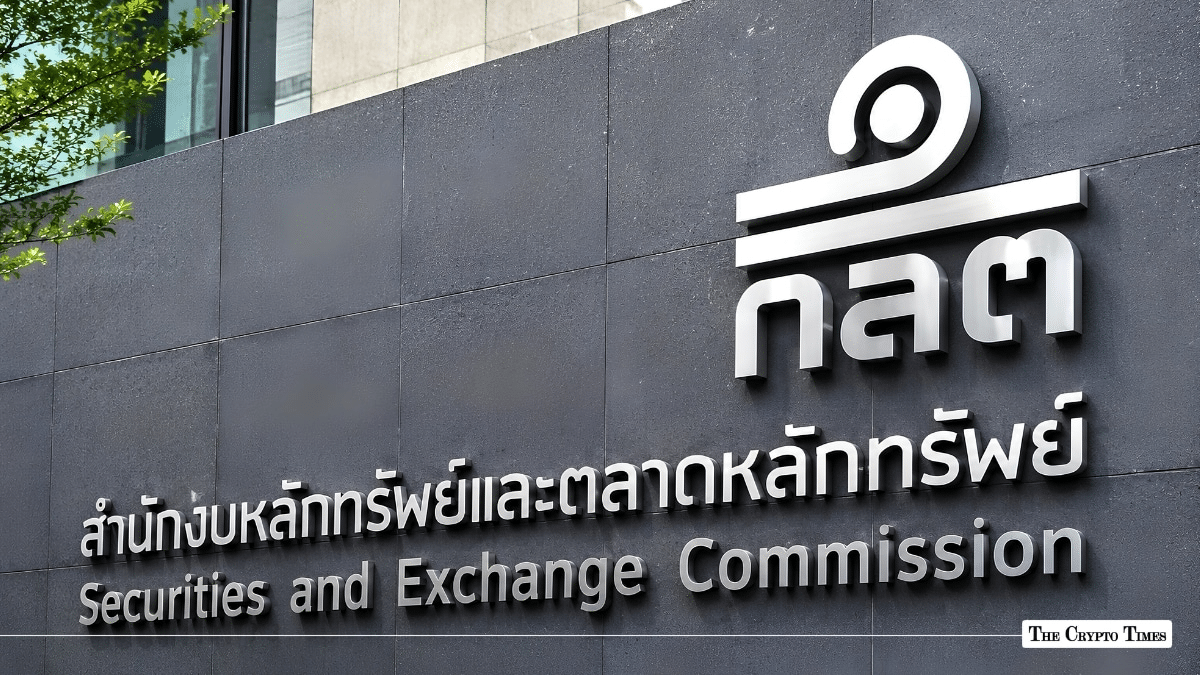
Thailand's securities regulator announced the finalized Travel Rule for Digital Assets on 2 September 2026, to take effect on 27 February 2027, giving firms roughly six months to build systems to collect, exchange and store identifying information on both sides of every transfer.
The rules sit in SEC Notification No. Sor Thor. 9/2026, dated 25 August 2026.
The rules apply to digital-asset operators supervised by Thailand's Securities and Exchange Commission, including platforms that send or receive tokens on behalf of customers.
Firms must write and operate risk-management policies covering transfers and receipts.
Firms must gather data on their own customers and on counterparties, perform due diligence, confirm that the other virtual-asset service provider is properly authorized, check any intermediary used in the routing path, and verify that a customer owns or controls a self-hosted wallet whenever assets move to or from one.
The originating operator must attach originator and beneficiary details to the transfer order and send that package to the receiving operator.
Follow any of these and your For You feed starts watching them — no settings page required.
Evidence-backed comparisons of source perspectives and observed adoption signals. Read the methodology
Which Builder, Operator, and Investor concerns the observed source mix emphasized—not a truth score.
Evidence, demonstrated adoption, hype gap, incentives, and confidence are assessed independently, each on its own current evidence. How these are measured.
One outlet, one unopened document
Crowdfund Insider is the whole record here, and it works from a notification it paraphrases rather than quotes. The specifics are checkable in principle, since a numbered instrument either sets a 30,000-baht threshold and a five-year retention floor or it does not, and Sor Thor. 9/2026 has been dated and identified. Nobody in our sources has gone to the text, and no operator or lawyer has been asked whether the reported reading matches it.
Deadline still ahead of the reporting
The one dated event on record is the regulator publishing its notification. No Thai exchange or custodian has described what it is building, no messaging vendor appears anywhere in the reporting, and the compliance date falls almost six months after our only source went to press. Whether firms can meet it is not something these sources can measure.
Descriptive prose, regulator's forecasts
The writing itself does not oversell; the stretch sits in what it repeats without a counterweight. Hearings are said to have shown broad industry support with no respondent named or submission counted, and the closing line places Thai crypto alongside bank wires in most of the world without anything to support the comparison. Both are the agency's characterizations, printed as background.
The rule's author is the only voice
Pornanong Budsaratragoon speaks for the agency that wrote the notification, and she is the only person quoted in our coverage. The party carrying the bill, a licensed operator funding secure messaging, transaction monitoring and staff retraining inside 178 days, is described in the third person and never asked what that work costs or whether the counterparty-authorization check is even performable.
Calendar firm, execution unknown
The dates are the part most likely to hold: a numbered notification with a stated effective date rarely moves quietly, and 27 February 2027 is close enough to check. What one trade report cannot settle is whether the hardest duty works in practice, namely a Thai platform confirming on deadline that a foreign venue is properly authorized, with no registry or verification method named anywhere in the reporting.
invest
Thailand ties crypto market access to full Travel Rule compliance, with wallet-ownership checks the toughest test1 publisher
invest
Codifying crypto AML duties gives bank compliance officers something to price1 publisher
invest
FinCEN's CTA rollback hands beneficial-ownership diligence back to lenders1 publisher
invest
Grayscale files to convert its Zcash Trust; ZEC's 42% day bought only 7% of new high1 publisher
Publishers with included, body-backed reporting in this cluster.
1 article · September 6, 2026