Invest1 distinct publisher3 min readPublished
Thailand's SEC has finalized a Travel Rule that bars non-compliant transfers from February 27, 2027, and its hardest duty asks operators to verify control of wallets with nobody on the far side to ask.
The Investor · Invest desk

Compiled by The InvestorSomething wrong?How this is made
Passing originator and beneficiary data alongside a transfer order is a message-format problem [4], and message formats get solved, eventually, by vendors and working groups. Verifying that the person holding the private keys to a self-hosted address is the person who passed KYC at registration is a different job, because there is no operator on the far side of that wallet to answer the question [6]. The finalized text, as reported, does not say what evidence discharges the duty, and that gap is where the money is: a cryptographic signature from the address, a small test transfer, a screenshot of a wallet app, and a tick-box declaration all count as verifying, and they do not cost the same to build or to run.
The clock is the other half of it. The regulator's own framing gives operators about six months [14], call it 26 weeks of build [15], though the shape has been visible for longer, since the SEC floated principles in March and April, put a draft notification out in June and July, and landed the final text on September 2 [8]. Interim rules from the SEC and the Anti-Money Laundering Office stand in the meantime, with AMLO still preparing its own under the anti-money laundering law [9]. A firm that started designing against the draft has had roughly eleven months [19]. A firm that waited for certainty has 26 weeks.
Lateness is doing some work here. FATF, whose Recommendation 16 is the origin of the crypto Travel Rule, estimated that 83% of the jurisdictions it surveyed had already passed Travel Rule legislation by 2026 [10], which puts Thailand in the remaining 17% [16]. Sitting in that group cuts both ways: reference implementations exist and can be bought or copied, and the tolerance for a soft launch is thinner when most of your peers did this years ago.
This is probably wrong, but my read is that proof of control is the only genuinely expensive requirement in the notification and the rest is records discipline. The thesis breaks in two visible ways. If the SEC or AMLO issues guidance that a customer declaration satisfies the check, the hardest duty becomes a form field and 26 weeks is generous. If the regulator instead wants cryptographic evidence per address, the smaller licensed operators face a build they cannot amortise, and the rational answer is to sell the licence or stop supporting self-custodial withdrawals rather than to engineer. What nobody outside can price is that second branch, because the announcement as reported carries no figure for the size of the Thai market or for what an operator's Thai revenue is worth [18], and without that number, walking away is a shrug rather than a calculation.
Ranked by verification strength, evidence, and original report placement.
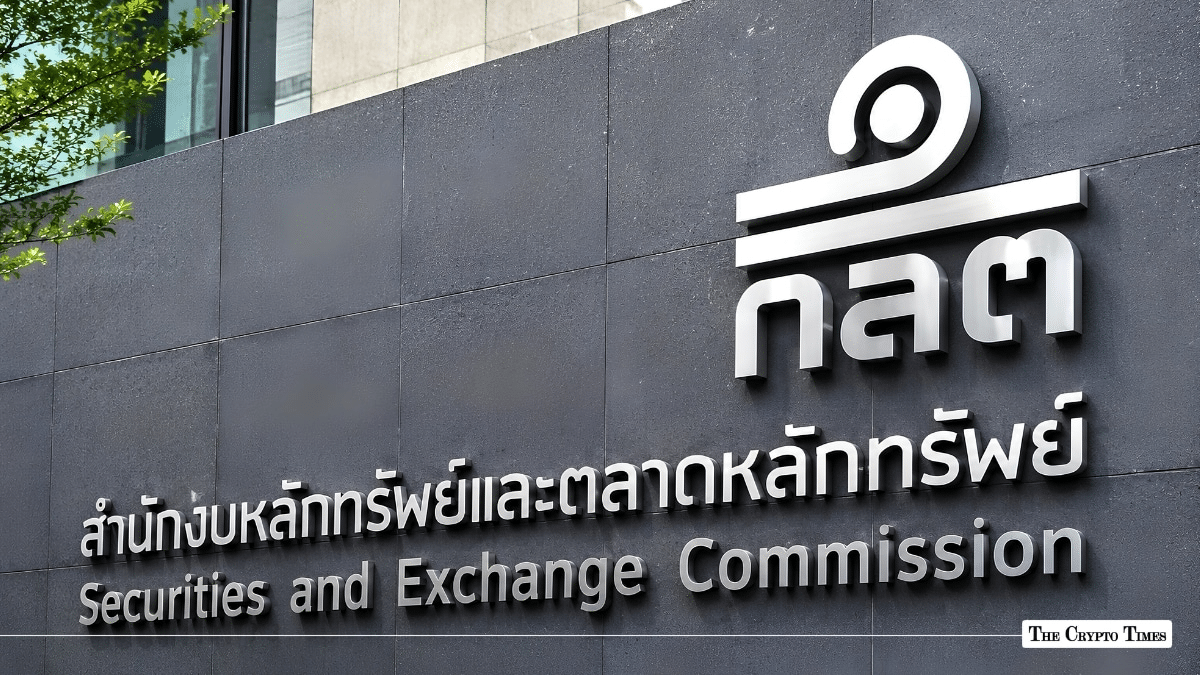
Thailand's Securities and Exchange Commission has finalized a crypto Travel Rule that takes effect February 27, 2027, and digital asset operators that have not set up the required systems by that date lose their right to do business in the country.
Non-compliant transfers will not be allowed once the deadline hits.
By the deadline, licensed exchanges and other digital asset businesses must be able to identify both the sender and the receiver in every crypto transfer.
The Thai SEC named four core duties: written policies and procedures for handling transfer risk, gathering identity data on customers and their counterparties, passing originator and beneficiary details to the receiving operator alongside the transfer order, and a five-year minimum requirement to hold accompanying transaction records.
Per local outlets, firms must keep records for the first two years after a transaction in a form that regulators can access on demand.
Operators must verify that a customer owns or controls a self-custodial wallet the customer sends crypto to or receives it from, a check with no intermediary to confirm ownership, and the report calls this the most challenging hurdle because self-hosted wallets do not carry the KYC data customers submit at registration.
Distinct publishers with included, body-backed reporting in this cluster.
1 article · September 2, 2026
Follow any of these and your For You feed starts watching them — no settings page required.
invest
BSC gives node operators until 02:30 UTC on August 25 to be running v1.7.71 distinct publisher
invest
SEC's $18.5M insider case shows where a shrunken enforcement docket still bites1 distinct publisher
invest
A Solana DEX halted trading and says the loss stopped at its treasury. Nobody can check1 distinct publisher
invest
Ceffu moved $120M out of Ethena's custody wallets, and nobody has said why1 distinct publisher
Evidence-backed comparisons of source perspectives and observed adoption signals. Read the methodology
Which Builder, Operator, and Investor concerns the observed source mix emphasized—not a truth score.
Evidence, demonstrated adoption, hype gap, incentives, and confidence are assessed independently, each on its own current evidence. How these are measured.
Firm dates, one newsroom, no primary text
The dates and duties here are the kind of thing a regulator publishes in full and would be trivial to check — but nobody in our coverage has checked them. Cryptopolitan paraphrases the announcement without linking it, and the most operationally consequential wrinkle, that the first two years of records must be retrievable on demand, is credited only to unnamed local outlets. That leaves the strongest detail resting on the weakest attribution in the piece.
Nothing measured on the operator side
Eighteen months before the rule bites, we have no reading on whether any Thai operator can meet it: no count of licensed firms, no readiness survey, no vendor deployments, no cost figure. FATF's 83% counts jurisdictions that legislated, which is not the same as transfers actually screened, and the story itself carries no market or revenue number to scale against. We would rather say nothing than convert a rulemaking date into uptake.
Restrained telling, unquantified stakes
Credit where it is due: Cryptopolitan calls Thailand late rather than pioneering and flags the wallet-ownership check as the part that may not be practicable, which is the opposite of a hype move. The tilt comes from the consequence. 'Lose the right to do business' is real teeth, but with no firm count, no compliance cost and no enforcement precedent in view, the stakes read heavier than anything actually measured here.
The regulator supplies both facts and framing
The Thai SEC is effectively the only voice: its Secretary-General gives the rationale quote, and 'bringing oversight into line with FATF' is its own characterisation of its own rulemaking — useful for a jurisdiction arriving after most of the world. Cryptopolitan pushes back once on the lateness point, then leans on its own earlier Korea report for the regional parallel and closes with a newsletter pitch and a trading disclaimer. Absent entirely are the parties with money at stake: exchanges facing the deadline and the compliance vendors who sell precisely the transmit-and-monitor plumbing it mandates.
Solid on what and when, thin on cost and capability
Take the calendar to the bank — September 2 final text, February 27, 2027 in force, roughly 26 weeks of stated runway — and treat the four duties as accurately relayed. Everything about consequence and feasibility is softer: interim rules that AMLO may rewrite, a wallet-control check whose practicality no operator has been asked about, and a market-access penalty with no exposure attached.