Product1 distinct publisher2 min readPublished
Tesla is charging for rides in a car it does not yet sell, and the rider rules published alongside it scope the Cybercab to the two-adult trip, which is a supply decision more than a design insight.
The Product Desk · Product desk
Compiled by The Product DeskSomething wrong?How this is made
Follow any of these and your For You feed starts watching them — no settings page required.
product
Tesla registers 51 Cybercabs into a Texas fleet already running 263 Model Ys1 distinct publisher
invest
Tesla's Cybercab rally banks 5.4% before anyone outside Austin counts the cars1 distinct publisher
product
Waymo drops the quiet-confidence act a week before Tesla shows the Cybercab1 distinct publisher
invest
Tesla stakes its robotaxi economics on a pod that seats exactly two1 distinct publisher
An adult travelling with a ten-year-old cannot use one of these. Tesla's Model Y robotaxis carry children as young as eight when an adult comes along [15], so a booking that fails in a Cybercab works one vehicle type over. The Cybercab has no ISOFIX or LATCH anchors either, although its documentation shows one child seat can be belted in [13], a detail InsideEVs reads as future-proofing for a version Tesla eventually sells to the public [14].
The seat count does have an official rationale. "80% of robotaxi rides are with two passengers; that's why the Cybercab only has two seats," a company official said at the presentation [18]. Take the figure as given and a fifth of rides still sits outside the description [4], and that fifth holds two very different trips: the solo rider, who fits a two-seater comfortably, and the party of three, who does not. The number explains a design choice without sizing the demand this car can absorb, and Tesla did not break the residual down.
Supply is where the launch is smallest. The Texas registration count amounts to roughly 18% of the driverless taxis Tesla operates across six cities [1]. Waymo is running about 16 times Tesla's fleet [2], which works out to around 286 vehicles per city against Tesla's 42 [3].
What the rider gets in exchange for the missing controls is a car that behaves like a logged-in account. Doors open as you approach, or from the app, and from the touchscreen or the door buttons once you are inside [19]. Cabin temperature and streaming logins arrive already set from your previous ride, then get wiped when this one ends [20]. Grok is there to answer questions [21]. The trunk holds 20.2 cubic feet, which Tesla rates at two checked bags and two carry-ons [16], or one folded wheelchair, up to 220 pounds [17].
The rules Tesla wrote concede that a rider who wants to send a car for someone else, or bring a kid, or travel three-up, is a request the product refuses. For anyone shipping a deliberately narrow version for the common case, the test that matters is where the refused request lands and who absorbs the cost of moving it. Tesla's fallback sits inside its own fleet, so a rider who cannot use a Cybercab is still a Tesla rider, and the narrow car costs the company a dispatch rule rather than a customer. When your fallback sits outside the product, in a support queue or someone else's app, the narrow version sorts your users rather than serving the majority case.
Ranked by verification strength, evidence, and original report placement.
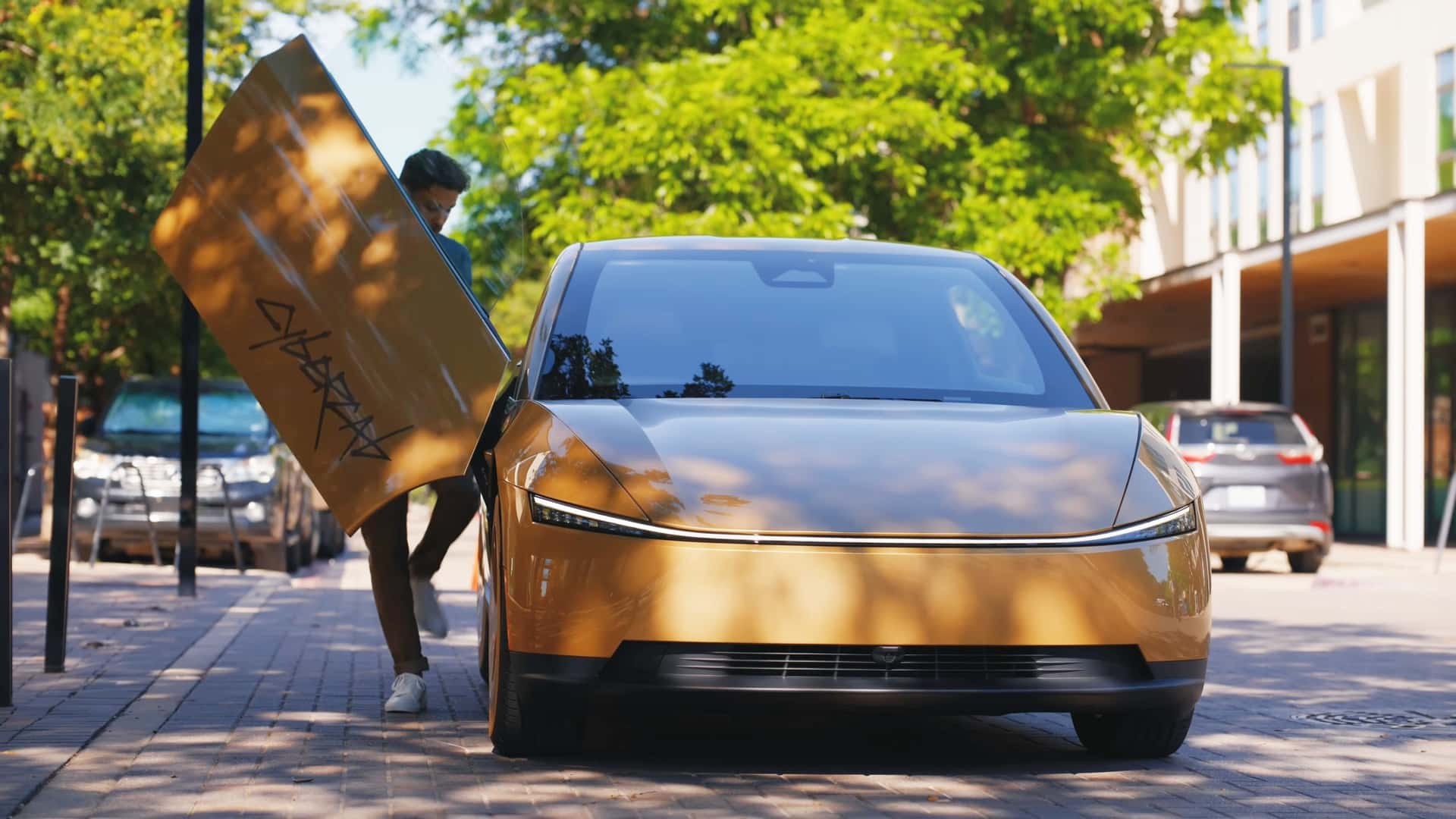
The Tesla Cybercab, a gold-colored two-seat EV without a steering wheel or pedals, is now offering paid Robotaxi rides in Austin, Texas.
The Cybercab was introduced at a closed-door event where traditional media and even some hardcore Tesla enthusiasts were not invited.
Musk has promised for years that people would eventually be able to enroll their personal Tesla EVs in the company's Robotaxi fleet to earn passive income; Tesla owners still cannot turn their EVs into Robotaxis.
Tesla did not say how many Cybercabs are available for public rides.
Recently published data from the Texas Department of Motor Vehicles shows Tesla has 45 Cybercabs registered in the state.
The two-seat Cybercabs are only available in Austin for now.
Distinct publishers with included, body-backed reporting in this cluster.
1 article · September 4, 2026
Evidence-backed comparisons of source perspectives and observed adoption signals. Read the methodology
Which Builder, Operator, and Investor concerns the observed source mix emphasized—not a truth score.
Evidence, demonstrated adoption, hype gap, incentives, and confidence are assessed independently, each on its own current evidence. How these are measured.
One outlet, two anchors it did not get from Tesla
The rider rules and the spec sheet are solid because Tesla published them itself, and the 45-vehicle registration count comes from Texas records. Everything else narrows to a single account of an event closed to media: the 80%-of-rides quote, the fleet approximations, and Musk's absence, the last of it resting on attendees who are not named.
Real fares, one city, 45 cars
Paying riders in driverless two-seaters is genuine deployment, not a demo, and that counts. But the footprint is one metro, the registered count is 45, Tesla will not say how many are actually in service, and the comparison the story itself reaches for — Waymo at roughly 4,000 vehicles in 14 cities — sets the scale.
Fares running ahead of the fleet
A launch billed as a milestone delivers 45 registered cars in one city, a vehicle no one can buy, and a passive-income promise still undelivered years on. The two-seat rationale is the tell: '80% of rides carry two passengers' is offered as a design insight, but with two seats, no child-seat anchors and a self-hail-only rule, the car defines the trips it can take rather than discovering them.
Tesla set the room, the page and the numbers
Nearly every fact originates with the party that benefits from it: a guest list Tesla controlled, a spec sheet Tesla wrote, a rider page Tesla posted, and a vehicle count Tesla refused to give. The reporting pushes back where it can — registration records, the Waymo comparison, the flat statement that owners still cannot enroll their cars — but it is working inside a disclosure perimeter someone else drew.
Firm on the rules, soft on the scale
Confidence splits by claim type. What the Cybercab will and won't let you do is documented and checkable, and we would be surprised to see it revised. The scale picture — how many cars, in how many cities, against how many Waymos — rests on round numbers with no source attached, and a single outlet reconstructing a closed event.