Science1 distinct publisher3 min readPublished
A survey of the Po, torpedoed in Vlora Bay in 1941, logged the first monk seal confirmed there since 1996 and up to seven devil firefish on the same steel, which makes the wreck a harder conservation call than it looks.
The Scientist · Science desk

Compiled by The ScientistSomething wrong?How this is made
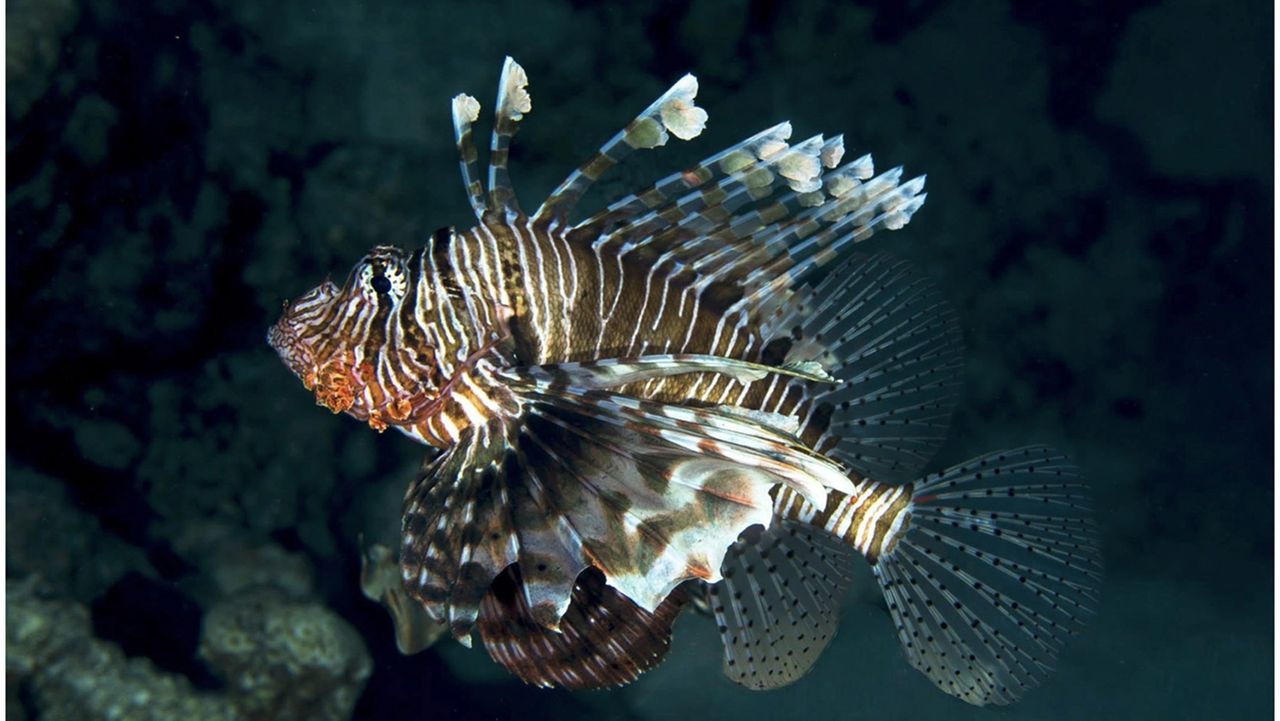
The two animals in this story are not documented to the same standard. That gap turns out to be the most useful thing in the paper. The monk seal is a single animal, photographed once, resting in a sheltered cavity in August 2023 [5], which is 27 years after the last confirmed record in the bay [1]. The devil firefish were logged across a window running from June 2022 to September 2024, roughly 28 months [2], with as many as seven visible at the same time [7].
There was no earlier biological or quantitative survey of the Po to compare against [3]. So the finding that over 80% of the hull's surface is occupied [2] tells you how thoroughly the steel has been colonised, not whether the wreck added animals to Vlora Bay or drew them off the seabed nearby. That difference decides whether a wreck is production or aggregation, and this design cannot settle it. A structure that gathers fish also makes them easier to find, for divers and for whatever else hunts there.
The authors propose that wrecks like the Po may be pulling invasive species toward more temperate water [8]. The observation supports presence, though the pull toward warmer water remains an inference rather than a demonstrated mechanism. Testing it needs the comparison the study did not have, which is matched natural rocky habitat at similar depth and distance from shore, censused with the same effort. What the paper does establish is position: the record sits among the northernmost for Pterois miles in the Adriatic [9], against a broader movement of Red Sea species through the Suez Canal as the sea warms [10].
Simone Modugno, a biologist and scientific diver at the University of Ferrara and a co-author, told Live Science the arrival was not a true scientific surprise, and that what stands out is the speed of the change, with abnormal salinity and persistent peaks of extreme heat acting as driver and amplifier [12]. Modugno reports three years of steady increase in Pterois miles along the Albanian coast, alongside the spontaneous return of the monk seal [13], and expects a serious firefish problem within a decade [11]. That trend is a diver's series without standardised effort or area behind it, so the direction is informative and the rate is unquantified.
For the seal, the value of the wreck is easier to state and harder to bank. Monk seals breed in sheltered sea caves, and tourism has pushed them into more isolated and more dangerous ones [14]; the researchers read the sighting as seals using artificial reefs to rest where natural habitat is fragmented [15]. One photograph shows use, but not how often or by how many animals, and the 28 fish species and squid egg clusters on the same hull [4] describe a working reef rather than a protected one.
The crevices that shelter a seal are the crevices that shelter a lionfish [16]. My view, with its condition attached: a wreck earns the label of conservation asset only after someone counts what is living on it, and the Po is an argument for surveying the hulls already down there before anyone argues for putting more steel in the water.</body_markdown> </invoke>
Ranked by verification strength, evidence, and original report placement.
The Po, an Italian World War II hospital ship, sank off Vlora Bay, Albania, in 1941 after being hit by a torpedo from a British Fairey Swordfish aircraft during the Greco-Italian War.
The wreck now acts as an artificial reef, with over 80% of its surface teeming with marine life, as reported on July 27 in the journal Frontiers in Ocean Sustainability.
There was no historical biological or quantitative data for the Po wreck itself before the new study, which sought to find out how the ship's structure affected the surrounding seabed and how marine organisms have colonised it.
Researchers noted 28 fish species living around the wreck and egg clusters belonging to the Ommastrephidae family of squid.
In August 2023 researchers captured a Mediterranean monk seal (Monachus monachus) resting within the sheltered cavities of the wreck, the first confirmed sighting of the species in Vlora Bay since 1996.
Devil firefish (Pterois miles) are native to warm coastal waters and coral reefs of the West Indian Ocean and the Red Sea.
Distinct publishers with included, body-backed reporting in this cluster.
1 article · September 2, 2026
Follow any of these and your For You feed starts watching them — no settings page required.
science
A drug-insensitive enzyme in the mouse gut strips 80% of metformin's glucose-lowering effect1 distinct publisher
science
Feeds are triaging patients by engagement, and the proposed defence is literacy, not moderation1 distinct publisher
science
A transplanted lung carried a 12-year-old donor's peanut allergy for a year1 distinct publisher
science
Ancient DNA keeps changing the sex of the richest graves. The backlog is the story1 distinct publisher
Evidence-backed comparisons of source perspectives and observed adoption signals. Read the methodology
Which Builder, Operator, and Investor concerns the observed source mix emphasized—not a truth score.
Evidence, demonstrated adoption, hype gap, incentives, and confidence are assessed independently, each on its own current evidence. How these are measured.
One survey, one relay
Every figure that matters — 80% of the hull colonised, 28 fish species, seven firefish at once, a seal seen in 2023 after a 27-year gap — comes from a single survey by the team that dived the wreck, reaching readers through a single outlet. For a site with no earlier biological baseline, which the study itself says was the case, that is the expected shape of a first assessment; it also means nobody who wasn't on the boat has checked any of it. Two small tells in the copy: a paragraph is repeated almost word for word, and the July 27 report date sits beside a citation carrying a 2026 volume.
Nothing to take up
A colonised wreck has no users. The nearest thing to uptake would be Albanian conservation or dive management acting on these records — a monitoring plan, a firefish removal effort, restrictions around the site — and this reporting describes none of it, so there is nothing here to measure rather than a low score to award.
Careful records, two loud quotes
Live Science is mostly disciplined: 'up to seven individuals', 'one of the northernmost' occurrences, a suggestion rather than a finding that wrecks pull invaders north. The overreach arrives through the interview. 'Serious problem' within ten years and a lionfish population 'literally exploding' are a diver's impressions with no counts behind them, and they carry more rhetorical weight than the bounded observations sitting beside them. Notably, the co-author herself pushes back on the novelty framing — she declines to call any of it a scientific surprise.
The only voice is a co-author
Simone Modugno is quoted three times and is the sole expert in the piece, which puts the interpretation, the alarm and the ten-year forecast in the hands of the researcher whose first assessment of this wreck is on the line. That is not a reason to doubt the sightings; it does mean the discovery and the warning flatter the same paper, with no outside ecologist to price either. Live Science's own pull shows in the furniture — a newsletter prompt dropped mid-article, a related-stories rail — around a WWII-wreck-meets-lionfish hook built to travel.
Firm on the sightings, thin on the sequel
I would take the two dated observations at face value: a seal photographed in the cavities in August 2023, firefish across a 28-month window. Those are the kind of records a camera settles. Everything downstream is softer — wrecks acting as stepping stones for invaders, seals substituting steel for sea caves on the strength of one animal, a crisis by the mid-2030s — and with no second publisher and no independent ecologist in the reporting, none of it gets tested.