Leadership1 publisher2 min readPublished
Farsight AI's co-founder would grade enterprise AI on how much output survives review
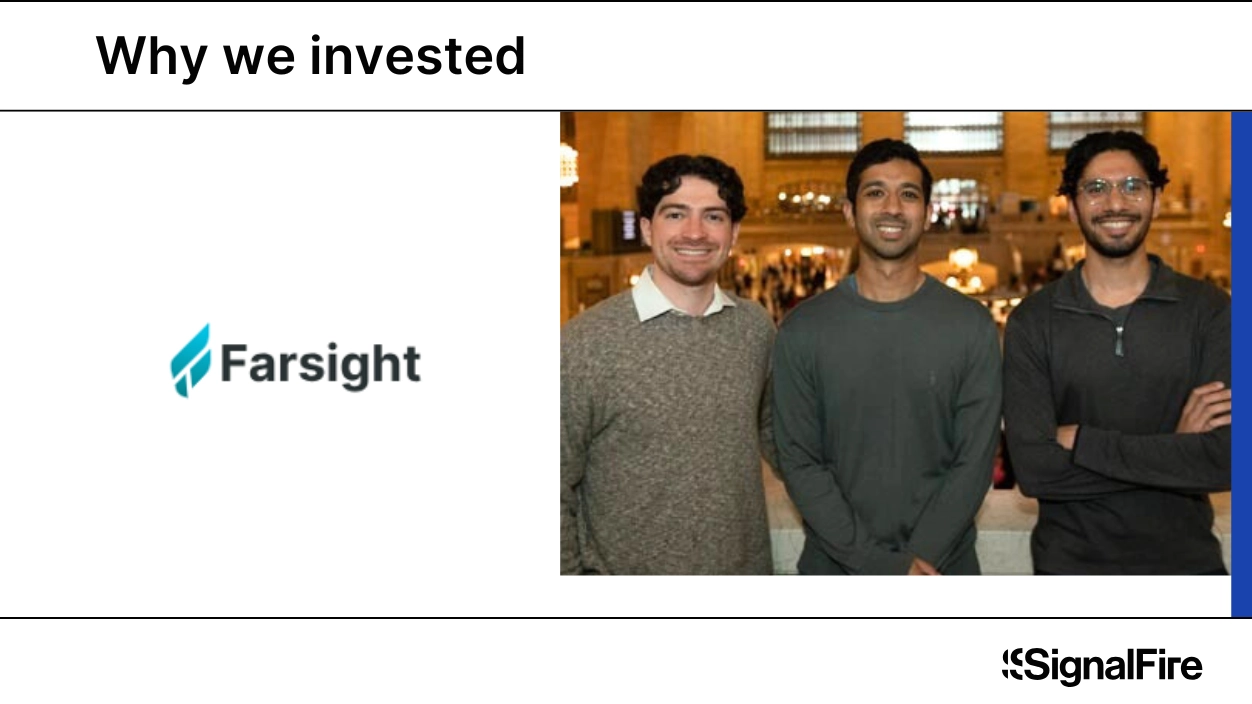
A Forbes Tech Council column by Farsight AI's Samir Dutta argues that raw model intelligence is becoming a commodity, and asks enterprise buyers to judge AI on the share of its output that reaches the final deliverable.
The Board Room · Leadership desk
What happened
- Samir Dutta, CEO and co-founder of Farsight AI, wrote in Forbes that enterprise AI leaders spent two years comparing benchmark scores and reasoning quality to find the smartest model, and have been asking the wrong question.
- He argues the organizations seeing the strongest returns are not necessarily on the smartest model, but apply their chosen model to real business problems and pair it with expertise competitors cannot easily replicate.
- Demonstrating ROI has become a top priority for business and finance leaders, according to the column, while very few organizations have a consistent way to measure it.
- The metric he brings from financial services is acceptance rate: how much of the work AI produces ultimately makes it into the final presentation, financial model or client deliverable.
- He names targets by function, including proposal turnaround time or win rates in sales, case resolution times in customer service, and how quickly analysts produce investment recommendations.
Compiled by The Board RoomSomething wrong?How this is made
Why it matters
- constraint Fixing one or two metrics before deployment closes off the retroactive success story, and it commits the sponsor to a number chosen before anyone has watched the tool behave in the workflow.
- decision Acceptance rate reaches a board pack only once someone sets the passing score, and the first team in a company to name one sets the bar every later AI project gets measured against.
- cost Counting acceptance rate means tracking which parts of each deliverable came from the model and which were rewritten, instrumentation the workflow owner has to build and keep running.
- precedent If buyers accept the commodity premise on assertion, the next procurement cycle can quietly drop comparative model testing without anyone having shown the scores converged.
One premise carries the argument, and Dutta states it without benchmark scores or comparative model results in support [19]. He wrote that "models are advancing so quickly that raw intelligence is becoming less of a differentiator and more of a commodity" [5]. A leader asked to cut a model-evaluation budget this quarter is being asked to take the convergence claim on the author's reading of the market.
Acceptance rate is the one proposal in the column with a number attached. Dutta wrote that "work that's only 60% usable often has very little value" [14]. He also wrote: "If employees have to discard almost half the output and start over, the anticipated productivity gains quickly disappear" [15]. Sixty percent usable is forty percent discarded [16], which he glosses as almost half. Acceptance rate becomes a quarterly number only once a team fixes what it counts against and what score counts as passing.
The pre-deployment step is the part that binds. Dutta wrote: "Without clearly defined objectives, nearly any result can be interpreted as success or failure" [11]. He asks for one or two business metrics tied to the problem, established before AI enters the workflow [10]. A metric named in advance can be missed, and a team that names one accepts the possibility of failing on it. Most organizations start with time savings, Dutta says, because it is relatively easy to quantify [9].
Dutta is CEO and co-founder of Farsight AI [1], and the piece ran on Forbes under the Tech Council banner [17]. Acceptance rate is what his own firm measures in financial services rather than an agreed industry standard [13]. None of that settles whether the metric works. Acceptance rate can be tested inside a single workflow in a quarter, and a company that runs the test can publish a number that contradicts him.
Nothing in the framework requires believing models have converged. A procurement team can keep comparing models on cost, latency and quality while the finance case moves to business outcomes, operational impact and return on investment [7]. The two questions have different owners and different renewal dates. This quarter's decision is which number a sponsor agrees to be judged on. The decade's question is whether frontier model quality stays close enough that the choice stops mattering. Dutta's third measurement dimension bets that it will. He argues that as foundation models keep improving, an organization's own expertise becomes more valuable, and he asks buyers to measure how effectively AI uses that institutional knowledge [18].
What to watch
- Whether Farsight AI or any of its clients publishes an acceptance-rate baseline other firms can compare themselves against.
- A benchmark release that separates frontier models on a specific business task. Such a release would test the commodity premise directly.
- Whether finance functions start asking for acceptance rate alongside hours saved in quarterly AI reviews.