Science1 publisher3 min readPublished
Human stem cell grafts repaired four things at once in stroke-injured mice
A University of Zurich team transplanted human neural stem cells a week after inducing strokes in mice, and reported new neurons, new blood vessels, a tighter blood-brain barrier and restored walking in the same animals.
The Scientist · Science desk
What happened
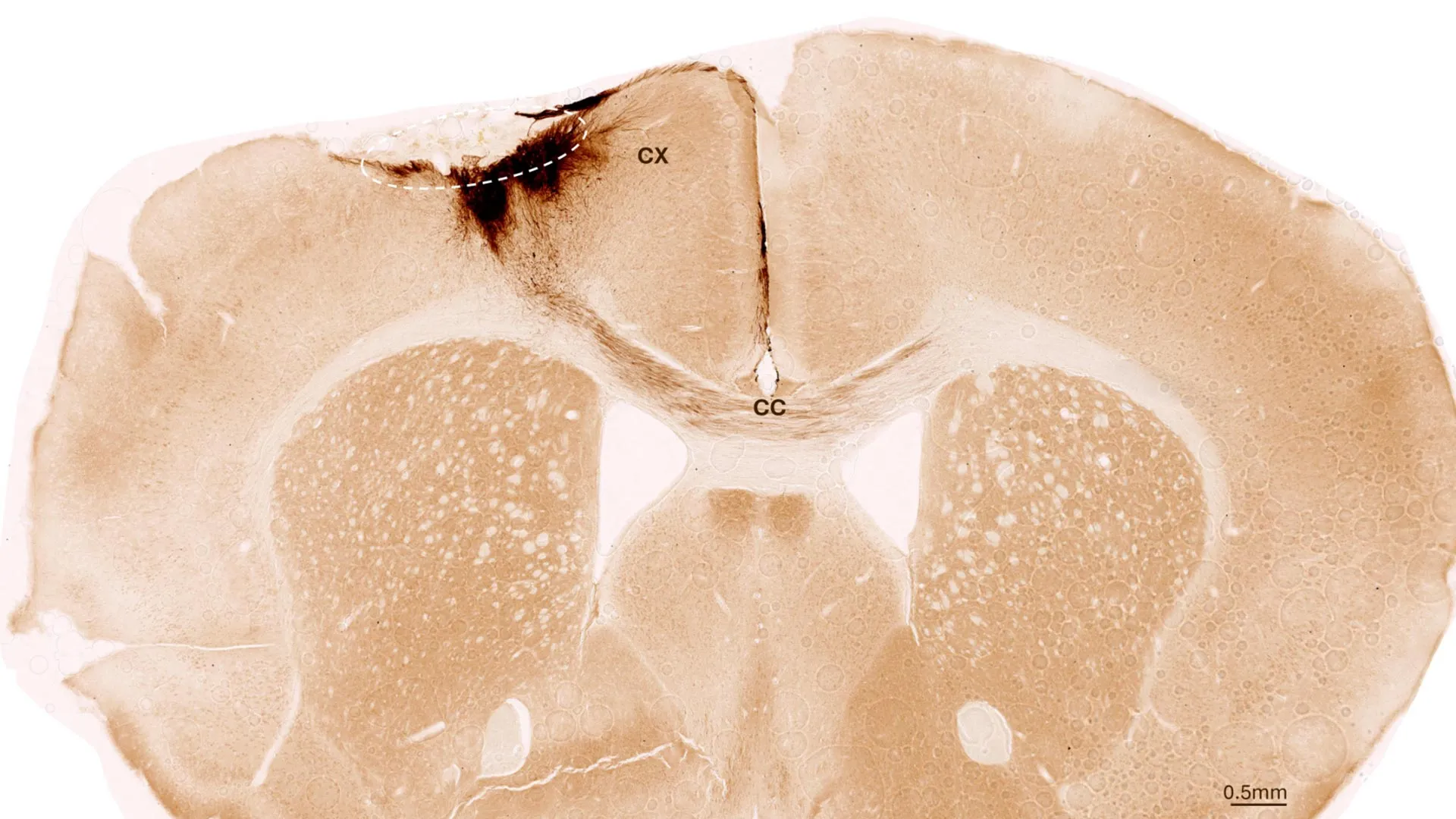
- The Zurich group induced permanent strokes in mice, waited a week, injected human neural stem cells straight into the damaged regions, and then followed them with imaging and biochemical analysis.
- Most of the transplanted cells became neurons that communicated with the animals' existing brain cells, and they survived to the end of the five-week analysis period, according to Tackenberg.
- The injured tissue also grew new blood vessels, inflammatory processes became less intense, and the blood-brain barrier held together better than before treatment.
- Motor impairments caused by the strokes were reversed after transplantation, scored partly through AI-assisted analysis of how the mice walked.
- The work comes from two studies run by Christian Tackenberg and Rebecca Weber in Zurich with a group headed by Ruslan Rust at the University of Southern California.
Compiled by The ScientistSomething wrong?How this is made
Why it matters
- capability The cells went in a full week after the injury and the animals still recovered, so a rebuilding approach does not depend on reaching the patient in the first hours.
- decision Whoever funds the next study has to spend an arm on subtraction, removing one repair at a time, because a result where everything improves together cannot name the active ingredient.
- constraint Rejection is outside this evidence entirely: the hosts were engineered to tolerate human cells, so a human programme inherits immune matching or suppression as an unanswered problem.
Nothing in the design, as the University of Zurich describes it, separates the new neurons from the repaired blood vessels and the better-sealed barrier [15]. Both sets of changes happened in the same animals over the same weeks, and either could plausibly help a mouse walk [18]. Christian Tackenberg was explicit that the graft does more than swap in cells. "Our findings show that neural stem cells not only form new neurons, but also induce other regeneration processes," he said [8].
The barrier result has its own route to benefit. A damaged blood-brain barrier can feed inflammation and further injury after a stroke [16], so sealing it is a candidate explanation for recovery that never passes through a new neuron. The release makes the opposite argument too: new neurons on their own would not necessarily restore function, because they have to become part of working networks [14]. Cell replacement and vascular repair are different products with different risks, and this result points at both without choosing.
The cells were human, grown from induced pluripotent stem cells made by reprogramming ordinary human somatic cells [9]. To keep them alive, the recipient mice were genetically modified so their immune systems would not reject the graft [11]. The modification makes the experiment possible, but it also means survival and integration were measured in a host that could not mount the response a person would. The injury itself was a permanent stroke, built to resemble important features of stroke in humans [10].
Brain tissue lost to stroke has been treated as permanently lost, because no treatment currently rebuilds it [5]. "That's why it is essential to pursue new therapeutic approaches to potential brain regeneration after diseases or accidents," said Tackenberg, the Scientific Head of Division in the Neurodegeneration Group at the UZH Institute for Regenerative Medicine [6].
The population behind that ambition is large. About one in four adults has a stroke over a lifetime [3], and roughly half of those who have one are left with lasting problems such as paralysis or difficulty speaking [4]. Multiply the two and about one adult in eight would, across a lifetime, be a candidate for a treatment that rebuilds tissue [19].
Tackenberg sets the work against earlier transplant experiments. "Our analysis goes far beyond the scope of other studies, which focused on the immediate effects right after transplantation," he said [17]. Five weeks is long enough to show that grafted cells persist and wire in, but a graft in a human brain would have to stay safe for far longer than that. The release does not report how many animals were used or how large the motor improvement was [20].
What to watch
- Whether the two peer-reviewed papers report animal numbers, sham-graft controls and effect sizes for the gait scoring.
- Whether a follow-up subtracts one repair, for example a graft blocked from forming neurons, to see if walking still recovers.
- Whether grafts survive five weeks in animals with intact immune systems, without the genetic modification used here.