Science1 publisher2 min readPublished
Soil bunds alone delivered nearly all of the erosion cut in an Ethiopian tillage trial
The best package in three seasons of central Ethiopian field trials raised wheat yield by more than a quarter and sharply cut erosion. But the simplest component captured most of the soil benefit on its own, and none of it was priced.
The Scientist · Science desk
What happened
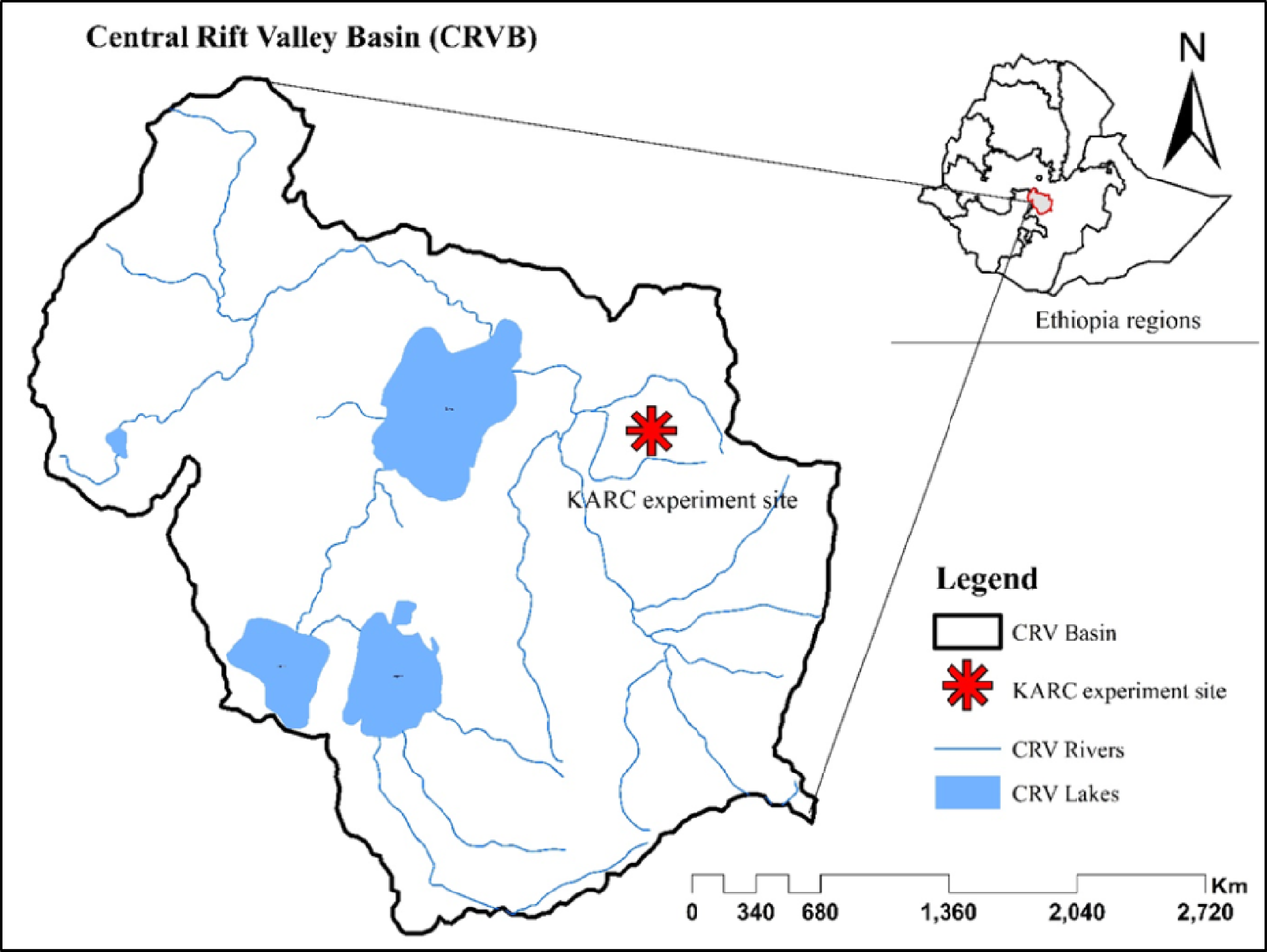
- Researchers ran three growing seasons of field trials in central Ethiopia, testing soil bunds, wheat-residue mulch and the deeper-furrow Berken plow both one at a time and in combination.
- The most effective combination increased wheat yields by more than 27% and reduced soil loss by 76% relative to the comparison plots.
- Soil bunds on their own, the small earthen barriers laid across sloping fields, cut runoff by 57% and soil loss by 73%.
- The team reports that as much as 50% to 70% of rainfall in the region can be lost before it ever reaches crop roots, carrying soil and nutrients away with it.
- The study did not evaluate costs or practicality for individual farmers, and the authors list labour requirements, affordability and larger-scale adoption as the next questions.
Compiled by The ScientistSomething wrong?How this is made
Why it matters
- decision An extension programme choosing what to subsidise now faces a narrower question: whether a purchased plow and diverted crop residue are worth the extra three percentage points of erosion control on top of bunds already built.
- exposure Every burden the trial left unmeasured lands on the smallholder, from the labour and lost planting area of bunds to residue taken away from livestock feed and cash for a plow.
- constraint With no control yield in kilograms and no labour figure, the 27% cannot be converted into a return per hectare, which limits the result to guiding the next study rather than a planting decision.
The best-performing package cut soil loss by 76% [2]; the earthen bunds by themselves cut it by 73% [3]. Mulch and the Berken plow, added on top of bunds that are already in the field, are therefore worth three percentage points of erosion control, and about 96% of the package's soil-loss benefit is present without them [12].
The yield side of that comparison is not available. The account of the trial gives runoff and soil loss for bunds alone but no wheat yield for that treatment [13], so these numbers cannot say whether the 27% harvest gain [2] rides on the plow's deeper furrows and the infiltration they allow [4]. That is the component with an invoice attached: the Berken plow needs an upfront purchase and training [8].
The percentages also travel without their denominator. No yield per hectare is reported for the control plots [14], so 27% could be a large absolute gain or a slim one. Nor is it pinned down which practices made up the "most effective combination" credited with the headline figures [15], while the treatment that stacked all three is described only as delivering "some of the strongest overall results" [6]. A combination and a description of strong results are not the same statement.
The authors, led by Abera Assefa Biratu and writing in Ecosystem Services [9], say plainly that they did not evaluate cost or whether the approach is practical for an individual farmer, and they file labour requirements, affordability and adoption at larger scales as next steps [7]. This is field evidence, not a costing. Each practice carries a different burden: bunds need labour and take land out of production, crop residue is often already committed to livestock feed or fuel, and the plow needs cash [8].
Keeping water on the field is a within-season fix, not a year-round one. Co-author Assefa Melesse of FIU says that even where wet-season rainfall is not deficient, dry-season needs go unmet unless runoff harvesting is prepared for [10]. That is a second intervention, with its own unmeasured labour. His suggestion that these techniques would help elsewhere in erosion-prone country [11] is an expectation rather than a finding of this trial, which ran in one central Ethiopian landscape across three growing seasons [1].
An effect of that size on both harvest and soil, sustained over three seasons, is worth building on [1][2]. The figure that decides whether any of it gets built is labour-days per hectare and the price of a plow, and this study did not measure either [7].
What to watch
- A follow-up reporting labour-days per hectare of bund construction and the land area withdrawn would let the 27% yield gain be turned into a return per hectare.
- Whether the Ecosystem Services paper itself reports treatment-level yields, including a wheat yield for soil bunds alone, which the public summary omits.
- Replication in a drier or wetter landscape outside central Ethiopia would test Melesse's expectation that these practices transfer to other erosion-prone regions.