Science1 publisher2 min readPublished
Whole-genome sequencing splits the gentoo penguin into four species
Genomic evidence turns one widely distributed penguin into four species, three of them sub-Antarctic, and gives the Kerguelen birds the first new penguin name in more than a century. Conservation accounting now has to be done island group by island group.
The Scientist · Science desk
What happened
- An international team led by researchers in Chile and at UC Berkeley identified the gentoo penguin population of the Kerguelen Islands as a distinct species, publishing the work in Communications Biology.
- The Kerguelen birds are now the southeastern gentoo penguin, Pygoscelis kerguelensis, and the authors say the population may face an uncertain future.
- Alongside the new species, three gentoo populations previously ranked as subspecies were found genetically distinct enough to be recognized as full species.
- The naming makes it the first new penguin species described in more than 100 years.
- Warming oceans could leave several of the island populations with little suitable habitat by 2050, according to projections cited in the announcement.
Compiled by The ScientistSomething wrong?How this is made
Why it matters
- decision No single authority covers the islands where the three sub-Antarctic species breed, so each governing country now has to decide separately whether to protect a species it previously counted as part of an abundant whole.
- constraint Surveys that identify gentoos by appearance cannot tell the four species apart, so monitoring the new boundaries means collecting genetic samples rather than counting birds from a boat.
- exposure The risk lands on populations that had no separate status until this paper: the Kerguelen species and two others in the sub-Antarctic, where the projected habitat loss is concentrated.
- capability Genome-wide sampling across a near-complete range can resolve a boundary dispute that a century of measuring bodies and recording calls left open. That is a usable template for other seabird complexes.
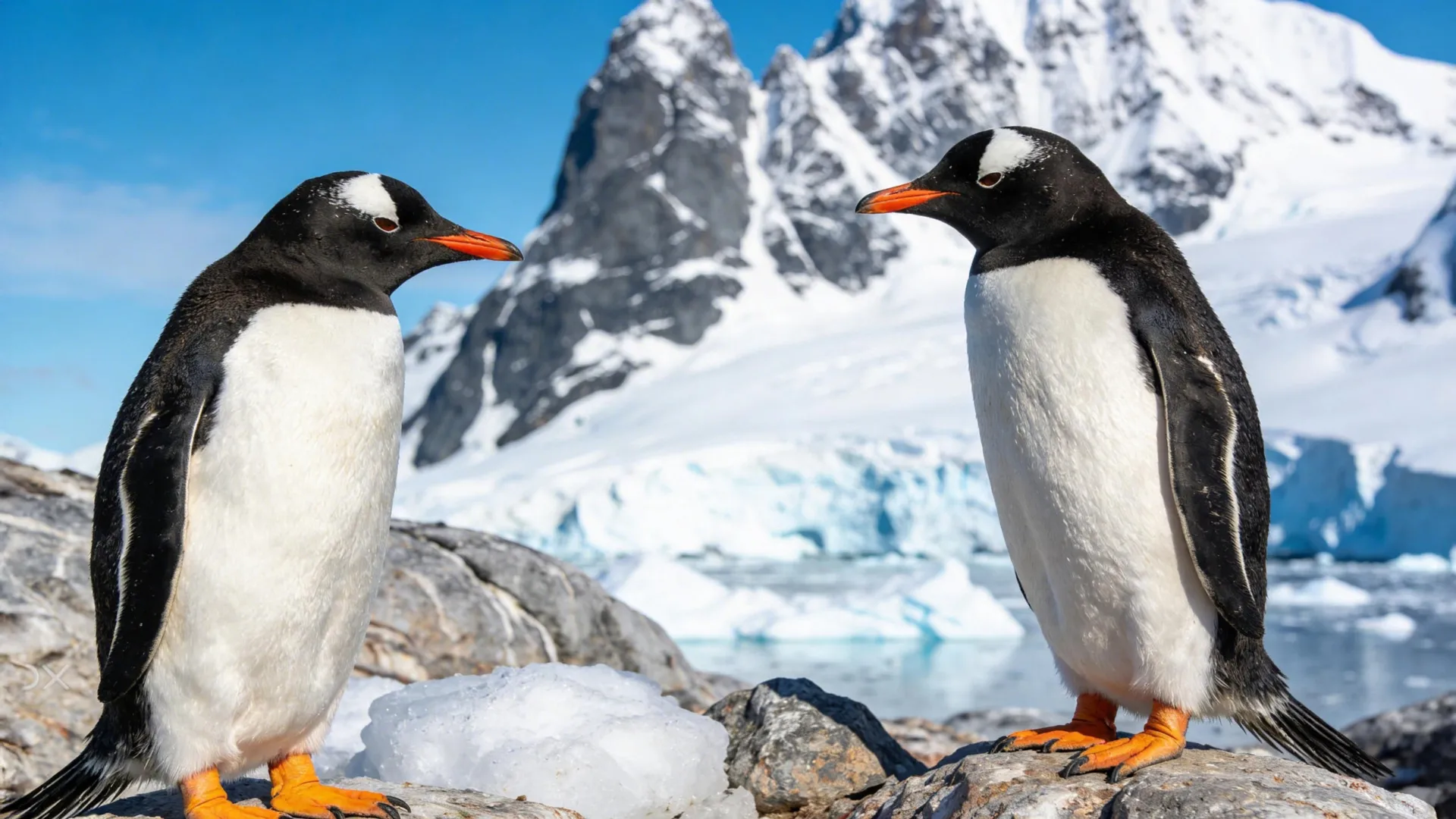
Gentoo penguins on Kerguelen look like gentoo penguins anywhere: the same white underside and black back, separated from their relatives by only subtle differences in body size and vocalizations [4]. Biologists call that a cryptic species, one that closely resembles its relatives while being genetically distinct [5]. The islands, known in French as the Desolation Islands, lie nearly 2,000 miles from any permanently inhabited landmass [11]. Many of the seventeen other penguin species also breed on islands that are difficult for researchers to reach and study [21].
The four-species result comes from whole genomes of 64 birds sampled at 10 breeding colonies [12], an average of about 6.4 genomes per colony [22]. That is a thin sample per site for a question about where one population ends and another begins. But it is the first gentoo study to cover nearly the entire geographic range of the birds [12], and the sequences were paired with comparisons of coloration, calls, breeding schedules, diet and feeding behavior [13]. Earlier authors had proposed as many as six subspecies without reaching agreement [14].
"There's probably no species of penguin where the taxonomy has been more debated than the gentoo penguin," said Rauri Bowie, a professor of integrative biology at UC Berkeley and a curator in its Museum of Vertebrate Zoology [15].
Splitting one species into four leaves the same number of penguins alive and changes the denominators: the same birds are now divided among four units, each with a smaller range and a smaller total than the taxon they were counted in before [24]. Three of the four live in the sub-Antarctic [23], the band of widely separated islands north of Antarctica under the jurisdiction of Chile, South Africa, France, the Netherlands, Australia and New Zealand [19]. Two of the newly defined species besides the Kerguelen birds could also be vulnerable as warming reshapes those regions [8]. The release does not describe the warming scenario behind the habitat projections, or how suitable habitat was defined.
Juliana Vianna of Andres Bello National University in Santiago, one of the paper's senior authors [20], located the risk geographically. "In Antarctica, of course, other species, not the gentoo, are threatened by climate change," she said [16]. "But the gentoo is of most concern in the sub-Antarctic region" [17]. She added: "It's very important that conservation institutions in all the different countries involved recognize and take appropriate action to save these three gentoo penguin species" [18].
What to watch
- Whether conservation agencies in Chile, South Africa, France, the Netherlands, Australia and New Zealand adopt four gentoo species in their own listings.
- Publication of the habitat projections behind the 2050 figure, with the warming scenario and colony-level detail spelled out.
- Whether sequencing of colonies outside the 10 sampled revives some of the six subspecies earlier authors proposed.