Science1 distinct publisher2 min readPublished
Purdue researchers measured nanoparticles forming within minutes of routine cleaning in a model house. The precursor is the fragrance, which turns product choice into a ventilation problem.
The Scientist · Science desk

Compiled by The ScientistSomething wrong?How this is made
Terpene plus ozone makes particles is settled atmospheric chemistry, worked out on forests, where the reaction runs slowly because the terpene supply is thin [6]. Indoors the feedstock changes: Boor puts airborne terpene concentrations during cleaning at tens to hundreds of times forest levels [8]. The reaction did not get more exotic. It got fed.
That makes this a two-reactant exposure, and both reactants arrive by decisions someone in the building makes [1]. One is the product on the cart. The other is the oxidant, which is why the advice to keep ozone-generating devices off while cleaning sits beside the advice to run an exhaust path [10].
The awkward part for anyone who thought they had solved this by buying botanical is the list of common cleaning terpenes: pinene, limonene, thymol and linalool, which is to say pine, lemon, thyme and lavender [7]. Thymol and linalool are what an essential-oil formulation advertises on the label, and the Purdue tests covered botanical disinfectant sprays and wipes alongside scented conventional liquids [1][2]. Specifying essential oils specifies the precursor [2]. What the material does not settle is whether a botanical disinfectant can do its job without those compounds.
Two limits on how hard to lean on the finding. It is a conference presentation at the American Chemical Society's fall 2026 meeting rather than a number-bearing paper in front of us [12], and the roadside comparison is Boor's own characterisation, offered with the caveat that particle composition differs even where the total dose is higher [5]. One instrumented tiny house with a working kitchen, wood flooring and a bathroom is also one building [2].
Set against that, the deposition end is not speculative in the same way: particles in this range settle throughout the airways and deep into the lungs, where they can irritate and inflame, or potentially cross into the bloodstream [13]. The suggested controls are unscented product, exhaust fans, and no ozone-generating device running while you clean [10], which is cheap enough to adopt well before the paper lands.
The last piece is what removing the smell actually costs. Boor and Nusrat Jung began this line of work during the pandemic and found the products heavily scented, often to build a pleasant smellscape [15]; Boor's own line is that clean air should not smell of concentrated citrus, and should not really smell of anything [14]. Where the fragrance is doing perception work rather than cleaning work, taking it out costs only the perception.
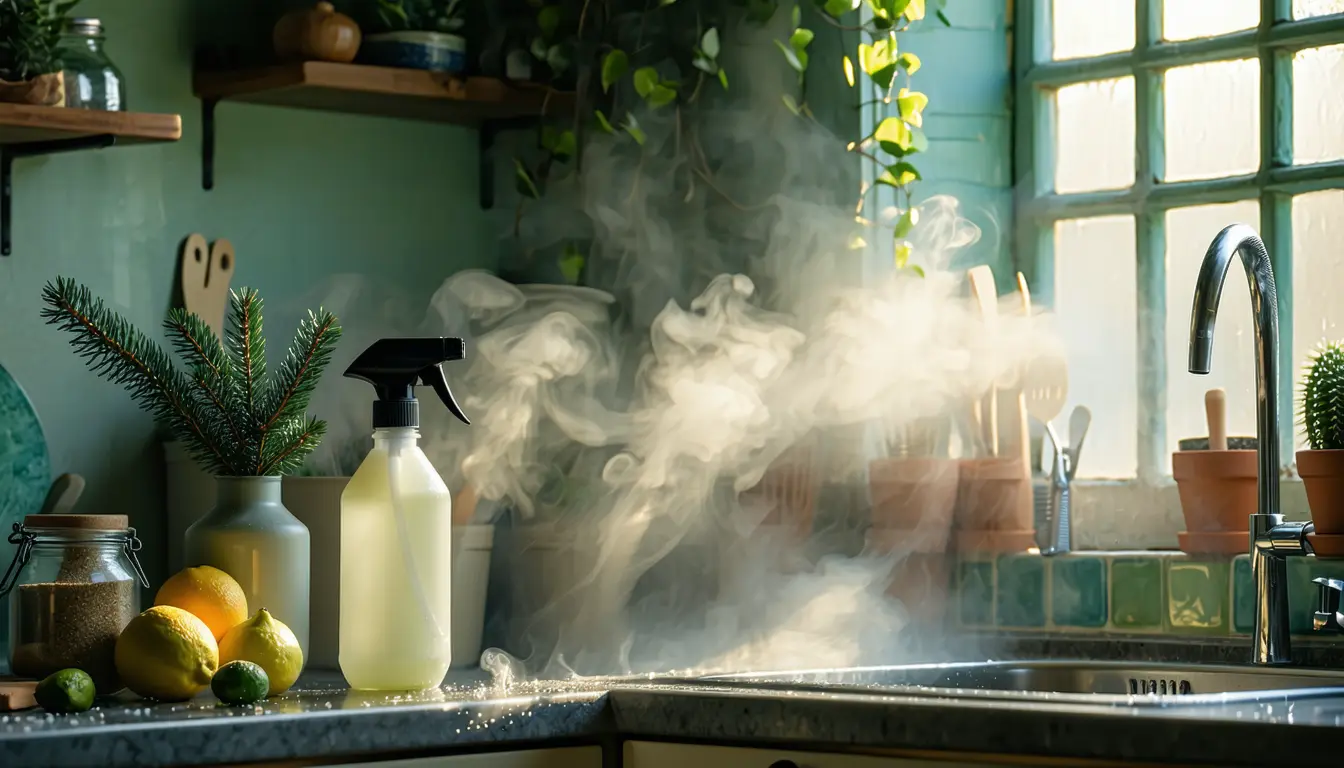
Ranked by verification strength, evidence, and original report placement.
Boor: "We showed that indoor ozone reactions with fragrances from cleaning produce nanoparticles that carry a respiratory dose comparable to or greater than what you would experience from standing outside along a busy road... The particles are different in terms of their composition, but the total dose can be higher. You're not seeing smoke, dust or haze in the air."
The researchers observed that routine cleaning can generate ultrafine particle pollution at levels above those found outdoors.
A research team led by Brandon Boor, assistant professor of civil and construction engineering at Purdue University, found that scent compounds in cleaning products, both conventional and botanical essential-oil based, react quickly in air to form nanoparticles that can travel deep into the lungs if inhaled.
The researchers tested scented conventional liquid products and botanical-containing disinfectant sprays and wipes in a model tiny house on Purdue's campus that has a working kitchen, wood flooring and a bathroom.
Activities such as mopping, spraying countertops and wiping surfaces with scented products formed billions or trillions of particles, depending on the product used.
Most of the particles were 1-30 nanometers wide, a size range often missed by at-home air quality monitors.
Follow any of these and your For You feed starts watching them — no settings page required.
Evidence-backed comparisons of source perspectives and observed adoption signals. Read the methodology
Which Builder, Operator, and Investor concerns the observed source mix emphasized—not a truth score.
Evidence, demonstrated adoption, hype gap, incentives, and confidence are assessed independently, each on its own current evidence. How these are measured.
Specific measurements from one instrumented test house, disclosed at a conference rather than in a cited paper
The source reports concrete experimental detail: a furnished model tiny house, both conventional scented liquids and botanical sprays/wipes, particles predominantly 1-30 nm, billions to trillions of particles per cleaning activity, ozone at roughly 20-40 ppb under far-UV lamps, and minutes-scale formation. Mechanism is anchored in established terpene-ozone atmospheric chemistry. What holds the score down: a single publisher, a single test facility, results described only as being presented at an ACS symposium with no peer-reviewed publication cited, and no numeric dose values behind the roadside comparison.
No adoption data supplied
The supplied material contains no evidence about uptake of any kind: no data on how widely far-UV lamps are deployed in real buildings, no product reformulation or fragrance-free procurement moves, no consumer behavior measurement, and no institution adopting the recommended cleaning-and-ventilation practice. The only dated event is a conference disclosure, which is publication of a finding rather than adoption of anything.
Headline roadside comparison outruns the disclosed numbers, but the piece self-limits
Mild overstatement. The load-bearing rhetorical claim - a respiratory dose comparable to or greater than standing beside a busy road - is delivered as a researcher quote with no dose figures, no peer-reviewed paper, and one test house behind it, and the source itself notes the particles differ in composition. Against that, the article is unusually restrained for the genre: it states the researcher wants to inform rather than alarm, publishes concrete low-cost mitigations, and reports the far-UV ozone level as somewhat lower than outdoor levels at the time rather than inflating it. Net: slightly overstated relative to what is shown, not a hype story.
Academic conference-cycle promotion; no commercial stake disclosed or apparent
The timing and framing follow a professional-society meeting cycle: the results are being presented at ACS Fall 2026 and the writeup appeared during the meeting window, which gives both the society and the researchers a visibility incentive around a health-salient result. No vendor, brand, or commercial sponsor is promoted, no product is being sold, and no competing formulation is named - the recommended remedy is to buy less-fragranced product and open a window, which benefits no identified party. Offsetting the low commercial pressure is a disclosure gap: the source names no funding source or conflict statement for the research.
Mechanism credible and internally consistent; corroboration and primary data absent
Moderate confidence. The chemistry is a well-established outdoor pathway relocated indoors, the source is internally consistent, and quantitative anchors (size range, ozone ppb, timescale) are present, which supports the directional finding and the practical inference that product choice and ozone-device operation are separately controllable levers. Confidence is capped by structural limits of the cluster: one publisher, one institution, one test house, conference-stage results with no cited paper, and no independent replication or dose arithmetic to check the strongest claim against.
science
Purdue's touch probe attacks the prep bench, not the mass spectrometer1 distinct publisher
science
Gateway's parking rules are being written before the vehicles that must obey them1 distinct publisher
science
Forget 35 C wet bulb: the heat line that breaks your schedule is much lower1 distinct publisher
Distinct publishers with included, body-backed reporting in this cluster.
phys.org
1 article · August 27, 2026