Science1 distinct publisher3 min readPublished
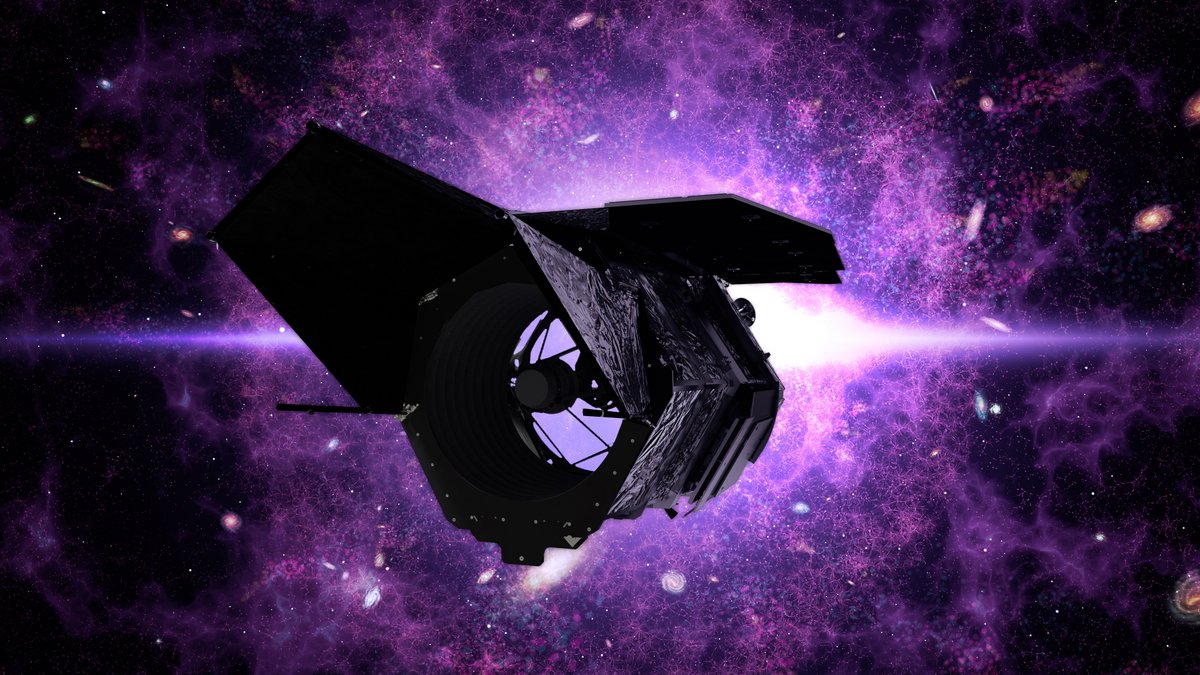
The Roman Space Telescope launches Aug. 30, 2026, carrying an instrument meant to image planets a thousand times fainter than anything managed so far. If it works, Earth-like targets follow.
The Scientist · Science desk

Compiled by The ScientistSomething wrong?How this is made
The interesting number in the coronagraph is not the contrast ratio, it is the tilt budget. The Precision Alignment Mechanisms built by the Max Planck Institute for Astronomy in Heidelberg must hold the instrument's masks, filters and mirrors to within 40 milliarcseconds of tilt across an eight-hour observation [8][9]. Since 3.6 million milliarcseconds make one degree [10], that budget is about one hundred-thousandth of a degree, sustained for a third of a day, at a point 1.5 million kilometres from Earth [11][3].
That is the mechanism behind the headline capability. A planet like Jupiter seen from outside its system is roughly a billion times fainter than its star [6], and the Coronagraph Instrument is specified to reach point sources about a thousand times fainter than what has been technically possible to date [7]. Existing ground-based coronagraphs have only managed bright, hot gas giants at wide separations, objects warm enough to glow in the infrared and be caught by infrared cameras [5]. Roman's target class is different: cooler planets seen in reflected starlight [5]. Reflected light does not help you; it is starlight, and the star is the thing you are trying to erase.
Note where the coronagraph sits in the mission's own hierarchy. The Wide Field Instrument is the survey workhorse, with a detector area about 100 times Hubble's, covering in five years an area of sky 50 times what Hubble covered in 30 [4], and it is expected to yield roughly 100,000 transiting planets plus about 1,000 more by microlensing [12][13]. Both of those methods are indirect [14]. The CGI's job is to go back to planets already found by other means and actually photograph them [15]. The catalogue arrives regardless of whether the demonstration succeeds; only the imaging does not.
The hardware count tells you how this was treated. Six flight models of the positioning mechanism are installed in the coronagraph and go to space; another six engineering models stay on the ground for testing [16]. A one-to-one flight-to-test ratio is what you build when the mechanism is the risk, not the optics around it.
The forward claim is explicit and conditional. If the alignment system performs, the same approach could later image smaller and fainter rocky planets, Earth among the comparison cases, around other stars [17]. The word doing the work there is "if". Roman has been in development for about a decade [1], and its 2.4-metre primary is a replica of Hubble's [2] - the aperture is not new, the star-suppression is. A coronagraph that lands short of its contrast goal does not fail loudly; it returns a smaller set of accessible targets and pushes reflected-light imaging of temperate planets onto whatever flies next.
Ranked by verification strength, evidence, and original report placement.
Roman's destination is the L2 Lagrange point, 1.5 million kilometres (930,000 miles) from Earth, on the sun-Earth axis on the side of Earth facing away from the sun, where gravitational forces cancel so it can orbit the sun without propulsion.
The CGI is designed to image exoplanets as point sources about a thousand times fainter than what has been technically possible to date.
The Max Planck Institute for Astronomy in Heidelberg built optomechanical components forming the Precision Alignment Mechanisms (PAM) for Roman's coronagraph.
The PAMs ensure the coronagraph's masks, filters and mirrors tilt by no more than 40 milliarcseconds over an eight-hour period.
3.6 million milliarcseconds equal one degree.
The Max Planck Institute for Astronomy supplied six flight models of the positioning mechanism, permanently installed in the coronagraph and launched into space, plus another six engineering models used for ground-based testing.
Follow any of these and your For You feed starts watching them — no settings page required.
Evidence-backed comparisons of source perspectives and observed adoption signals. Read the methodology
Which Builder, Operator, and Investor concerns the observed source mix emphasized—not a truth score.
Evidence, demonstrated adoption, hype gap, incentives, and confidence are assessed independently, each on its own current evidence. How these are measured.
Detailed but single-source and pre-flight
The engineering specifics are concrete and internally consistent - mirror size, L2 geometry, contrast ratio, tilt budget with unit conversion, model counts, and a quantified life test - which is unusually specific for a pre-launch story. But every figure traces to one article that reads as communication from the hardware-supplying institute, with no independent measurement, peer-reviewed reference or on-orbit data. The central capability claim is a design target awaiting first tests in space.
Flight hardware integrated, zero operational use
Adoption is real but entirely pre-operational: the PAM flight units are built, qualified and permanently installed in the instrument, and a life-test article logged over 27,000 movements. Against that, the observatory had not launched at publication, the coronagraph had performed no science, and no external users, follow-on programmes or downstream missions are named as having taken up the technique.
Headline capability overstated relative to flown evidence
The framing - a thousand-fold sensitivity gain, 'the most sophisticated optical observation instrument ever used for research in space', and a path to photographing Earth-like worlds - is stated in near-achieved terms while all of it depends on initial tests in space that have not occurred. The underlying engineering claims are modest and well-specified, so the gap is one of tense and certainty rather than fabrication, and the launch date and hardware delivery are genuinely concrete.
Institutional pre-launch promotion, one voice
The article is built from the perspective of the Max Planck Institute for Astronomy, whose components are the subject, and both named quotes come from that institute - including the superlative about the most sophisticated optical space instrument ever. It appears four days before launch, the peak moment for mission publicity, and omits cost, schedule risk and any external check. That is a strong promotional incentive structure, though the technical content itself is specific and falsifiable rather than vague.
Moderate-low: coherent but unchallenged
Confidence is limited by cluster structure rather than internal contradiction: one publisher, one institutional voice, no contradicting evidence and no corroboration. Verifiable physical facts (mirror size, L2 distance, unit conversions, launch time) are easy to trust; forward performance claims are not, and the assessment cannot be triangulated against a second account.
product
Roman's 100x field is a pipeline bill, and August 30 is when it comes due1 distinct publisher
science
Roman's faint-end science is riding on a stray-light model built at Ames1 distinct publisher
science
A spiral galaxy at redshift 2 suggests Webb's little red dots are partly a resolution problem1 distinct publisher
product
A five-watt nuclear heater on Blue Ghost turns lunar night into a procurement problem1 distinct publisher
Distinct publishers with included, body-backed reporting in this cluster.
phys.org
1 article · August 26, 2026