Science1 distinct publisher3 min readPublished
Kenyan field data puts heat illness and symptoms of anxiety and depression in the same workers, while step counts show the pace does not drop when the temperature climbs.
The Scientist · Science desk

Compiled by The ScientistSomething wrong?How this is made
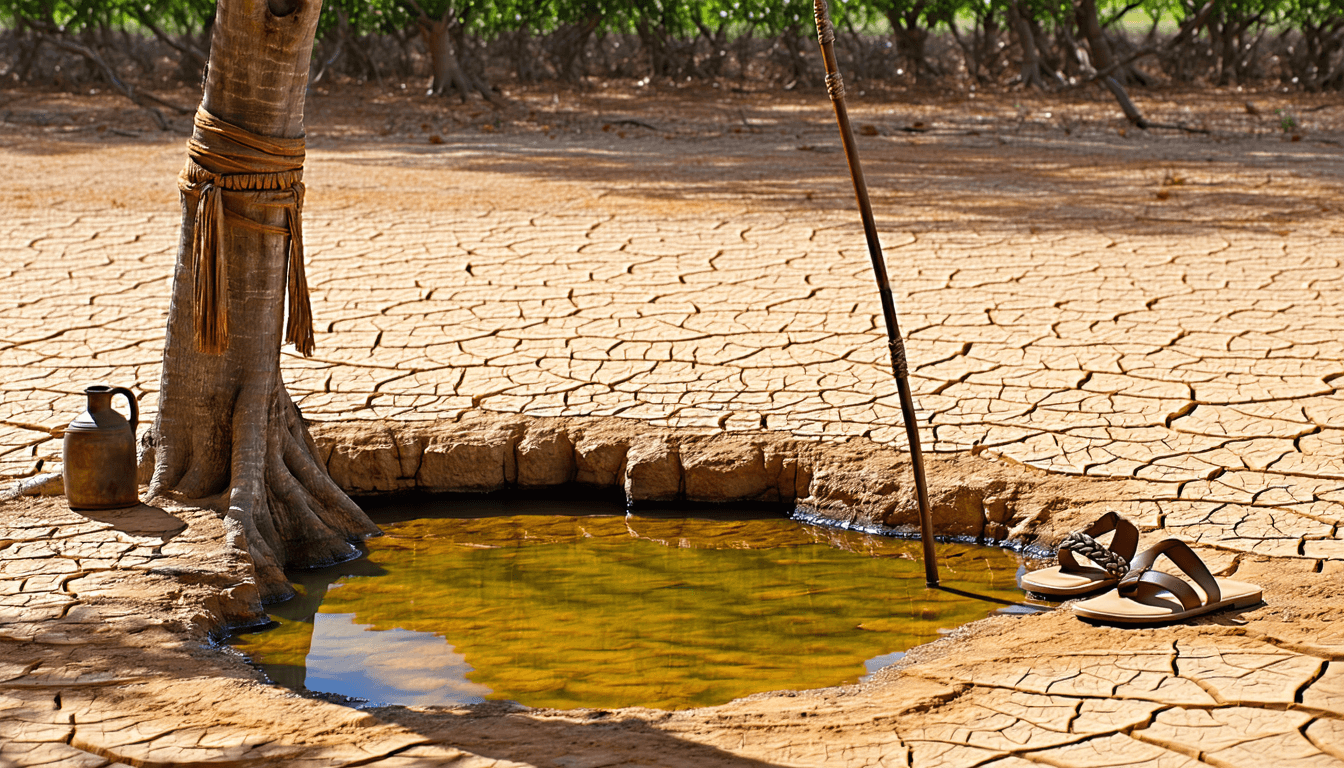
The step-count result is the one doing the work here. Occupational heat rules operate almost entirely through behaviour: drink more, get shade, slow the pace, stop when symptoms appear. In northern Kenya the research team found herders walked about the same amount on warm days as on cool days [6], because the day's distance is set by where the water and pasture are rather than by how the herder feels. One participant described walking with animals for almost 12 hours a day in the sun while searching for both [3]. Herding is built for heat in the sense that the animals can be moved to food and water [20], but in a dry season that move can run 100 miles, with nights spent under the stars or in makeshift shacks [18]. Kenyan pastoralists already carry a higher risk of dehydration at high ambient temperatures, and those temperatures have become more frequent [17]. When the pace is fixed by the livestock, the weather sets the dose by itself.
That is the physical channel. The second one turns up in the same people. Asked how the 2020-2023 drought had affected them, most of the dozens of herders surveyed described headaches, breathing abnormalities and extreme sweating, and also described stress and feelings of hopelessness [9]. The authors are careful about attribution: the symptoms likely relate both to the drought, which cost many herders their animals, and to heat exposure itself, which is often associated with anxiety and depression [10]. With 13.2 million livestock dead across the Horn of Africa in those years [4], grief and heat strain are not separable in survey answers. For anyone writing a heat plan, the apportionment matters less than the co-occurrence: both land in the same worker in the same season, and only one of them has a checklist.
The measurement route is the part that could transfer. In 2026, thirty herders wore smartwatches every day for three months, charging them from solar power banks [5], alongside smartphones and temperature loggers the size of a matchbox [7]. Daytime temperatures peaked between 88.7 and 97 degrees Fahrenheit, or 31.5 to 36.1 Celsius [8]. That is roughly 2,700 person-days of continuous monitoring [15] from a population that otherwise reaches a clinician only when badly injured or very sick [13]. It works in Kenya because cellphone coverage is reliable and because some of the field team are herders who call participants for a location and ride out on motorcycles [11].
On the US range there is less to go on [2]. Most shepherds hold temporary visas, are paid to be with the flock 24 hours a day, live in portable trailers without air conditioning, and spend long hours in direct sun in states such as Colorado and California [12]. The employer is often the only party who knows where a shepherd is, and may visit once every couple of weeks [c13b]. A California state report warns that herders can die of heat-related illness and tells employers their heat illness prevention plans need precautions such as prompt emergency response [14]. That duty is written for collapse. It does not reach a symptom that presents as hopelessness. The wearable analysis, for its part, reports only a small correlation between a day's average temperature and the count of heat illness symptoms, and the published account stops short of quantifying it [16].
Ranked by verification strength, evidence, and original report placement.
A research team studying health and climate in Kenya and the US reports that recent data from Kenya suggest that when drought and heat are particularly bad, herders suffer heat-related illness and symptoms of anxiety and depression.
Fewer data are available about herders in the US, though the authors say there is reason to worry about them as global temperatures rise.
One Kenyan herder told the research team that while searching for water and pasture they may walk with the animals for almost 12 hours a day in the sun.
From 2020 to 2023 an extreme drought hit northern Kenya, killing 13.2 million livestock across the Horn of Africa and leaving millions of people with too little food.
In 2026, thirty herders wore smartwatches every day for three months to collect real-time heat exposure and heat illness symptoms, charging the devices with solar power banks.
Step count data showed herders walked about the same amount on warm days as on cool days; like herders in the US, herders in Kenya do not have the option of not working when it is hot.
Follow any of these and your For You feed starts watching them — no settings page required.
Evidence-backed comparisons of source perspectives and observed adoption signals. Read the methodology
Which Builder, Operator, and Investor concerns the observed source mix emphasized—not a truth score.
Evidence, demonstrated adoption, hype gap, incentives, and confidence are assessed independently, each on its own current evidence. How these are measured.
First-hand field data, but preliminary and unquantified
The cluster rests on direct measurement — a 2026 smartwatch cohort with step counts, recorded temperature peaks and real-time symptom capture, plus interviews with dozens of herders — which is stronger than commentary. It is weakened materially by scale and reporting discipline: thirty participants, results the authors themselves label preliminary, a 'small' temperature/symptom correlation with no effect size or statistical detail, no peer-reviewed publication or dataset identified, and a single publisher carrying the researchers' own account.
One research cohort plus an existing employer duty
Observed uptake is narrow: a single thirty-person, three-month wearable deployment in northern Kenya, and a California state report restating an employer obligation to hold heat illness prevention plans. Nothing in the sources shows wearable heat monitoring being used operationally by employers, nor any evidence about compliance with or effectiveness of the existing prevention-plan requirement, so adoption is scored as demonstrated-but-confined.
Framing runs slightly ahead of the reported statistics
The story's strongest empirical result — flat step counts across warm and cool days — genuinely supports the argument that rest-based controls assume a break the job does not permit, and the exposure figures and interview findings are concrete. The overstatement is modest and specific: a 'small' correlation with no reported magnitude, an explicitly preliminary thirty-person cohort, and a US limb the authors admit is data-poor are carried into a broad Kenya-and-US conclusion about protocols and health. Positive but low.
Researchers reporting and advocating for their own programme
The piece is written by the investigators about their own unpublished preliminary results and closes by arguing that multi-year studies without funding gaps are what is needed — a direct interest in the salience of the finding. The Conversation/phys.org republication format means no editorial adjudication of the statistics. This is disclosed rather than concealed, and the interest is scholarly funding rather than commercial, so it is elevated but not disqualifying.
Low-moderate: one publisher, one preliminary study
Confidence is constrained by a single-source, single-publisher cluster reporting the authors' own preliminary work. Descriptive facts about working conditions, drought losses, exposure hours and the California duty are internally consistent and specific, which supports the qualitative picture; the quantitative heat-to-symptom relationship cannot be independently checked from this material.
science
The 35C problem is a rostering problem: card data says afternoon trade does not come back until dark1 distinct publisher
science
A handful of Texan pumas saved the Florida panther. Genetics is still off the plan.1 distinct publisher
science
Most kingfish carrying the mushy-flesh parasite cook up firm, so the cook test misses them1 distinct publisher
science
H5N1 is in Australian resident birds, and overseas the first wave does most of the killing1 distinct publisher
Distinct publishers with included, body-backed reporting in this cluster.
phys.org
1 article · August 25, 2026