Invest2 publishers2 min readPublished
Microsoft folds its consumer Copilot into one assistant built for corporate buyers
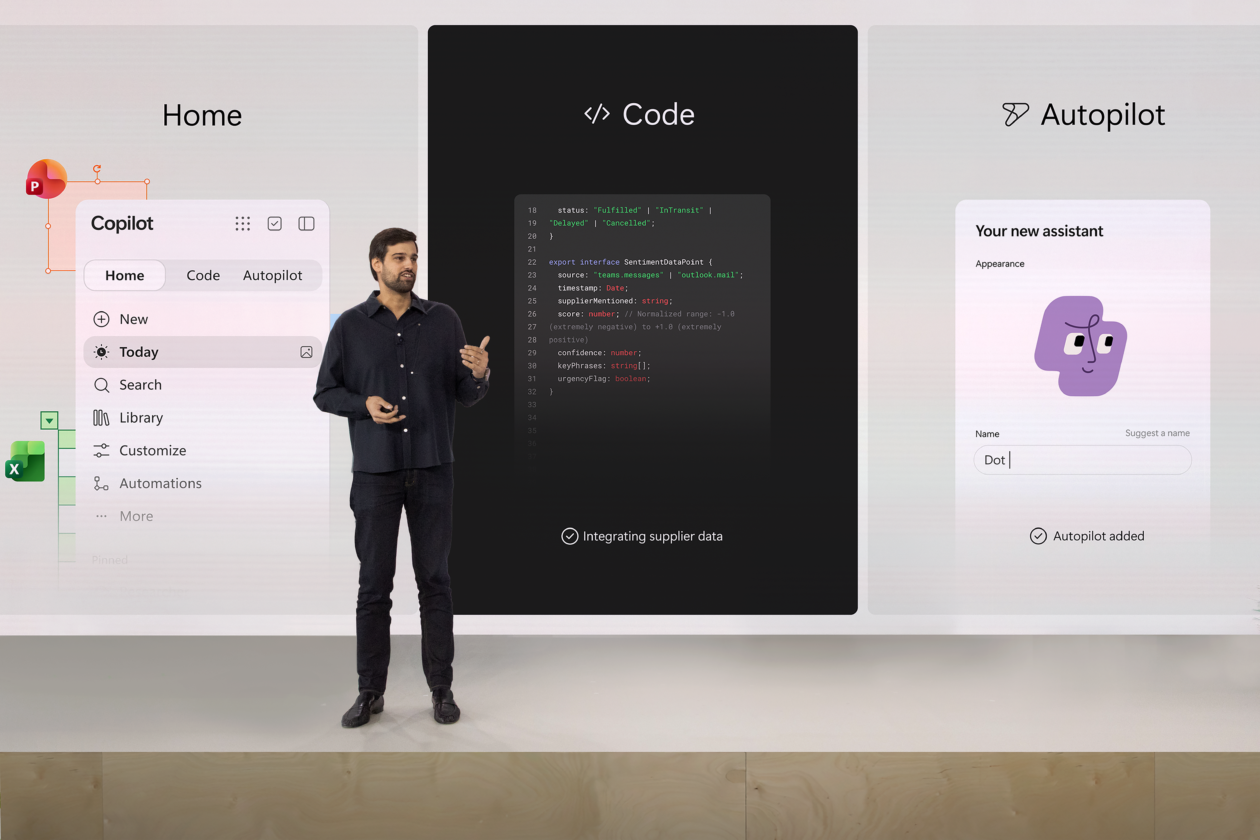
Microsoft is merging its consumer and workplace Copilot assistants into one product for corporate customers after a six-month rebuild, Bloomberg reported. It leaves personal chatbots to OpenAI, Google and Meta and ties Microsoft's AI bet to the corporate accounts it already serves.
The Investor · Invest desk
What happened
- Microsoft executives previewed what they call the new Copilot to a few dozen business and technology leaders at an event in Seattle earlier this week.
- Microsoft is ending its effort to build a personal AI companion, according to Bloomberg's reporting as relayed by PYMNTS.
- The relaunch drops the marketing that had sought to present Microsoft as a builder of personal AI.
Compiled by The InvestorSomething wrong?How this is made
Why it matters
- decision Microsoft's engineering and marketing money now backs one assistant sold through corporate accounts, and none of it goes to a companion competing for individual users.
- constraint Home users lose a Microsoft assistant designed for them, because the product they used now sits inside one built for corporate customers.
- cost By dropping the personal-AI pitch, Microsoft gives up a consumer business it could have leaned on if corporate buyers are slow to pay for Copilot.
PYMNTS, relaying Bloomberg's reporting, described the new home for Microsoft's AI effort as the place "where it already has the customer, the software and the data" [8][9]. It is an argument about distribution. A company that already sells workplace software to corporate buyers can put an assistant in front of them without first winning their attention. A consumer chatbot has to win each user on its own.
The bet pays off if companies adopt the merged Copilot inside software they already run, so the AI money arrives through accounts Microsoft already holds [8]. A weaker result follows if the home version's design features, which Bloomberg called "slick" [5], matter less to corporate buyers than they did to individuals. In that case the six months of engineering [4] mostly bought a better interface. The bad case is that people form their chatbot habits with OpenAI, Google or Meta [2] and bring those preferences to work. Then the market Microsoft left would end up setting demand in the market it kept.
I think the first outcome is the likelier one. Microsoft's corporate customers already sit inside its software and data [8]. The personal market it is leaving has three well-funded rivals taking it over, and Bloomberg counts Meta as the newest of them [2]. The strongest case against that view is the third outcome: employees who prefer the chatbot they use at home may push their employers to buy it for the office. The view is wrong if companies that already run Microsoft's software decline to pay for the assistant built into it.
The reporting does not include pricing, seat counts or revenue for either version of Copilot [10]. Until Microsoft publishes one of those figures, the claim that enterprise distribution will carry its AI returns rests on the company's stated strategy and on Bloomberg's account of it [9].
What to watch
- Pricing for the merged Copilot at general release, and whether Microsoft charges for it separately or bundles it into existing software contracts.
- Any Microsoft disclosure of Copilot seat counts or revenue, which would be the first public measure of whether enterprise distribution produces AI returns.
- Whether Microsoft keeps a free tier for individuals once the merged product ships to everyone.