Loading today’s stories
Product1 distinct publisher3 min readUpdated
Princeton Critical Minerals' $16M buys its way into other people's ponds
The raise is small for lithium. That is the point: retrofitting extraction into working Chilean evaporation ponds skips the land, permits and buildout that stall new brine projects.
The Product Desk · Product desk
What happened
- Princeton Critical Minerals raised $16 million in combined equity and non-dilutive funding.
- The total includes an $11 million Series A led by SOSV, with participation from the Grantham Foundation for the Protection of the Environment, Prospect Innovation, ASTOR Management AG, Black Forest Ventures, and the New Jersey Economic Development Authority through the New Jersey Innovation Evergreen Fund.
- The company also secured more than $5 million in grant funding from the National Science Foundation, ARPA-E and the NJEDA.
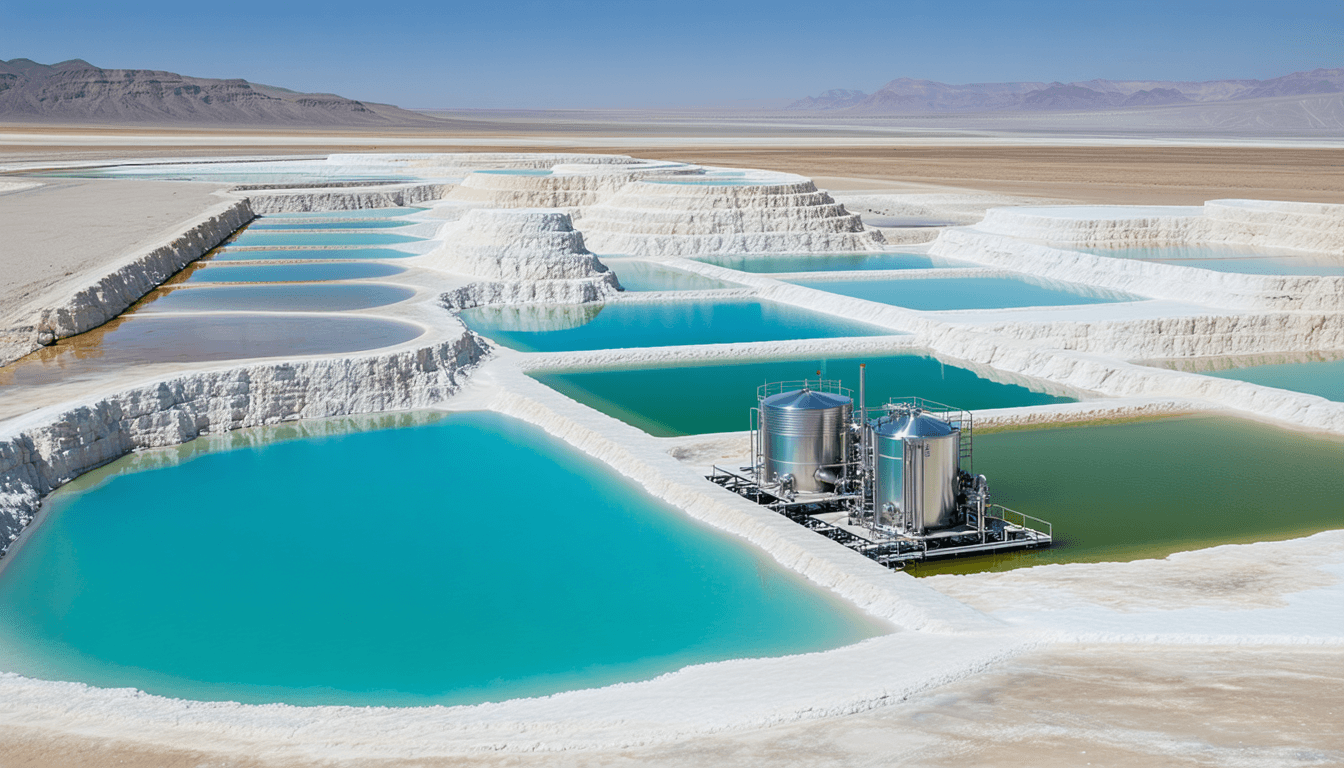
- Its Lilypad technology has recently transitioned from the pilot phase to deployment in active production environments such as Chile, which holds some of the world's largest lithium brine resources.
- The lithium extraction system is integrated directly into existing commercial evaporation ponds that process naturally occurring, mineral-rich underground water.
Compiled by The Product DeskSomething wrong?How this is made
Why it matters
A retrofit sells into capital someone else has already spent. A commercial evaporation pond that is producing today has its concession and its permits behind it, its land already disturbed and its evaporation train already built, and Princeton Critical Minerals' Lilypad system is described as dropping into exactly that [5]. The company's own list of what makes conventional brine slow reads as a list of things a retrofit vendor never buys: large land areas, long development timelines, extensive permitting and infrastructure buildout [7]. Direct lithium extraction, the other route out of that problem, is described in the same material as still fighting downstream concentration costs, energy consumption and scale-up complexity [8]. Lilypad's pitch is to skip both fights by not being a project.
The financing supports that reading better than any of the technology language does. Eleven million dollars of equity, led by SOSV with the New Jersey Economic Development Authority participating through the state's Innovation Evergreen Fund, is not a number you raise to build lithium capacity on two continents [2]. It is a plausible number if your unit of deployment is equipment installed inside a customer's operating asset and paid for out of that customer's production budget. Grant money from the National Science Foundation, ARPA-E and the NJEDA accounts for more than $5 million of the $16 million total [3][1], which is more than 31 percent of the raise coming from public sources [15].
The cost of the model is the customer's calendar. Sidestepping a permitting queue means entering a procurement queue instead, and the counterparties are few: the company says demand is growing from customers including the largest lithium producers [10], which is a statement about concentration as much as traction. A pond that earns money every day is a conservative place to try new hardware, and the operator, not the vendor, decides when the trial window opens. Nothing in the announcement names a producer, quantifies the yield gain, prices the installation or says how many ponds are involved [17]. What is offered instead is the claim that combining evaporation enhancement, AI-enabled pond monitoring and selective crystallization raises output while cutting energy use, chemical consumption and operational complexity [6], and chief executive Sean Zheng's summary that the system delivers "higher production, with lower cost in a shorter time" [18].
There is also a wobble in the account of where the next two systems stand. The same source says the company is preparing to launch two additional projects covering evaporation enhancement and AI-powered process optimisation [12], and separately that it is already testing those two technologies in Chile [13]. For a retrofit business that distinction is the whole story, because pilot-stage kit inside a producing plant and commissioned kit inside a producing plant are different commercial facts. Lilypad itself is described as having made that crossing, from pilot into active production environments including Chile [4]. Whether the follow-on systems have made it is the number to ask for.
Loading topic controls
Loading related stories