Invest1 publisher3 min readPublished
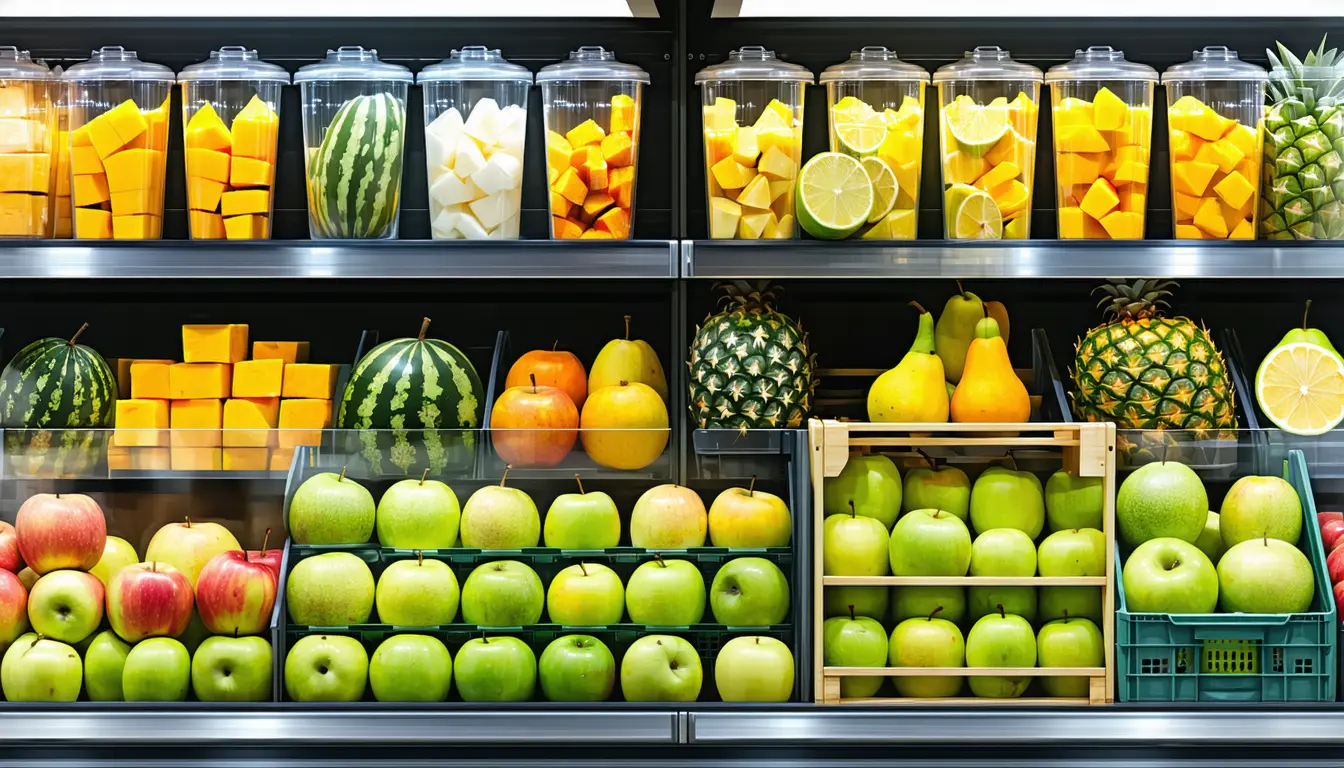
Pre-cut fruit grew 2.8 times as fast as all fruit at Shinsegae Department Store
The share of Koreans meeting the daily 500-gram fruit and vegetable target has fallen by about a third since 2016, and the growth retailers report is in fruit somebody else has already cut into halves, quarters and eighths.
The Investor · Invest desk
What happened
- The Korea Disease Control and Prevention Agency's 2024 National Health Statistics, released on the 23rd, put the share of people aged six and over eating 500 grams of fruit and vegetables a day at 22.1%.
- Single-person households numbered 10,272,573 last year, 42.3% of all households, according to the Ministry of the Interior and Safety's 2026 Public Administration and Safety Statistical Yearbook.
- Lotte Mart's sliced watermelon sales rose 103.2% year-on-year over January to May after it split melons into halves, quarters and eighths and began selling durian as flesh only.
Compiled by The InvestorSomething wrong?How this is made
Why it matters
- contradiction Sedaily reports consumption picking up, but the only population measure in the piece has fallen for eight years, so the chains' growth rates evidence a change of format, and it is too soon to say more fruit is being eaten.
- constraint Until a chain publishes a per-gram price and a pre-cut share of sales, an outside buyer of these stocks cannot tell whether cutting adds volume or moves the same volume into a tray at a higher ticket.
- decision Installing 46 cutting kiosks in seven months commits convenience stores to in-store food handling and staff time that selling whole watermelons off a pile spared them, at a cost the article leaves unstated.
- capability Cutting to an eighth makes fruit a single shopper cannot finish sellable to the two in five households that are one person. Whole-fruit displays missed that group.
Shinsegae Department Store's pre-cut fruit sales rose 58% over January to August, while its fruit sales overall rose 20.6% [12]. The cut format grew 2.8 times as fast as the category that contains it [2]. At GS25 the same comparison is much tighter, 27.6% against 20.3% [14], a gap of 7.3 points [3]. In both places whole fruit is still growing at about a fifth a year.
The article does not report prices for cut versus whole fruit, or the share of any chain's fruit sales that is already cut [7]. Without that mix, the growth rate of the uncut remainder is not recoverable. A 58% gain sitting inside a total that grew 20.6% is consistent with whole fruit up, flat, or slightly down [2].
Sedaily opens by saying fruit consumption is picking up in South Korea as retailers remove the hassle of peeling and slicing [17]. The survey it then cites runs the other way across eight years. Among women in their teens and twenties, fewer than one in ten eats the recommended amount [3]. A population share clearing a health threshold is one quantity; a sales line at a named chain is another. The sales line is the one that is growing.
Back the total out of the single-person count and its 42.3% share and Korea has roughly 24.3 million households [4]. Cutting is aimed at the single occupants among them: a person living alone with a whole watermelon or a full box of apples eats part of it and throws the rest away [6]. Lotte Mart's answer was halves, quarters and eighths, and durian sold with only the flesh separated out [9].
E-Mart's growth rate on sliced watermelon over the same five months is roughly half Lotte Mart's [5], and some of that gap is calendar. E-Mart moved sliced watermelon from a summer-only item to a year-round one [7], so a January-to-May comparison now takes in months when the product had barely existed a year earlier.
The labour shows up in the service numbers. Use of Lotte Department Store's Easy Fresh cutting service rose 90% over January to August, and on-the-spot cutting 65%, across five stores including the Jamsil outlet [11]. Hyundai Department Store is extending its cutting service from watermelon to pears and apples [13]. Kurly's convenience fruit sales rose 55% in June and its sliced watermelon 74% [16]. GS25 sells about 40 cut-fruit items and added six pouch-style products this month [14].
The sales figures establish that Korean shoppers will pay for someone else's knife and a plastic tray. Whether they eat more fruit as a result is measured once a year by the disease control agency, not at a convenience store till. The counter-case is the one the experts in the article make: if preparation time and waste are genuine barriers alongside high prices [4], portioning removes a binding constraint and the intake share should start recovering. Shoppers are already choosing fruit with the skins and seeds removed as a way to cut food waste [18]. If the next two rounds of National Health Statistics show that share climbing, I have this wrong.
What to watch
- The next two rounds of National Health Statistics, and whether the share meeting the 500-gram target stops falling.
- Any retailer disclosing pre-cut fruit as a share of total fruit sales, or per-gram pricing against whole fruit.
- Whether CU keeps installing cutting kiosks at this year's pace once the summer melon season ends.