Product1 distinct publisher3 min readPublished
Interesting Engineering reports the buyer unnamed and the conversion yield undisclosed, which leaves whoever holds the contaminated bales with a genuinely new intake spec to sell into and no way yet to price it.
The Product Desk · Product desk

Compiled by The Product DeskSomething wrong?How this is made
This lands on whoever signs the outbound contract at a sorting facility for the fraction that currently attracts no bid, the contaminated film and multi-polymer packaging that fails every clean-bale spec, not on an airline fuel buyer. According to Niutech, via Interesting Engineering, its process accepts low-value plastic waste without the complex washing, sorting and drying normally required for recycling [6]. Read that as a purchasing specification rather than a technology boast, and it is the part of the announcement with consequences upstream of the fuel.
Teams writing plastics-to-fuel decks tell themselves the hard part is the chemistry, which the pyrolysis route has in hand: heat in an oxygen-limited vessel, oil out, hydrotreat the oil [7]. The people who will run the unit know the hard part is the gate and the calendar. The source is explicit that continuous operation matters at refinery scale because interruptions move throughput and economics [12], and Niutech frames its own next milestone as proving these systems run reliably and economically beyond individual production lines [14]. Nameplate capacity is just a permit number; what actually decides whether an offtake contract holds is availability on dirty feed.
The scale step is worth dividing out. Niutech says it has deployed continuous pyrolysis in the UK, South Korea, Denmark, Thailand, Vietnam and China, with multiple delivered projects at around 10,000 tonnes a year [8][9]. The new line is specified at 10,000 to 50,000 tonnes a year for a single unit [4]. The ceiling is five times the delivered reference and five times the floor of its own quoted range [1], which tells you the number is an envelope rather than a design point, so the working assumption should model the floor, not the ceiling.
What the account does not carry is the list that would let anyone else price the material: buyer name (described only as a prominent energy company [3]), site, start date, gate fee, and tonnes of plastic in per litre of SAF out [4]. The demand side is firmer. ReFuelEU Aviation requires SAF at 2% of fuel supplied at EU airports in 2025, 6% in 2030 and 70% by 2050 [10], a tripling of the required share inside five years and a 35-fold increase by mid-century [2][3]. Established waste-oil feedstocks are supply-limited [11], so that curve goes shopping for hydrocarbons somewhere.
Two variables sort the decision for anyone holding waste-plastic tonnage: whether the material clears a buyer's intake spec without pretreatment, and whether that buyer is quoting demonstrated availability or nameplate capacity.
- Clears the spec, availability demonstrated: contract multi-year and index the gate fee to fuel. - Clears the spec, nameplate only: sell spot, keep terms short, keep your current outlet warm. - Needs pretreatment, availability demonstrated: your washing capex is the buyer's discount, so negotiate who funds it. - Needs pretreatment, nameplate only: nothing has changed for you yet.
The recommendation and its cost sit together. Treat this contract as evidence that the intake specification is negotiable, not as evidence that the offtake tonnage exists; going long on an announced range costs you optionality on material you can still move elsewhere, and going short costs you the better price if the unit turns out to run.
Ranked by verification strength, evidence, and original report placement.
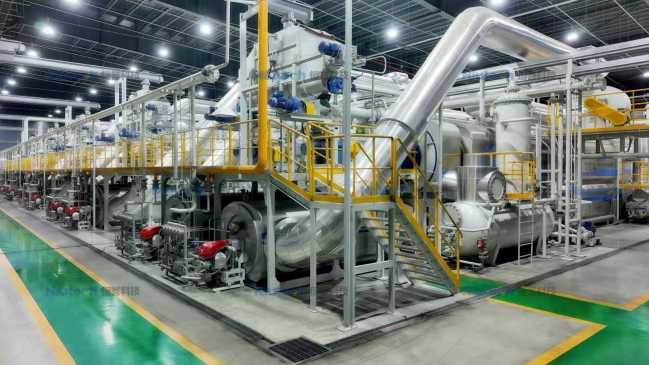
An energy company has signed a deal with Chinese pyrolysis technology provider Niutech to install an industrial-scale system converting waste plastic into feedstock for sustainable aviation fuel; it is Niutech's first equipment supply contract with that company.
The project will upgrade an existing refinery and connect waste plastic processing with production of hydrotreated SAF, creating an end-to-end pathway from discarded plastics to aviation fuel.
The source identifies the counterparty only as a prominent, unnamed energy company.
The planned production line will have a single-unit capacity ranging from 10,000 to 50,000 metric tons per year.
Niutech's system uses continuous pyrolysis to heat waste plastic in an oxygen-limited environment, producing hydrocarbon products including pyrolysis oil, which can undergo further processing and hydrotreatment to produce SAF.
The EU's ReFuelEU Aviation rules require SAF to account for 2% of aviation fuel supplied at EU airports in 2025, rising to 6% in 2030 and 70% by 2050.
Distinct publishers with included, body-backed reporting in this cluster.
Follow any of these and your For You feed starts watching them — no settings page required.
Evidence-backed comparisons of source perspectives and observed adoption signals. Read the methodology
Which Builder, Operator, and Investor concerns the observed source mix emphasized—not a truth score.
Evidence, demonstrated adoption, hype gap, incentives, and confidence are assessed independently, each on its own current evidence. How these are measured.
One outlet, one interested voice
Strip out what Niutech says about Niutech and this story keeps three things: an EU mandate schedule, a description of pyrolysis chemistry, and the fact that a contract exists. The polymer range, the no-pretreatment claim, the six-country footprint and the prior 10,000-tonne deliveries are all company assertions relayed by Interesting Engineering, and the counterparty who could confirm the deal is not named.
A signature, not a site
What has actually happened is that equipment was ordered. Nothing in this reporting shows steel on the ground: no location, no commissioning date, and no operator willing to be named. The prior installations that would give the order weight are a list of countries from the supplier rather than referenced plants, and the largest of them sits at a fifth of the new line's stated ceiling.
End-to-end pathway, undisclosed conversion
"An end-to-end pathway from discarded plastics to aviation fuel" is a big sentence to write without a single yield number in it. How many tonnes of bales make a tonne of jet fuel decides whether any of this pays, and it is absent; so is the gate fee, the capital cost and the buyer. The overreach is in the framing rather than the facts — Niutech's own closing line, that reliable and economic operation at meaningful scale is still the next milestone, is more measured than the headline above it.
The seller writes the record
Niutech is selling equipment and is the source for nearly every favourable detail, including its own four decades of experience as the reason it won the work and the deal as "validation" of its technology. The buyer, who has every commercial reason to stay quiet before a refinery upgrade is committed, contributes nothing. Interesting Engineering hedges with "the company says" and "Niutech claims", which is honest labelling of a one-sided supply of facts rather than a correction of it.
Directionally plausible, factually thin
That a Chinese pyrolysis vendor has sold a line into a refinery chasing SAF volume is entirely believable and fits the mandate timetable this reporting sets out. Believable is as far as it goes: with one publisher, an anonymous buyer, and no yield or commercial terms, the specifics here would not survive a single follow-up question.