Science1 publisher3 min readPublished
A plasma upstream of a copper electrode turns CO2 into methanol and butane
A Yale group reports in Nature Catalysis that exciting CO2 in a plasma before it reaches a copper electrode yields methanol and butane, products the team says electrocatalysis alone does not make. The cell runs at room temperature.
The Scientist · Science desk
What happened
- Yale researchers led by Lea Winter combined a plasma with electrocatalysis to convert carbon dioxide into useful chemicals, and published the result in Nature Catalysis.
- Methanol and butane appear among the products, and Winter said electrocatalysis alone does not generate them.
- Winter said the cell is easy to scale out because it runs at atmospheric pressure and room temperature, and she called it a turnkey process.
Compiled by The ScientistSomething wrong?How this is made
Why it matters
- constraint The plasma is a second electrical load upstream of the electrolysis step, so any costing of this route rests on total energy per mole of product, and the phys.org account does not include that figure.
- capability A CO2 cell that works cold, at ambient pressure, and can be switched on and off suits electricity that arrives intermittently, which is one of the uses the Yale account names for practical CO2 conversion.
- precedent If plasma pre-excitation genuinely opens pathways closed to electrocatalysis, catalyst design acquires a second variable alongside the metal, and Winter says tuning catalysts for plasma-activated CO2 is her group's next task.
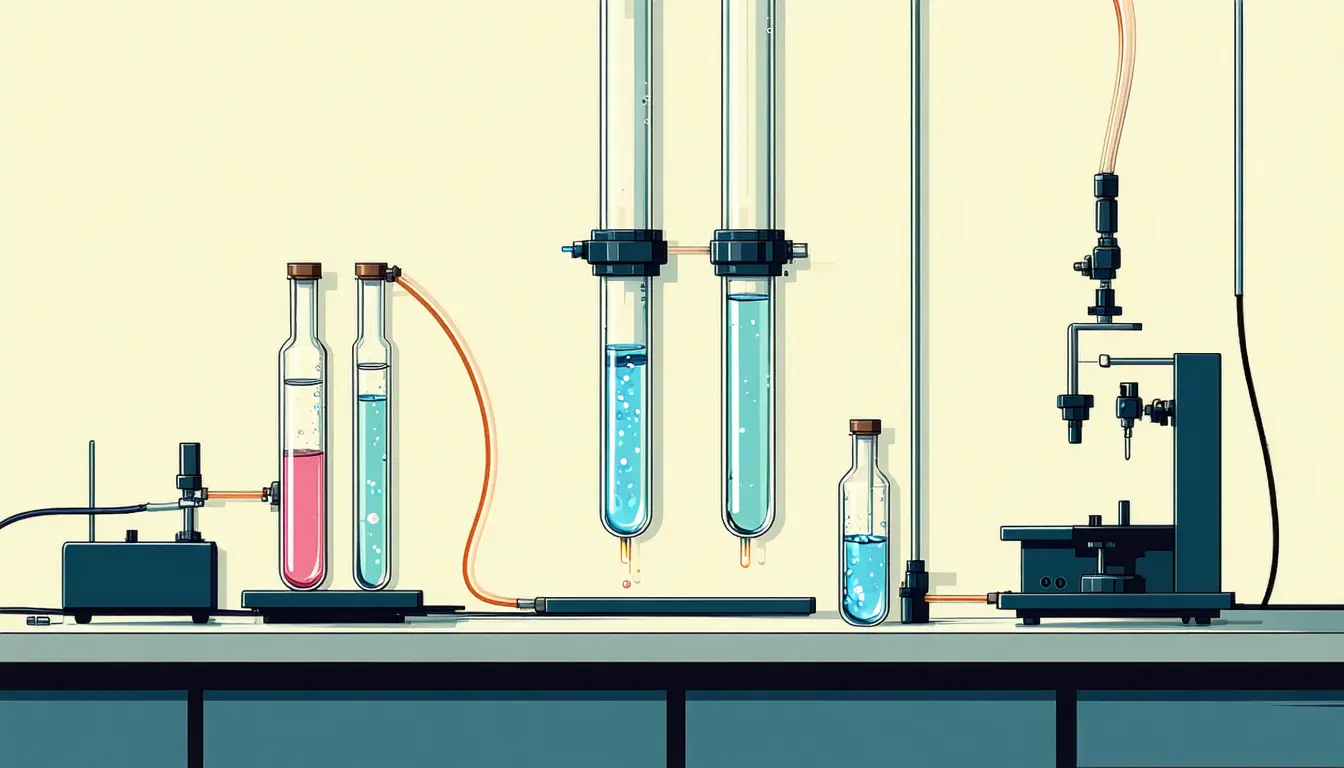
The engineering problem sits at the membrane. In earlier plasma-electrochemical cells the plasma meets liquid water, and the water quenches the most reactive species before they arrive at a catalyst [6]. Winter's group holds the two apart with a gas diffusion electrode made of the same material as nonstick pans, partly coated with a thin copper layer that acts as the catalyst [7]. Its pores are wide enough for plasma particles to pass through to the copper, where they meet protons supplied by a small amount of water on the liquid side [8]. "It's been challenging to figure out how to effectively couple plasma with catalysts in a way that allows us to actually see an effect of plasma," Winter said [10].
What the plasma changes is which reactions are available. Free electrons loosen the carbon-oxygen bonds before the gas reaches the electrocatalyst, which then rebuilds the pre-excited species [4]. "We find that plasma unlocks new reaction pathways that lead to the generation of products like methanol and butane, which are not generated with electrocatalysis alone," Winter said [5]. Methanol has one carbon atom and butane four [17]. So the plasma is not only lengthening carbon chains; it is opening routes a copper electrode does not take on its own, which typically yields a limited set of simple-carbon products [3].
The comparative result reported is that the cell reached some of the highest generation rates published for valuable alcohols and for products with three or four carbon atoms [9]. The phys.org report does not include a production rate, a selectivity or an energy input [18]. That gap matters more here than in an ordinary electrolysis result, because the plasma is a second electrical load sitting upstream of the first, and the cost of the route depends on the energy drawn per mole of product.
Winter said the system is easy to scale out because it operates at atmospheric pressure and room temperature [11]. "And it's a turnkey process," she said [12]. Long-term storage of intermittent renewable energy is one of the uses the Yale account names for a scalable CO2 conversion route [16].
Winter also said the approach could produce the precursor chemicals needed for sustainable aviation fuel [13], and described the output this way: "The sorts of multi-carbon products we generate with this approach are really useful for a lot of chemical industries" [15]. Those are uses for the molecules in industries that already buy them, not fuel-grade products demonstrated in this work. Her next step is the catalyst. "We want to figure out how to design catalysts that are specifically tuned to controlling the reaction pathways for converting plasma-activated CO2 toward high-value products," she said [14].
What to watch
- Whether the Nature Catalysis paper itself reports energy per mole and selectivity for the four-carbon products, the figures a cost comparison needs.
- Durability data for the copper-coated nonstick membrane under sustained plasma exposure.
- Whether the alternative catalyst materials Winter plans to test shift selectivity toward specific three- and four-carbon products.