Product1 distinct publisher3 min readPublished
Android 17 runs the same on both phones, so the Pro premium now buys a sharper panel plus Wi-Fi 7 and UWB, while 16GB of RAM sits behind the 512GB tier, which turns a memory decision into a storage decision.
The Product Desk · Product desk

Compiled by The Product DeskSomething wrong?How this is made
The row on the procurement sheet that lists what a user can actually do settles first. Gemini Intelligence's proactive task offloading, Gboard's Rambler filler-word cleanup, Sign-to-Text through the front camera, Edit with Ask Photos, Camera Looks, the Creator Suite and Magic Capture all arrive on both phones [11]. Onboarding docs and support macros do not fork, and there is no Pro-only capability to write into a justification memo [1].
So the premium lands on glass. Multiply the panels out: 1280 x 2856 is 3,655,680 pixels against 2,617,920, roughly 40 percent more [12]. Peak brightness goes from 3,000 nits to 3,600, a 20 percent gain [3][13]. That does real work for a technician reading a job sheet in daylight and close to none for someone answering email at a desk.
The configuration trap sits one row lower. Both phones now start at 12GB of RAM, the Pro's 256GB model included, which is down from 16GB on the Pixel 10 Pro, and 16GB appears only on the 512GB and 1TB Pro [4]. UFS 4.0 is standard at the entry tier of either phone, while Zoned UFS starts at 512GB on both [5]. The cheapest way to get 16GB is therefore a 512GB Pro [14], so a memory requirement drags a storage upgrade along with it. The reverse is cheaper than it looks: a fleet that wants the faster storage behaviour and not the extra RAM can stay on the base 11 and buy the 512GB tier [5].
Seven years of OS, security and Pixel Drop updates puts these devices on OTAs until around August 2033 [10]. A 12GB device you replace in three years is one thing. A 12GB device you have promised the finance team will still be in service in 2032 is the decision that RAM tier is actually making, and 9to5Google's own caveat is whether the hardware lasts that long anyway [10].
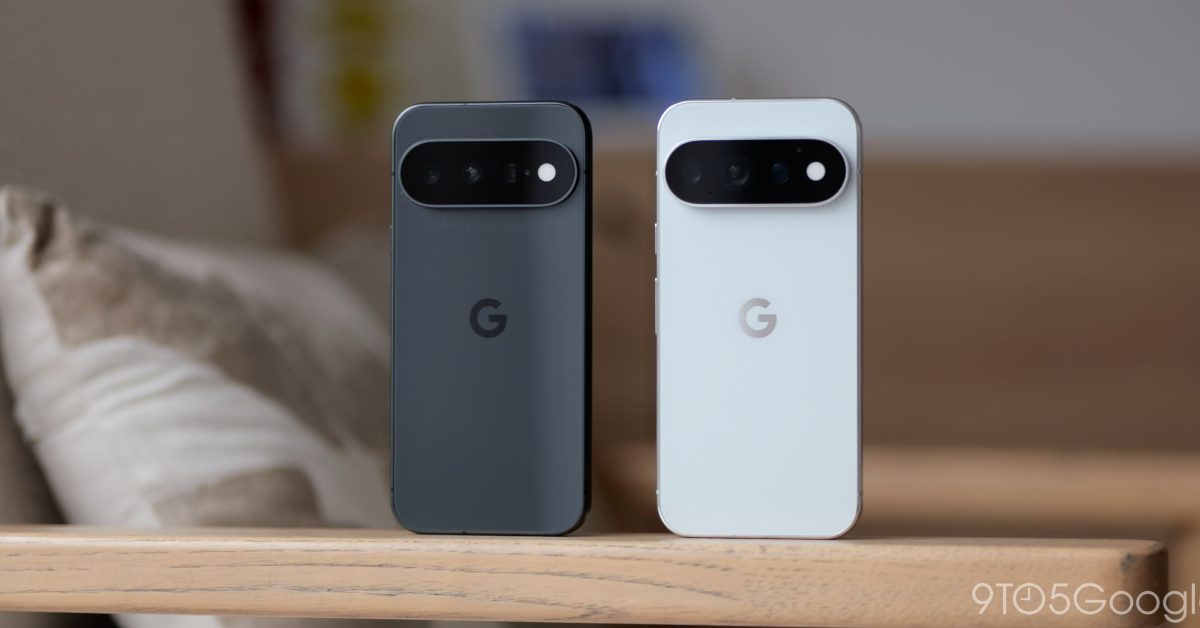
Two smaller items belong to whoever owns the accessory catalogue. The camera bar is now glass in a metal frame, slimmed on the base 11 so it protrudes less, while the Pro's still sticks out and, per 9to5Google, could be in harm's way, which means third-party case fit has to be checked per model rather than per family [8]. The Pro also adds an anti-scratch coating over its Victus 2 that the review says more than doubles scratch resistance against previous models [9], and the same review still reaches for a screen protector for anyone using HiLight, because that feature wants the phone face down [17].
The condition, not the spec sheet, decides whether the difference is worth paying. What holds up: your network runs Wi-Fi 7 or you issue digital car keys over UWB [6]; screens get used outdoors where 3,600 nits and a 1Hz idle floor earn their keep [2][3]; or you need 16GB and have already accepted the 512GB Pro that carries it [14]. Absent one of those, the base 11 is the fleet device at whatever storage tier you were buying anyway, and the saving covers the case and the screen protector both models need.
Ranked by verification strength, evidence, and original report placement.
9to5Google reports that Android 17 is identical on the Pixel 11 and Pixel 11 Pro, down to core features and functions, and the Pro does not get anything extra.
The Pixel 11 Pro has a 1280 x 2856 LTPO panel with a 1-120Hz refresh range; the base Pixel 11 has a 1080 x 2424 panel with thicker bezels and a 60-120Hz range, and is not LTPO.
Peak brightness reaches up to 3,000 nits on the base Pixel 11 and 3,600 nits on the Pixel 11 Pro.
The base Pixel 11 ships with 12GB of RAM in 256GB and 512GB storage options; the Pixel 11 Pro also ships with 12GB at its 256GB tier, down from 16GB on the Pixel 10 Pro, and only the 512GB and 1TB Pro models step up to 16GB.
All models have UFS 4.0 storage by default at the entry-level tier of either phone, while Zoned UFS requires upgrading to at least the 512GB tier on either model.
The Pixel 11 has Wi-Fi 6E; the Pixel 11 Pro has Wi-Fi 7 plus UWB support, which 9to5Google links to better Bluetooth connectivity and digital car key benefits.
Distinct publishers with included, body-backed reporting in this cluster.
1 article · August 28, 2026
Follow any of these and your For You feed starts watching them — no settings page required.
product
Google moved the Pixel 11 Pro's upgrade case into software. Judge it on rollout risk.5 distinct publishers
product
A fair fight with last year's iPhone is where Pixel hardware has landed1 distinct publisher
product
Pixel 11: a flatter camera bar, seven grams, and a software lockout1 distinct publisher
product
Pixel 11 verdict: "could have been a software update," and fleet buyers should read it that way2 distinct publishers
Evidence-backed comparisons of source perspectives and observed adoption signals. Read the methodology
Which Builder, Operator, and Investor concerns the observed source mix emphasized—not a truth score.
Evidence, demonstrated adoption, hype gap, incentives, and confidence are assessed independently, each on its own current evidence. How these are measured.
One outlet, mostly reading a spec sheet
Split the story in two and you see the problem: the checkable half (3,600 nits, 'more than double' scratch resistance, the RAM and storage tiers) is Google's own numbers relayed by 9to5Google, and the tested half is judgment - the camera bar sticks out, a screen protector still feels necessary, HiLight only fires in Contacts. Nobody has metered a panel, scratched a screen or run a memory workload for this reporting.
On sale, entirely uncounted
These are shipping phones with locked configurations, which is real adoption evidence of a kind - the tier gating is live, not roadmapped. What is missing is any quantity: no sales, no mix between 256GB and 512GB, nothing on how many buyers actually pay for the 16GB step. And the one Pro-exclusive software feature is still confined to a single app.
Sceptical framing, vendor numbers untouched
The framing pushes the other way from marketing - 9to5Google's whole argument is that the Pro premium has shrunk to a panel and a blinking LED, and it says out loud that Android 17 gives the Pro nothing. The overstatement that survives is inherited: a doubled scratch resistance with no stated baseline, 3,600 nits nobody metered, and a 2033 support date built by adding seven years to a promise the publisher itself doubts the hardware will outlive.
Google-beat outlet in buying-advice mode
9to5Google covers Google for a living, had both devices before most people, and packages this as a comparison with a video and shopping instructions - check your case, upgrade to 512GB if you want the memory. That is a legitimate service piece, but access-driven launch coverage that tells readers what to buy is the format most likely to relay a spec sheet without pressure-testing it, and this one does exactly that.
Probably right, wholly unchecked
Most of this will hold, because spec-sheet facts are cheap to verify later and 9to5Google knows this hardware. But confidence here is confidence in one publisher: the load of the story sits on the RAM and storage gating, which nobody else in our coverage has confirmed, and the absence of prices means even a correct spec reading cannot tell you what the upgrade costs.