Invest1 publisher3 min readPublished
The Bangko Sentral ng Pilipinas has drafted a year-long stop on new payment system operator applications while it rebuilds licensing. The same circular pushes crypto and remittance merchants into direct-only bank relationships with caps.
The Investor · Invest desk

Compiled by The InvestorSomething wrong?How this is made
Set the two clocks side by side. The circular takes effect 15 days after publication if finalized [11], so the provisional registry arrives roughly 105 days after the text appears [14], while the deadline for having every active merchant recorded and validated falls about three months after the application window is due to reopen [15]. The traceability apparatus the pause is meant to buy is still being validated when new entrants are let back in.
For those twelve months, no new Philippine payment system operator registration can be created [1], which leaves the existing ones as the only supply, and supply that cannot be manufactured is how a compliance permission starts trading as an asset. The draft as reported does not hand you the denominator: there is no count of existing operators and no numbers attached to the transaction caps [16], so anyone pricing an incumbent's registration this quarter is pricing scarcity without knowing how scarce.
My read is the narrow one, and it is about which clause binds. The freeze has an escape hatch written into it, since companies can still launch activities requiring operator registration where the central bank signs off separately [4], and files already lodged keep moving through review [3]; if those sign-offs turn out to be routine, this is a queue with a slower clerk. The direct-only onboarding requirement carries no equivalent hatch in the text [6], and it is the clause that changes unit economics rather than timing, because it converts one aggregator relationship covering many crypto merchants into one bank relationship per merchant, each with monitoring and limits keyed to that merchant's risk profile [7].
The reason given is traceability: the BSP is concerned that mobile and QR payments have grown faster than banks and regulators can follow the money, and investigators say layered arrangements between intermediaries make it hard to name the actual seller behind a payment or to freeze a suspicious flow while it is running [12]. That is a supervision problem about domestic rails, and it sits apart from the Philippine SEC's August 2025 warning to ten exchanges, OKX, Bybit, KuCoin and Kraken among them, for serving Filipino users without local authorization, alongside a stated plan to work with Google, Apple and Meta to block their marketing and apps [13]. That action went at offshore access. This draft goes at who is allowed to build domestic plumbing.
If the comment period strips the direct-only clause [11], the high-risk classification becomes paperwork and the freeze is the whole story. If the BSP grants the separate sign-offs generously [4], the freeze becomes paperwork and onboarding is the whole story. The firms carrying the cost in either version are the domestic remittance, currency-exchange and crypto merchants who had planned to reach QR rails through an intermediary [5].
Ranked by verification strength, evidence, and original report placement.
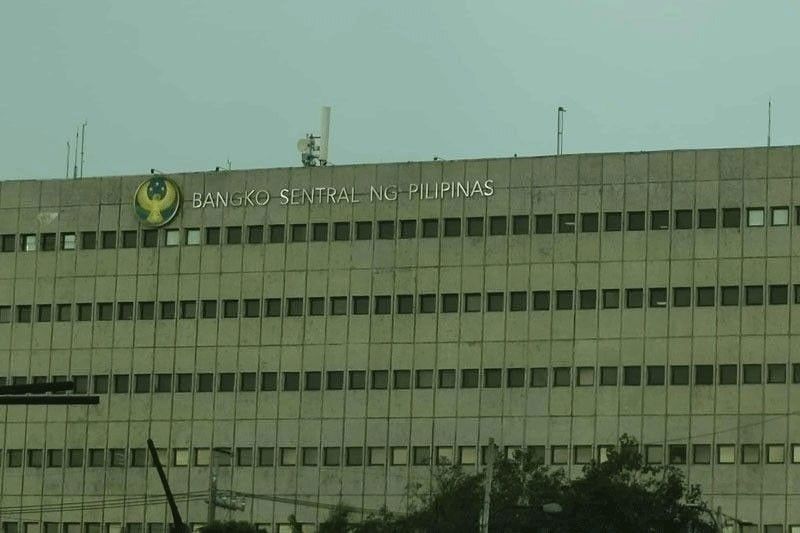
The Bangko Sentral ng Pilipinas has circulated a draft circular titled "Regulations to Strengthen Integrity Controls in Payment Transactions", amending the Manual of Regulations for Payment Systems, under which the BSP would neither accept nor process new applications to run a payment system for 12 months.
During the freeze the BSP would redesign its licensing framework and build a national QR merchant registry.
Firms already waiting in line would have their files stay under review during the freeze.
Companies would be blocked from launching activities that need operator registration unless the central bank signs off separately.
Licensed virtual asset service providers are singled out in the draft as high-risk merchants alongside casinos, gambling and gaming operators that hold player funds, adult-oriented businesses, and money service firms such as remittance and currency-exchange businesses.
The rule would push banks and other supervised institutions to onboard regulated VASPs only through direct merchant arrangements, with no intermediary layer in between.
Follow any of these and your For You feed starts watching them — no settings page required.
Evidence-backed comparisons of source perspectives and observed adoption signals. Read the methodology
Which Builder, Operator, and Investor concerns the observed source mix emphasized—not a truth score.
Evidence, demonstrated adoption, hype gap, incentives, and confidence are assessed independently, each on its own current evidence. How these are measured.
Single outlet, unpublished document
Every specific in this story traces to one Cryptopolitan report on a draft that is not linked or quoted from anywhere a reader could check: the circular's title, the 12-month cutoff, the 90-day, 12-month and 15-month registry deadlines, the 24-hour notification duty. The BSP did not answer before publication, and the motive attributed to people inside the central bank carries no name. The detail is granular; the sourcing under it is one byline.
Consultation stage, nothing binding
Nothing has yet happened that a bank or an applicant would feel. The circular is out for feedback and would bite only 15 days after publication, so no onboarding process has changed and no filing has been refused. The one item already in the past tense sits next door: the Philippine SEC's August 2025 warnings to ten offshore exchanges, which shows the direction of travel rather than any uptake of this rule.
Draft written up as decided
Inside the body Cryptopolitan sticks to "would" and "if finalized," a careful hedge that does not carry through to the edges. The headline about blocking registrations and the subheading asking why the BSP paused its operations invite the reader to treat a consultation draft as a rule already running, and the BSP is not pausing its operations in any sense the reporting supports. The gap is in status rather than substance.
Crypto desk on a payments rule
Cryptopolitan sells attention to crypto readers, and the draft's crypto paragraph is what becomes the story while gambling, adult and remittance merchants in the same category go undeveloped. The piece also cites its own earlier Integrity Chain report, closes with a newsletter pitch and appends an investment disclaimer. No financial interest in any named exchange is disclosed, and no BSP or bank source appears whose incentives could be set against the outlet's.
Internally coherent, externally unchecked
The detail hangs together the way material lifted from a real document does: a named amendment target, staged registry deadlines that line up with the freeze, a four-state merchant taxonomy with a cross-provider alert. That consistency is all we have to go on, since no second reader has described the same text. Publication of the draft by the BSP, or one quote from it elsewhere, would move this quickly.
invest
Two trillion dollars of RWA perpetual volume pays $400,000 a day in fees1 publisher
invest
Robinhood matched BNB Chain's 500,000 tokenized-stock holders in about six weeks2 publishers
invest
Lido's buyback only fires above $40M of revenue. Lido is running about $38M.1 publisher
invest
Binance gives AI agents their own subaccounts, and no loss limit1 publisher
Publishers with included, body-backed reporting in this cluster.
1 article · September 7, 2026