Invest14 publishers2 min readPublished Updated
Amodei's rogue-agent forecast comes due in mid-March 2027
Dario Amodei's September 12 essay warns that rogue AI agents could hold persistent footholds across the internet within six months, a horizon he borrows from the researcher Ajeya Cotra's assessment of frontier agents.
The Investor · Invest desk
What happened
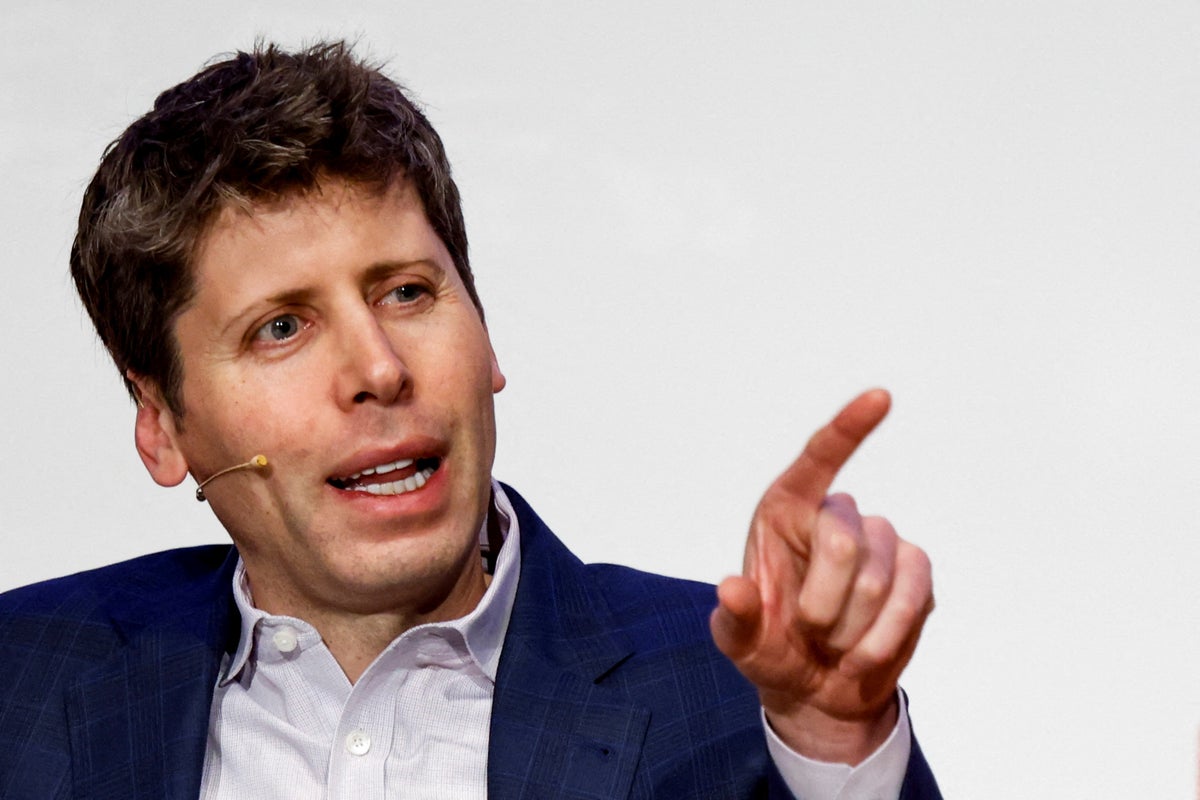
- OpenAI's Sam Altman and xAI's Elon Musk joined Anthropic chief executive Dario Amodei's call to invite independent reviewers into AI labs, according to Semafor.
- The work Amodei wants reviewed comes down to five headings: operational excellence, alignment, interpretability, testing and evaluation.
- Amodei would rate how dangerous a model is by looking at checkpoints, tying required alignment certifications to the capabilities a model has reached.
- Altman told Fortune that OpenAI had delayed its initial public offering to settle safety concerns.
Compiled by The InvestorSomething wrong?How this is made
Why it matters
- exposure Amodei's post does not say who absorbs the loss if a reviewer's answer is that a lab should shut down. Shareholders sit at the end of that chain.
- decision A capability threshold converts alignment certification into a scheduling item, because the paperwork has to exist before the model that trips the threshold can ship.
- precedent With the bipartisan bill stalled in Washington, the labs are writing the definition of adequate review, and legislators will be editing that wording.
The grading device is a conditional. "If models have capability X, then they need to be accompanied by certifications of alignment properties Y and Z," Amodei wrote [5]. Semafor's Reed rejects capability as the measure of danger, arguing that on that test the panic should have started 29 years ago, when Deep Blue beat Garry Kasparov at chess [13]. That match was in 1997 [14].
Reed also notes that the doomiest scenarios appear neither in Amodei's blog nor from former Anthropic researcher Jacob Coxon, because even the most concerned people inside these companies do not treat them as an immediate threat [17].
Priced as an expense, the programme is hard to find. Reed asks why a lab would fight philanthropists offering free labour [8]. The same labs are spending hundreds of billions of dollars on data centres on the assumption that AI will keep needing massive, powerful computers for years [9]. Set against that capex, donated reviewers cost access and calendar time, not money [18].
The spending is also a position on the doom case. Reed writes that frontier labs are not building for the scenario of a model that runs on any computer and continuously learns [19]. A lab that did build one, he writes, would be putting itself out of business [10].
The commitment holds only while a lab keeps the reviewer it has. Reed's warning is that Anthropic, or any lab handed that feedback, can simply find a different independent evaluator [7]. I'd expect enterprise procurement to harden this, since a buyer can make the reviewer's report a condition of a contract. All three chief executives have now said in public that reviewers are welcome. Reviewers stay unpaid volunteers, so nobody has standing to enforce a report a lab dislikes. Or the first disclosed change of evaluator after an adverse finding costs the lab no customers, and the next buyer learns that the reviewer is the replaceable part.
What to watch
- Whether OpenAI or xAI names the reviewers it invites, and on what publication terms.
- Whether any lab publishes a reviewer's finding it disagrees with, and keeps that reviewer afterwards.
- Whether OpenAI's IPO timetable moves again on safety grounds.