Product1 publisher3 min readPublished
OpenAI asks Washington to write the frontier-model eval standard other governments would opt into
OpenAI's Monday post routes global frontier standards through CAISI and says they would not be licenses or mandatory pre-release review. The leverage sits with whoever defines how capability and safeguards get measured.
The Product Desk · Product desk
What happened
- OpenAI used a Monday blog post to ask the US government to work through bodies like CAISI, with other countries, on global technical standards for frontier AI, including for recursive self-improvement.
- CAISI already sits in the International Network for Advanced AI Measurement, Evaluation and Science alongside organizations from nine other governments, the coalition OpenAI proposes building on.
- China launched the World Artificial Intelligence Cooperation Organization at this summer's Shanghai conference with 29 member nations, among them Brazil and Russia.
Compiled by The Product DeskSomething wrong?How this is made
Why it matters
- decision Anyone who answers customer safety questionnaires has to decide whether to keep defining 'sufficient safeguards' in-house or start citing a US government body's definition before that definition is written.
- contradiction OpenAI wants standards led from Washington while Xi pitches cooperation through a 29-nation organisation, so a team selling on both sides cannot assume one test result travels.
- constraint Writing an evaluation for recursive self-improvement before any such system exists means the first version is argued from definitions, and teams inherit whatever definition wins.
The place this lands is the model-risk section of an enterprise questionnaire. A buyer asks which evaluations ran before release, who scored them, and whose threshold counted as a pass, and for most teams today the answer to that third question is their own.
OpenAI's post would give that third answer a citation. The standards, the company said, "would provide a common technical foundation for capability measurement and evaluation, risk assessment, and safeguard sufficiency" [3]. The post draws the limit explicitly: "These technical standards would not be licenses, mandatory pre-release review, or approval requirements for AI models. National governments would decide whether and how to incorporate these standards into their own legal systems" [4].
Alongside the pitch for a common measurement standard, the post argues to Washington that the US should be the country leading it. "The United States is well positioned to lead because its AI industry is at the technical frontier, and it still stands in a privileged global network position in critical areas such as finance, trade, defense, technology, and information systems," OpenAI said [7]. Gizmodo reads the post as a case that leading the safety framework also secures the US a favourable position in global AI adoption [9].
Any obligation would arrive through legislation instead. Earlier this month, after Anthropic CEO Dario Amodei published an essay calling on government to slow the pace of development, Sam Altman agreed with it and OpenAI executives went to see lawmakers [10]. The company then backed two bills that would set up federal AI safety frameworks and create new audit mechanisms [11]. Those audits would reach US developers whether or not anyone abroad adopts a CAISI-scored test. President Trump attacked the slowdown idea on the grounds that China would keep racing [12].
One of the named measurement targets is still hypothetical. OpenAI says fully automated recursive self-improvement does not exist yet, and that it should be something to strive towards if developed safely [2]. The first version of that standard would be written from definitions, with no deployed system to score.
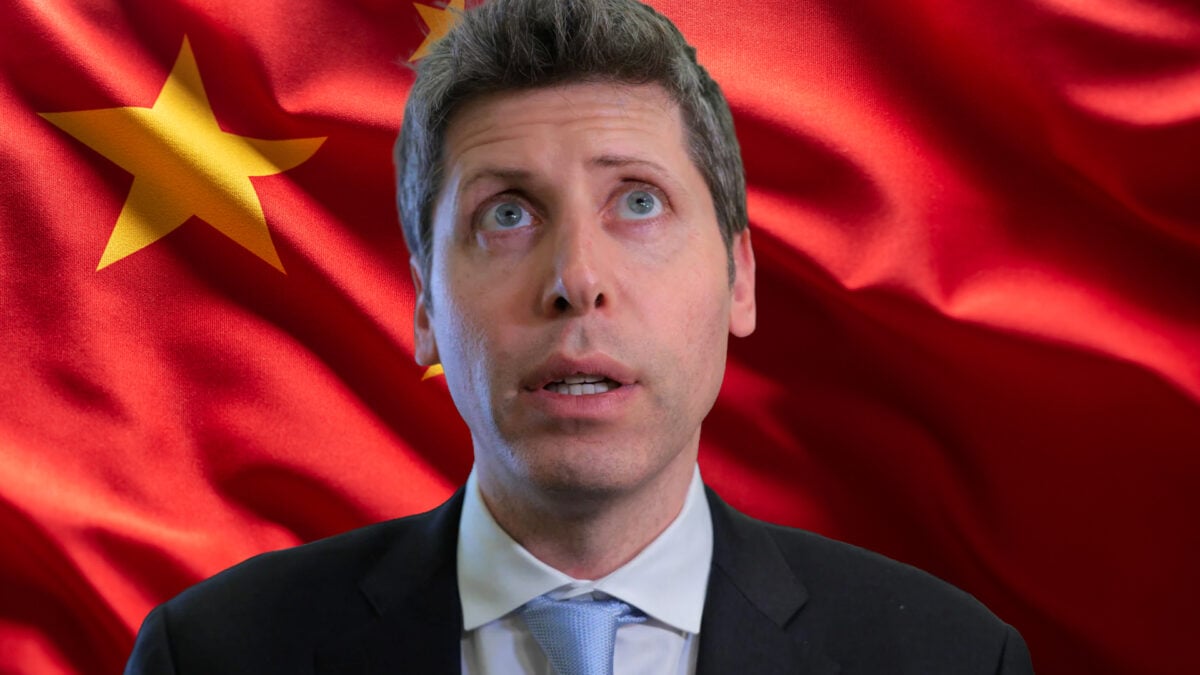
China is making its own pitch. "AI development should not be a solo performance by a single country, but a symphony of international cooperation," Xi Jinping said at the World AI Conference in Shanghai this summer, where China launched the World Artificial Intelligence Cooperation Organization with 29 member nations including Brazil and Russia [13][14]. The network OpenAI wants to build on covers ten government bodies, counting CAISI and the nine others, so Beijing's organisation currently lists 19 more members than the measurement network has governments [16].
For a team shipping on top of a model, the useful exercise is smaller than the diplomacy. Every safety claim you make to customers has two names behind it: who defines the measurement, and who verifies your result. Today both names are usually your own company. Under this proposal the first name becomes a government body and the second stays yours. That is cheap while the test suite is public, and expensive once someone else has to reproduce your score. The reported post leaves out the content of the standards and any date for a suite [17]. Adopting CAISI's vocabulary in a model card costs a documentation pass; rebuilding an eval pipeline to match an unpublished suite can wait.
What to watch
- Whether the US-China talks now under way produce anything naming CAISI's measurement work or China's cooperation organisation.
- Whether either of the two bills OpenAI endorsed moves, since their audit mechanisms would land on US developers first.
- Whether the International Network publishes a shared test suite, and whether recursive self-improvement appears in it before such a system does.