Science1 publisher2 min readPublished
Flinders lab tests two diatom species for how pH changes their trace-metal uptake
A Flinders University study in Marine Ecology used neutron activation analysis to track how acidified seawater changes what two diatom species take up, and the authors still want the carbon-pump consequence tested.
The Scientist · Science desk
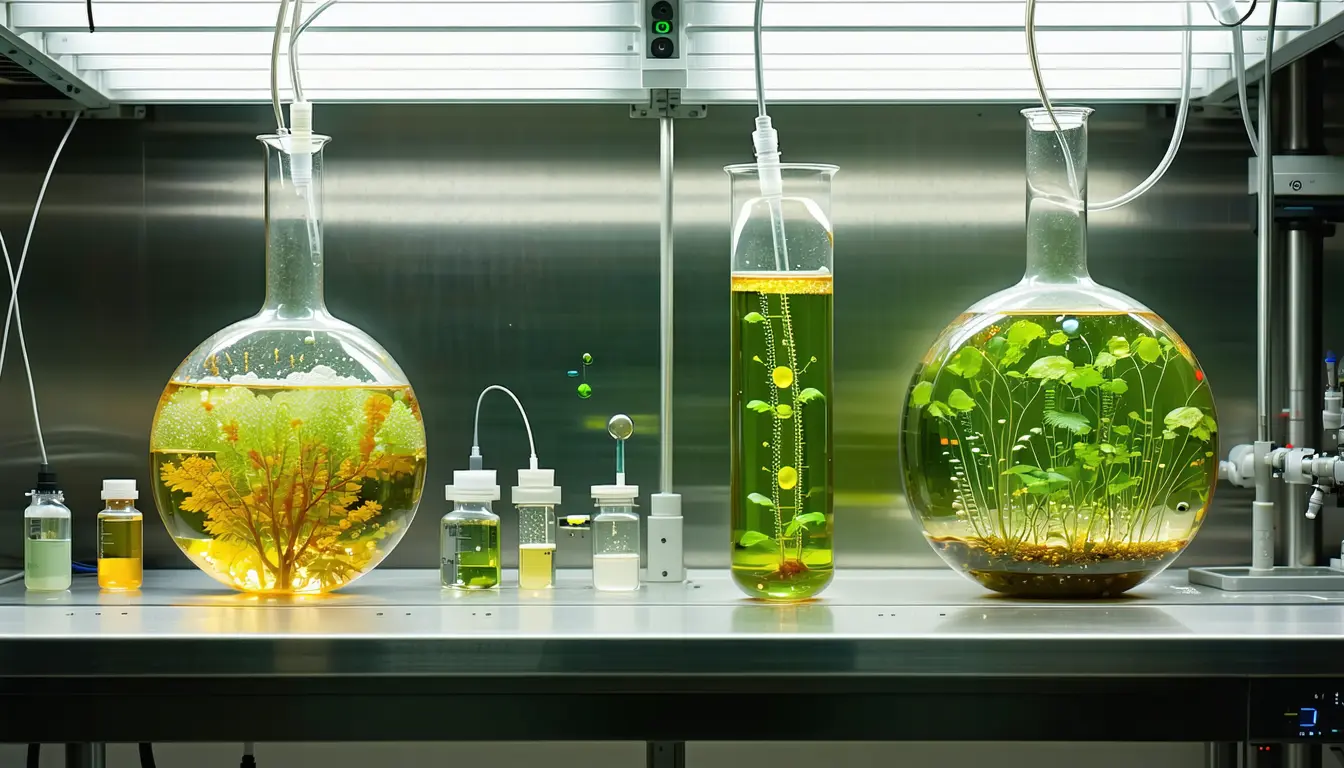
What happened
- Flinders University researchers published a study in Marine Ecology on how ocean acidification changes the sorption of trace metals by diatoms, with Sophie Leterme as senior author.
- The mechanism under test is that seawater pH alters how much iron, zinc and cadmium planktonic algae absorb, and those metals are needed for inorganic carbon acquisition.
- Ocean pH has fallen 0.1 units since the end of the Industrial Revolution, with a further 0.3 to 0.6 units expected by the end of this century.
Compiled by The ScientistSomething wrong?How this is made
Why it matters
- constraint The food-web and carbon-export consequences sit in the authors' own list of things still to investigate, so this cannot yet be used to revise any estimate of deep-ocean carbon flux.
- contradiction The researchers allow that more abundant, faster-growing diatoms could draw down more CO2 even as their metal content falls, which leaves the sign of the net effect open.
- capability If neutron activation analysis works this well on microalgal cells, the same technique can be pointed at element uptake in other marine organisms without chemical separation steps.
- exposure Because diatoms handle 40 to 50 percent of ocean primary production, any confirmed pH effect on their metal budget would land on a large share of the surface ocean's carbon fixation.
Neutron activation analysis is the interesting choice here. It works by irradiating a sample so trace elements become briefly radioactive and identifiable by the energy they emit, which lets you count metals at very low concentrations without chemically separating them out first. The Flinders group used it on two species, Thalassiosira pseudonana and Nitzschia navis-varingica, with seawater from Gulf St. Vincent in South Australia and material from the CSIRO algae collection [5][6]. ANSTO supplied the expertise for that part [7].
"We showed that changes in ocean pH can affect the growth, abundance and elemental composition of these diatoms," said senior author Sophie Leterme, who directs the ARC Industry Transformation Training Centre for Biofilm Research and Innovation at Flinders [8][9]. Leterme said the team needs "to investigate how these changes interact with various trace elements and can lead to broader ecological impacts, such as disruption to marine food webs, reduced carbon and silicon export, and increased microbial and nutrient activity" [10].
The mechanism being probed is specific: iron, zinc and cadmium are essential for inorganic carbon acquisition, and seawater pH alters how much of them planktonic algae absorb [4]. Diatoms account for 40 to 50 percent of ocean primary production and move organic carbon to the deep ocean by fixing CO2 near the surface [3].
Seawater has already dropped 0.1 units since the end of the Industrial Revolution, and another 0.3 to 0.6 units are expected by the end of this century [11]. The projected change is three to six times the drop recorded so far, so bench work of this kind has to reach past any condition organisms in the ocean have yet met [12].
Which way all this pushes carbon export is the open part. The researchers flag that ambiguity themselves: "While a higher abundance and growth of diatoms might be beneficial to reduce carbon dioxide levels, the impact of lower concentrations of major and trace elements in the environment is not well understood" [13]. More cells carrying less metal is not obviously worse for the pump than fewer, richer cells.
One applied thread sits apart from the carbon accounting. The Flinders team says a better understanding of these processes in seawater would help develop novel biofilms to reduce shipping pollution in harbours [14]. Diatoms are already used as bioindicators for water quality [15].
What to watch
- Whether follow-up work measures actual carbon or silicon export flux under lowered pH, rather than cell composition alone.
- Whether the trace-metal effect holds in more than two species, and in mixed natural assemblages.
- Whether the biofilm application the Flinders group mentions for harbour shipping pollution attracts funding or an industry partner.