Product1 distinct publisher3 min readPublished
Enterprise AI 2.8 is generally available with agent token controls and a claim that VMs, containers and agents share one control plane, not three. It is a claim infra teams can test.
The Product Desk · Product desk

Compiled by The Product DeskSomething wrong?How this is made
The word silo is carrying most of the marketing weight here, so it helps to separate what the platform decides from what it hands back to the operator. Cornely's framing is that the customer picks the substrate for each workload, and Nutanix optimizes the deployment only after that choice is made [5]. That is a narrower promise than run anything anywhere, and a more testable one: the claim is not that VMs, containers and agents become one runtime, but that they stay under one control plane instead of three [1]. Cornely puts the emphasis on operations rather than enablement, saying the hard part is not getting containers working but how you manage them [4].
The governance additions are where the release earns attention. The new MCP gateway is a single point for controlling which tools and data an agent can reach [6], and a companion MCP server exposes Nutanix-managed infrastructure to agents under the same control [7]. The reason is a billing problem, not a model one. Cornely says customers ask first for visibility, control and governance because they do not control cost per token, and agents make repeated calls nobody watches [9]. He says he has seen a monthly budget spent in a week [10], roughly four times the intended burn rate [20]. The quota controls at team, user and agent level are the direct answer to that [8].
The cheaper answer sits alongside it: steer work that does not need a frontier model, such as basic Python scripting, to open-weight models the customer hosts, where the bill is infrastructure rather than tokens [11]. Private Inference supplies the machinery, including LoRA tuning for sub-8B models, tensor-parallel inference across GPUs, batching and speculative decoding [12]. Nutanix claims speculative decoding can raise token-generation speed up to 2.5 times, with the caveat that the number depends on the model and the configuration [13], which makes it a ceiling to verify rather than a figure to plan against.
Two limits temper the governance story. MCP activity logs record which data sources an agent touched and what it did, but prompt inspection is not the default purpose [14], so the trail is about access, not intent. And Cornely is blunt that an MCP server is only as secure as the backend infrastructure and the API keys and role controls behind it [15]: the gateway concentrates access without removing the need to lock down what it fronts.
The rest of the release supports the single-plane argument. NKP 2.19 extends Kubernetes management across virtualized and bare-metal environments, with NKP Metal automating OS, firmware and container deployment and NKP on AHV integrating with Nutanix Flow for isolation [16], and the platform carries CNCF Kubernetes AI Conformance certification while Unified Storage has enterprise Nvidia certification [17][18]. Whether it removes a silo or just relabels one is the question an infra team can actually put to it.
Ranked by verification strength, evidence, and original report placement.
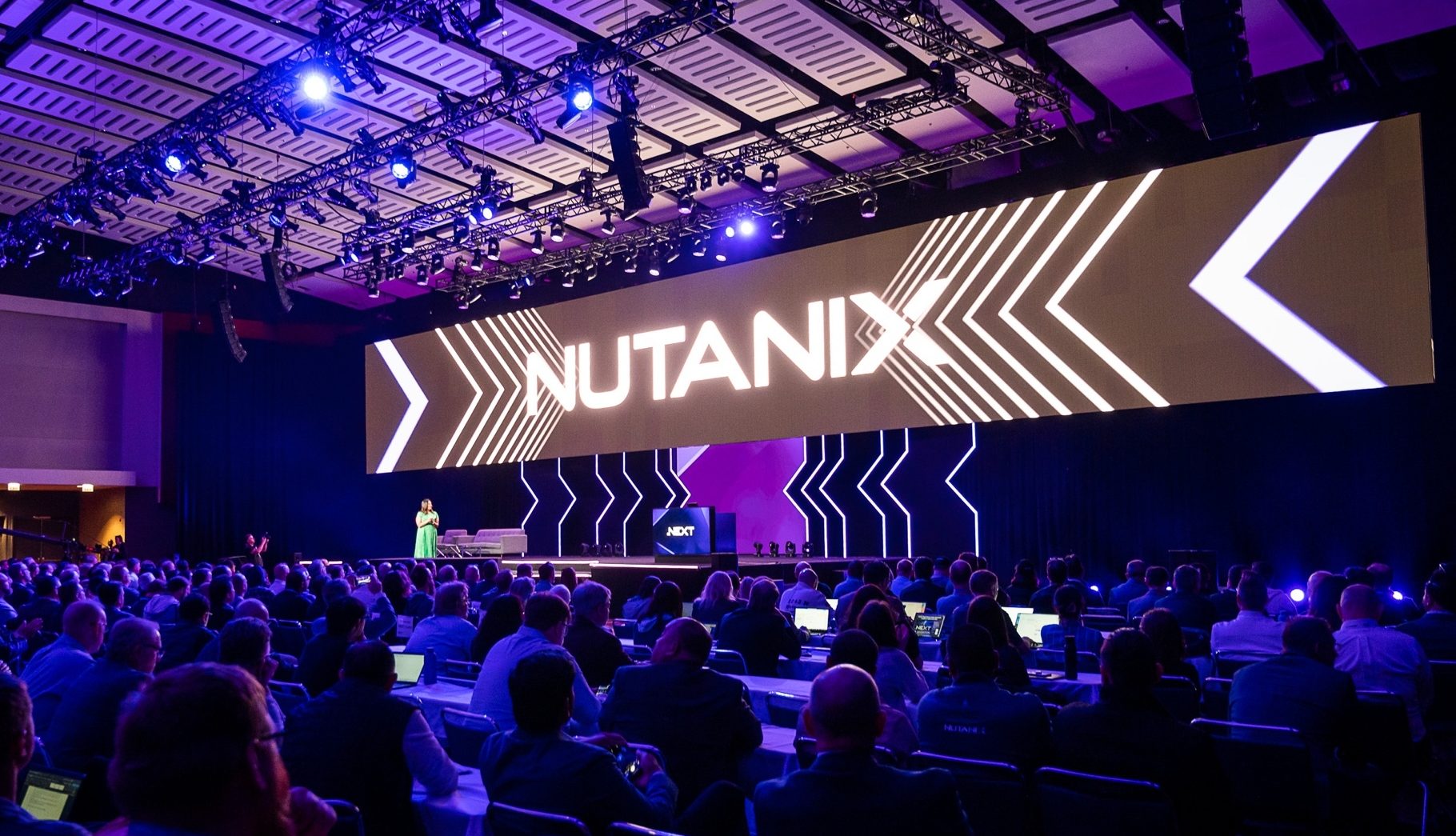
Nutanix introduced capabilities intended to help enterprises run agentic AI applications alongside existing virtual machines and containerized workloads without splitting infrastructure into separate management silos.
The updates include the general availability of Nutanix Enterprise AI 2.8 and a forthcoming release of Nutanix Kubernetes Platform 2.19.
Nutanix calls its approach dual-native, treating VMs and containers as first-class infrastructure, so customers can run Kubernetes on the Acropolis Hypervisor when isolation and operational consistency are priorities or on bare-metal systems for different performance or resource profiles.
Cornely said the distinction is operational: "It's not about getting containers working; it's about how you operate and manage those containers."
The customer selects the environment for each workload and Nutanix optimizes deployment based on that decision; Cornely said "They decide."
NAI 2.8 adds a generally available Model Context Protocol gateway to Nutanix Agent Gateway, providing a central point for governing the tools and data that AI agents can access through MCP.
Follow any of these and your For You feed starts watching them — no settings page required.
Evidence-backed comparisons of source perspectives and observed adoption signals. Read the methodology
Which Builder, Operator, and Investor concerns the observed source mix emphasized—not a truth score.
Evidence, demonstrated adoption, hype gap, incentives, and confidence are assessed independently, each on its own current evidence. How these are measured.
Single vendor-briefed trade report
All substance comes from one announcement-day article grounded in a Nutanix product briefing and an on-record EVP interview. Feature-level facts (GA status, MCP gateway, quota granularity, Private Inference additions) are specific and attributable, which lifts the floor, but there is no second publisher, no customer testimony, no documentation link and no benchmark methodology. The only performance number is a vendor 'up to' figure the vendor itself qualifies.
Shipped, but no usage evidence
There is real availability signal — NAI 2.8 and the MCP gateway are generally available, SP Central is GA, and two third-party certifications are claimed — so this is more than an announcement of intent. But nothing in the cluster shows anyone using it: no named customers, deployment counts, token-volume disclosures or partner wins, and NKP 2.19 has not shipped. Adoption is therefore scored on availability alone.
Positioning ahead of proof
The framing — one control plane for VMs, containers and agents, 'dual-native' infrastructure, up to 2.5x faster token generation — runs ahead of what is demonstrated. Half the consolidation story (NKP 2.19) has not shipped, the speed figure has no published benchmark, and the cost problem it solves is evidenced by a single anonymous anecdote. The gap is moderate rather than severe because the governance mechanics themselves (GA MCP gateway, quotas by team/user/agent, activity logs) are concrete and testable, and the vendor volunteers limiting caveats about MCP security posture and VMware replacement.
Vendor-driven launch narrative
Every claim originates with Nutanix on its own announcement day, delivered through an EVP of product management whose remit is positioning the platform against Broadcom's VMware and monetising an agentic-AI attach. The publisher is an enterprise-tech outlet that appends its own community and AWS Marketplace solicitations to the piece, and the story also promotes Nutanix partner and service-provider programs. No independent or adversarial voice appears in the cluster.
Facts clear, significance unproven
Confidence is moderate. What was announced, and by whom, is documented unambiguously with direct quotes, so the descriptive layer is reliable. Any judgement about whether the single-control-plane claim holds in production, whether the 2.5x figure survives testing, or whether token quotas change enterprise AI spend rests on one vendor-sourced article with zero corroboration or customer evidence.
build
The only way to prove a contract test can fail is to ship a server that lies1 distinct publisher
build
MCP 2026-07-28 drops the `result` wrapper, and your unit tests will not notice1 distinct publisher
product
Twin1's $20M bet: the unit of enterprise AI is one employee, not the org1 distinct publisher
build
Amazon Q executed code from any repo you opened, and it is not the only one1 distinct publisher
Distinct publishers with included, body-backed reporting in this cluster.
1 article · August 26, 2026